
Central Circuit or Kilembe Trail: Which Rwenzori route is right for you? Our expert guides compare both trails honestly: difficulty, scenery, duration, camps, peaks, and which trekker each route suits best.
It is probably the most common planning question we receive, and it deserves a more honest answer than most comparison articles are willing to give. When trekkers ask whether the Central Circuit or the Kilembe Trail is the better route, what they are really asking is something far more specific: which route is better for me, for my timeline, for my summit objective, for my experience level, and for the kind of experience I actually want from the Rwenzori Mountains? The answer to that question is never the same twice, because the two routes are genuinely different in ways that matter enormously depending on who is asking.
This guide won’t say one route is better than another. Both the Central Circuit and the Kilembe Trail lead to the same extraordinary mountain range. Both pass through the full ecological spectrum of the Rwenzori, from lowland rainforest to glaciated high-alpine terrain. Both can get a well-prepared, well-guided trekker to Margherita Peak at 5,109 meters. But they do so via paths that are different in character, different in logistical requirements, different in the landscapes they reveal, and different in the type of trekker who will thrive on each of them, such as those seeking a more challenging adventure versus those preferring a more leisurely experience.

This guide is written from a position of genuine experience on both routes. Our team guides trekkers across the Rwenzori every week, on both trails, in all conditions, and across all seasons. We did not borrow this analysis from a forum thread or assemble it from secondary sources. It comes from the accumulated knowledge of guides who have walked every camp, crossed every pass, and managed every weather scenario these two routes produce. Read it as you would read advice from someone who has done the job for a long time, with respect for the mountain and respect for the trekker who deserves the right route for their journey.
Two Routes, Two Histories, Two Personalities
The Central Circuit Trail is the Rwenzori’s original outstanding route, the path that established the mountain’s reputation in the international trekking community and has been drawing climbers, naturalists, and adventurers to western Uganda for generations. Its foundations trace back to the early 1900s, when hunters and explorers first mapped passages through the dense highland forest, and it was formalized as a recognized trekking route in the 1950s. Today it is maintained by Rwenzori Mountaineering Services (RMS), a community-owned organization whose porters, guides, and hut keepers are drawn from the Bakonjo people who have lived on the slopes of the Rwenzori for centuries. The Central Circuit carries with it the weight of that history, a sense of walking a path that has been walked by generations before you, through a landscape that was old and extraordinary long before any trekker put boots on it.
The Kilembe Trail is the newer route officially launched by Rwenzori Trekking Services in 2011, though its historical antecedents reach back to 1895, when Professor Scott Elliot made his pioneering expedition into the Rwenzori highlands and passed through terrain that the trail now formally follows. The Scott Elliot Pass, a major landmark on the upper trail, bears his name. Compared to the Central Circuit’s decades of trekking heritage, the Kilembe Trail is in its adolescence as a managed route, but this relative youth is part of what provides it its character: fewer trekkers have walked it, the infrastructure is newer and in some respects more modern, and the experience it offers retains a rawness and a sense of genuine discovery that older, more trafficked routes inevitably lose over time.
Understanding these personalities, the established classical route versus the wilder, newer alternative, is the foundation for determining which one suits you. Neither personality is inherently superior. They are different expressions of the same extraordinary mountain, and choosing between them starts with an honest assessment of what you want. Browse the full Rwenzori Mountains overview for the wider context before diving into the route specifics.
The Geography of Each Route: Where They Go and What They Cross
The Central Circuit Trail: A True Circumnavigation
The Central Circuit Trail begins at Nyakalengija village, reached via the Mihunga Gate at approximately 1,651 meters on the northern side of the range. From there, it forms a loop around the central mountain area of the Rwenzori, going through five different ecological zones and linking a series of mountain huts that help with gradual acclimatization. The classic itinerary visits Nyabitaba Hut in the montane forest, John Matte Hut in the upper forest and lower moorland, Bujuku Hut in the heart of the Afro-alpine zone on the floor of the Bujuku Valley, Elena Hut in the high alpine zone above the snowline, Kitandara Hut in the southern glacial valley, and Guy Yeoman Hut on the descent back towards the trailhead.
The Central Circuit is truly circular; you cross the mountain from north to south and back, passing through every ecological zone on each side of the central peaks. The maximum altitude on the standard circuit without the summit is approximately 4,372 meters at Freshfield Pass on the descent from Kitandara, though Elena Hut at 4,541 meters and the summit approach to Margherita at 5,109 meters represent the high points for those adding the peak.
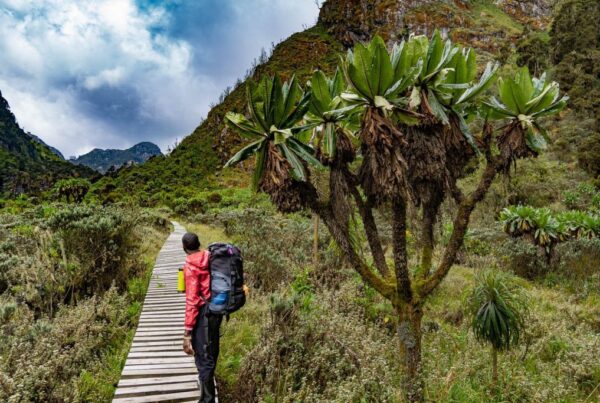
The boardwalks across the famous Bigo Bogs, a series of elevated wooden walkways constructed across the deep Afro-alpine bog sections between John Matte and Bujuku, are one of the Central Circuit’s distinctive features and one of the practical aids that make the route more manageable for trekkers who might otherwise spend hours knee-deep in waterlogged peat. These boardwalks represent a significant infrastructure investment and are a genuine advantage of the route for trekkers worried about the Rwenzori’s notorious bog terrain.
The Kilembe Trail: A Linear Ascent With a Southern Soul
The Kilembe Trail begins near Kilembe, south of the Rwenzori range and east of Kasese town, at a starting elevation similar to the Central Circuit. Where the Central Circuit approaches the mountains from the north, the Kilembe Trail enters from the south, ascending through the Kilembe Valley and its associated watercourses before climbing through the montane forest and into the moorland zone from an entirely different geographical direction. This southern approach gives the Kilembe Trail a fundamentally different visual perspective on the range; the peaks appear differently, the valleys open differently, and the relationship between the high summits and the lower terrain is revealed from angles that Central Circuit trekkers never see.
The Kilembe Trail’s camp sequence ascends through Forest Camp at approximately 2,600 meters, Kalalama Camp at 3,134 meters in the montane forest, Mutinda Camp at 3,688 meters in the heather and moorland zone—where the Mutinda Lookout offers panoramic summit views that are genuinely spectacular on a clear day, Bugata Camp at 4,062 meters in the alpine zone, Hunwick’s Camp at 3,874 meters for acclimatization, and finally Margherita Camp at approximately 4,485 meters as the base for the summit push. The route does not loop back on itself in the way the Central Circuit does; it is a more linear ascent to the summit and a descent that can be varied depending on the itinerary.
One of the Kilembe Trail’s distinctive features is its access to peaks that the standard Central Circuit does not pass through. While the Central Circuit gives the most direct approach to Mount Stanley, Mount Baker, and Mount Speke through the Bujuku Valley hub, the Kilembe Trail provides access to Mount Luigi di Savoia, Mount Emin, and Mount Gessi as well as Margherita via a route that many experienced alpinists find more intriguing from a mountaineering perspective. For trekkers whose summit ambitions extend beyond Margherita to the full range of Rwenzori peaks, the Kilembe Trail is the gateway to the mountain’s less-visited summits.
Difficulty, Terrain, and Physical Demands: An Honest Comparison
Neither route is easy. The Rwenzori Mountains are physically demanding in ways that consistently surprise trekkers who have completed other significant African mountain routes, and the honest assessment of difficulty on both trails deserves to be stated clearly before examining how they compare to each other.
The Central Circuit is often characterized as the more manageable of the two routes for first-time Rwenzori trekkers, and this characterization has merit but requires qualification. The trail infrastructure on the Central Circuit is more developed; the boardwalks across the Bigo Bogs reduce the physical and psychological challenge of the moorland sections significantly, and the hut system provides reliable shelter at well-spaced intervals that support progressive acclimatization. The daily altitude gain on the Central Circuit’s standard itinerary is generally more gradual than on the Kilembe Trail, which is considerably relevant for trekkers who are sensitive to altitude or who are approaching 4,000 meters for the first time.
The Kilembe Trail is steeper, more technically demanding on the trail surface, and in the lower sections significantly more challenging to navigate. The bamboo forest sections on the Kilembe approach are particularly steep and can be slippery in wet conditions, which, on the Rwenzori, means most conditions. The trail does not have the extensive boardwalk infrastructure of the Central Circuit in its bog sections, meaning trekkers on the Kilembe Trail spend more time navigating genuinely waterlogged terrain rather than walking over it. For trekkers who thrive on physical challenge, who find heavily managed trails unsatisfying, and who want to work harder in exchange for a more raw and immersive experience, the lack of signage is a feature rather than a limitation.
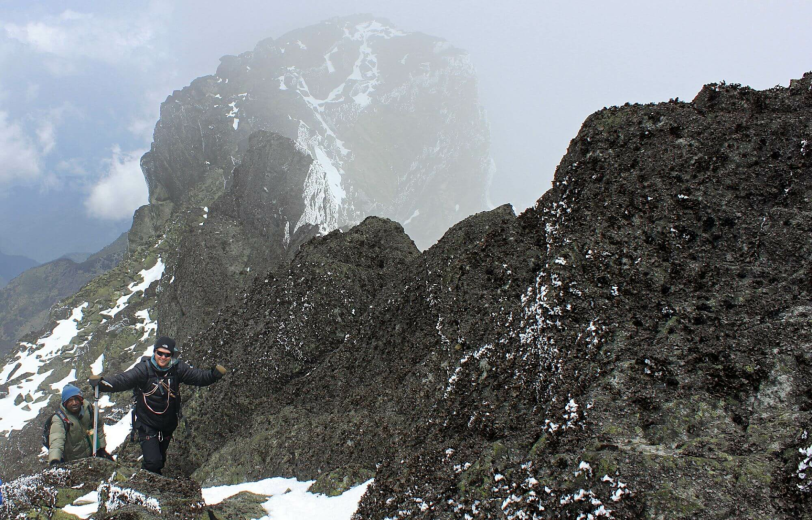
The summit day from the Kilembe Trail’s Margherita Camp is, in most respects, similar to the summit push from Elena Hut on the Central Circuit—both involve crossing glaciated terrain with crampons and ice axes, both are guided and roped, and both represent the same technical challenge of reaching Margherita Peak’s 5,109-meter summit. The glacier’s approach varies, but the summit is the same mountain no matter how you climb it.
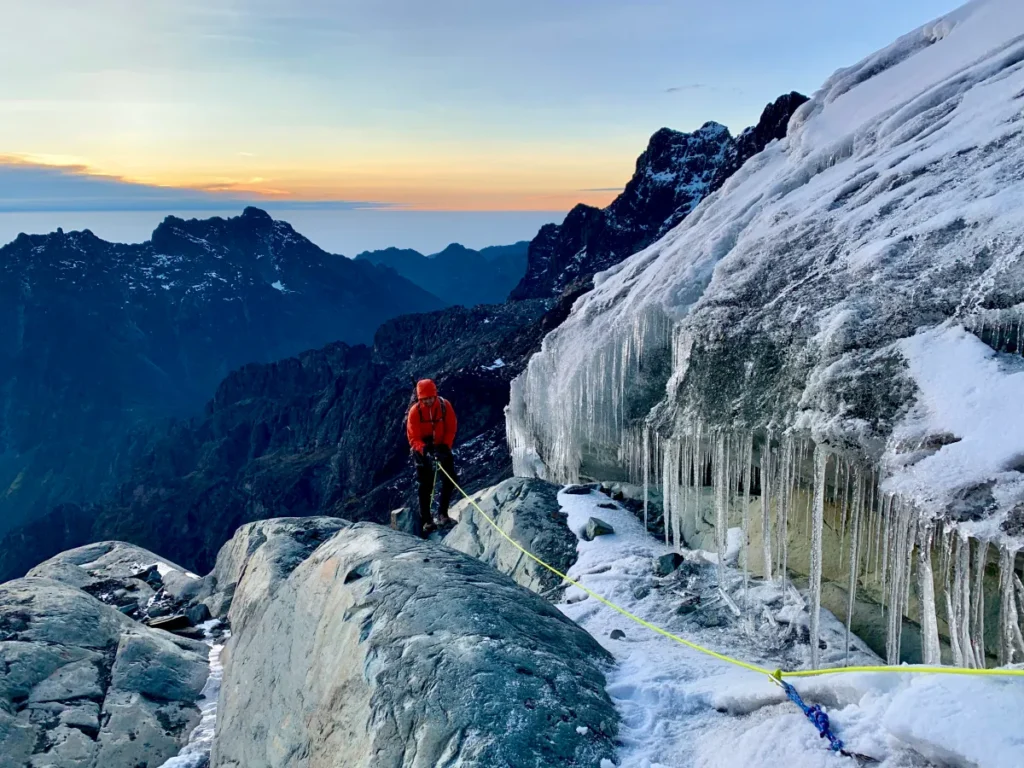
To gain the most comprehensive and honest understanding of the physical challenge involved in reaching the top of the Rwenzori on either route, it is essential to read the guide on how technical the climb to Margherita Peak actually is before committing to any summit itinerary. Your physical and technical readiness for the summit is independent of the route you take, and it deserves its own honest examination.
Scenery, Wildlife, and the Quality of the Experience on Each Route
What the Central Circuit Shows You
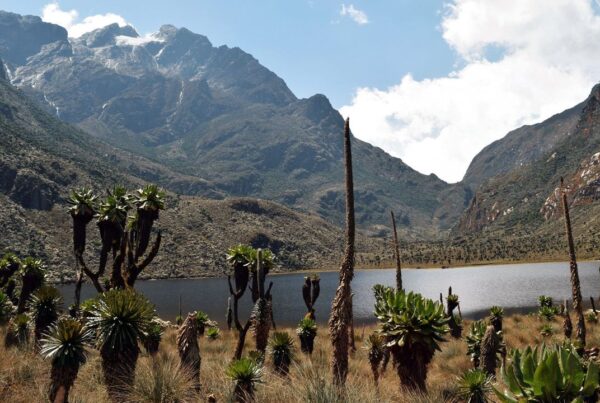
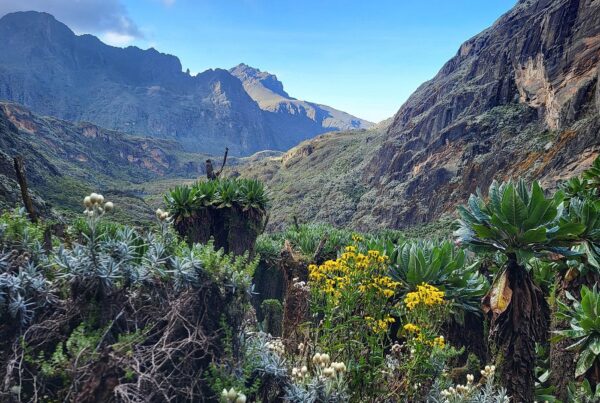
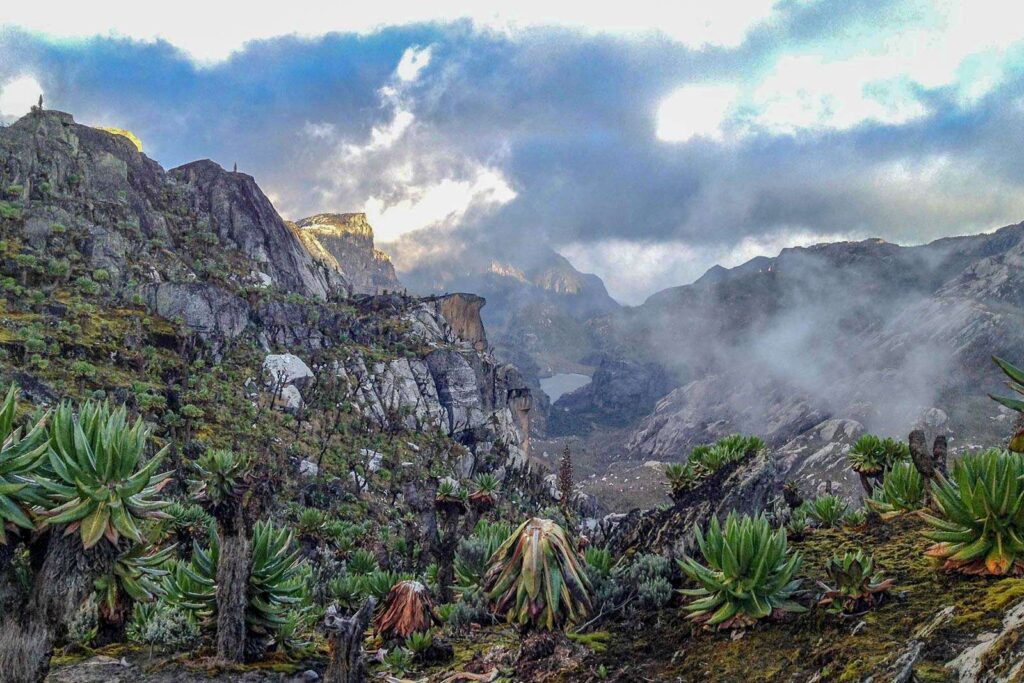
The Central Circuit’s greatest experiential asset is its completeness. By going around the central massif, it allows trekkers to see all the different ecosystems of the Rwenzori from various angles, and the range of landscapes experienced during a typical 7-day circuit is truly wonderful. The journey from the thick, wet montane forest at Nyabitaba to the bamboo area above John Matte, then to the strange Afro-alpine moorland filled with giant lobelias and groundsels in the Bujuku Valley, followed by the high-alpine area at Elena Hut, and finally to the southern glacial scenery of the Kitandara Lakes is one of the most amazing ecological experiences you can find anywhere in Africa.
The Bujuku Valley, which the Central Circuit passes through at its highest non-summit point, is the emotional and visual centerpiece of the route for most trekkers. Surrounded by three major peaks, Stanley, Speke, and Baker, at close range, with glaciers visible above and the bizarre vegetation of the Afro-alpine zone at eye level, Bujuku Hut occupies a position in the mountains that feels genuinely unlike anywhere else. The valley’s character changes dramatically with weather; on a clear morning it is expansively beautiful; in cloud it is atmospheric and otherworldly in a different register entirely. Many trekkers cite the Bujuku Valley as the defining memory of their Rwenzori experience.
The Kitandara Lakes, two glacial lakes set in a bowl between Mount Baker and the southern ridges encountered on the descent toward Guy Yeoman, are among the most beautiful high-altitude landscapes in East Africa. Their vivid color, the reflection of the surrounding peaks in calm conditions, and their position in what feels like a genuinely secret place in the mountains make them a highlight that many trekkers rate as highly as the summit itself. The Central Circuit is the route that visits them.
Wildlife along the Central Circuit matches the rich variety of nature found in the Rwenzori: you can often spot L’Hoest monkeys and black-and-white colobus monkeys in the forests below John Matte; experienced guides can help you find the unique Rwenzori turaco bird; and the Afro-alpine area is home to the three-horned chameleon and several small mammals that are only found here. The sheer diversity of bird species on the Central Circuit makes it the preferred choice for serious birdwatchers, as the route passes through multiple distinct avian habitat zones.
What the Kilembe Trail Shows You
Relative solitude and a fresh perspective on the range define the Kilembe Trail’s experiential character. Because fewer trekkers use the Kilembe Trail compared to the Central Circuit, the experience of walking it carries a sense of genuine exploration that increasingly trafficked mountain routes cannot replicate. On a typical week, the Central Circuit hosts multiple trekking groups simultaneously; the Kilembe Trail hosts far fewer, and there are days when you will have entire sections of the mountain entirely to yourself in a way that is no longer common on the more established route.
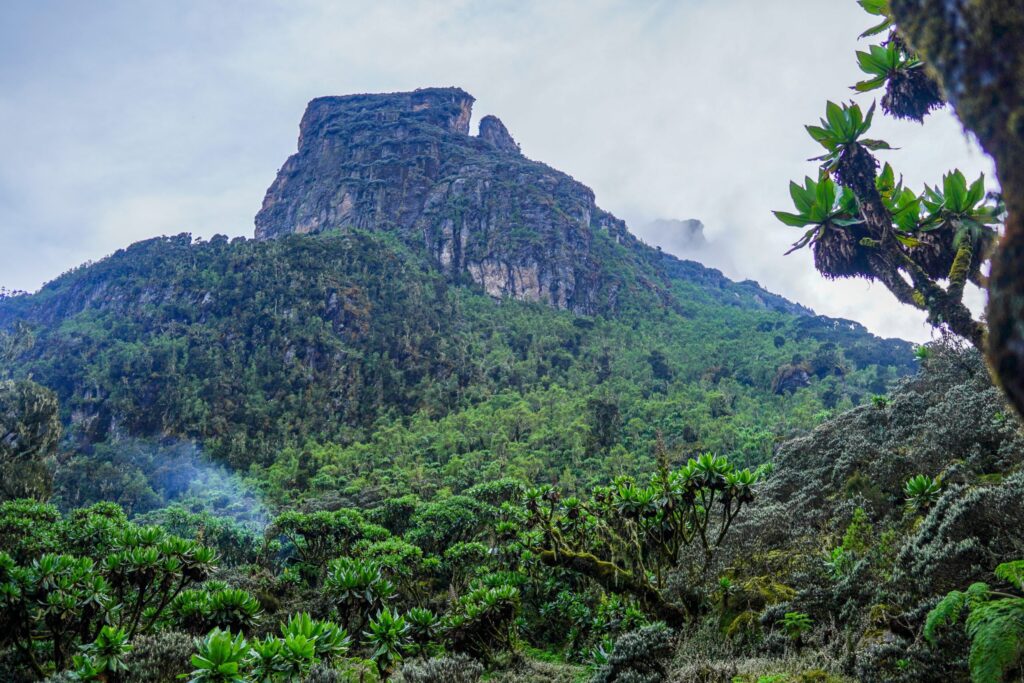
The Mutinda Lookout at approximately 4,000 meters is the Kilembe Trail’s show-stopping moment of arrival, the point at which the upper Rwenzori suddenly opens in front of you. On a clear morning, the view from Mutinda encompasses the central peaks of the range at close range and in dramatic relief: the glaciated summits of Mount Stanley, the ridges of Mount Baker, and the high moorland stretching between them. It is one of the finest mountain viewpoints in East Africa and one that the vast majority of the world’s trekkers have never seen. The
The 4-Day Mutinda Lookout trek is actually built around this view as its primary objective for trekkers who want to experience the Kilembe Trail’s most dramatic scenery without committing to a full summit itinerary.
The Kilembe Trail’s access to the Rwenzori’s less-visited summits is its most distinctive experiential advantage for peak collectors and mountaineers. The route provides the practical base from which Luigi di Savoia, Emin, and Gessi can be approached, and the character of each of these summits their rock, their approaches, their particular relationship to the range’s glacial geography is meaningfully different from the Stanley-Speke-Baker experience that dominates the Central Circuit. The Kilembe Trail, with its different peaks and perspectives, is the natural next chapter for trekkers who have already completed a Central Circuit itinerary and are returning to the Rwenzori for a second visit.
The Kilembe Valley’s historical dimension also adds a specific kind of depth to the experience. Walking a trail that dates back to Professor Scott Elliot’s 1895 expedition, when the Rwenzori was still a mystery to European science, and crossing the high pass named after him adds a rich historical layer to the Kilembe Trail, making it more meaningful for trekkers interested in history.
Duration, Itineraries, and Flexibility on Each Route
Central Circuit Itinerary Options
The Central Circuit’s standard summit itinerary runs to seven days, which represents the pace that most trekkers complete it at comfortably, allowing adequate acclimatization time, unhurried daily stages, and a full summit day from Elena Hut. The 7-Day Central Circuit to Margherita Peak is the most frequently booked Rwenzori itinerary for a reason: it is the sweet spot between ambition and comfort, between summit achievement and the enjoyment of the journey. Experienced, acclimatized trekkers have completed the circuit in five days, but this version compresses the daily stages into long, demanding sessions that are not enjoyable for most people and significantly reduce the time available to engage with the environments passed through. A six-day option exists and is appropriate for fit trekkers with some altitude experience.
For those with more time and multiple summit objectives, the 9-Day 3 Peaks Trek on the Central Circuit adds summits on Mount Speke and Mount Baker to the Margherita objective, using the Central Circuit’s hub at Bujuku as the base for multiple summit days. The 13-Day 6 Peaks Expedition extends this further, combining the Central Circuit’s access to the principal peaks with Kilembe Trail access to the lesser-visited summits in one continuous grand traverse. This is the most ambitious Rwenzori itinerary available and the one that demands the most from both the trekker and the planning.
Kilembe Trail Itinerary Options
The Kilembe Trail’s standard summit itinerary is eight days, a day longer than the Central Circuit, because the southern approach involves more altitude gain across the lower stages and benefits from the additional acclimatization day that an eight-day schedule provides. The 8-Day Kilembe Trail to Margherita Peak is the route’s flagship itinerary and represents a genuinely different Rwenzori experience from the Central Circuit equivalent, despite sharing the same summit objective.
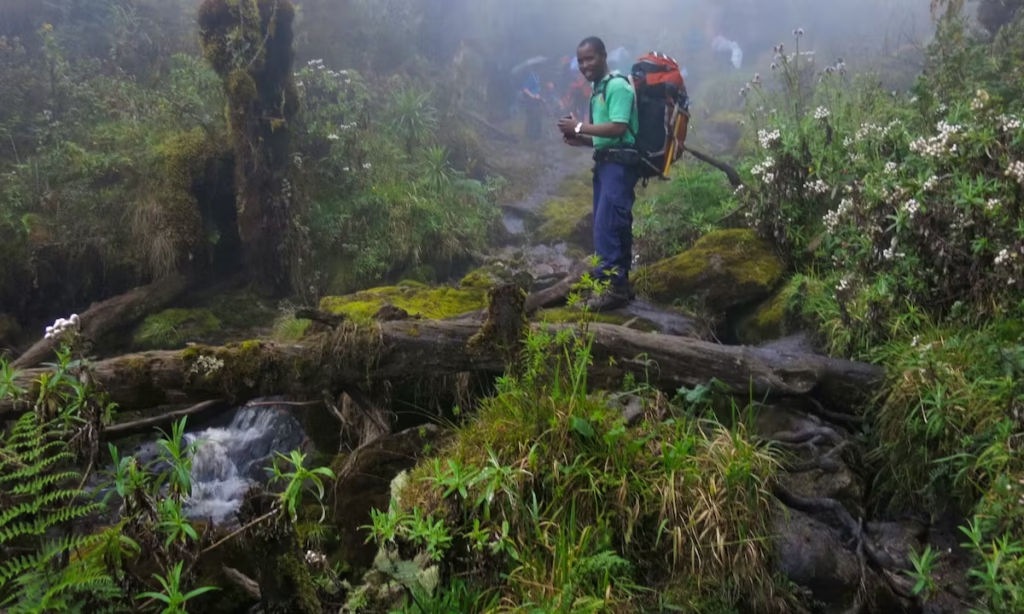
For trekkers who want the Kilembe Trail experience without committing to a full summit itinerary, the 4-Day Mutinda Loop provides access to the trail’s most dramatic scenery and reaches meaningful altitude without requiring the full summit-day technical preparation. The 8-day Cheptegei Peak trek via Kilembe offers a different summit objective, Cheptegei Peak at 4,907 meters, for trekkers who want a high-altitude achievement on the Kilembe Trail without the full Margherita technical requirements. And the 10-day Mount Stanley and Baker expedition via Kilembe combines the Kilembe Trail’s southern approach with summit objectives on both of the range’s two highest massifs.
Accommodation and Camp Infrastructure: Huts Versus Camps
One of the more practical differences between the two routes is the nature of the overnight accommodation, which affects daily comfort in significant ways over a week or more on the mountain.
The Central Circuit operates on a hut system: permanent mountain huts at each overnight stop, with wooden sleeping platforms, mattresses, cooking facilities, and basic shelter that has been maintained and improved over decades of use. Nyabitaba, John Matte, Bujuku, Elena, Kitandara, and Guy Yeoman huts provide shelter that, while genuinely basic by any standard, is genuinely weatherproof and provides a measure of warmth and dryness at the end of each day’s hiking that is not easily underestimated after eight hours in the Rwenzori’s weather. Elena Hut, in particular, is the highest and coldest of the circuit huts, and its solid construction makes a real difference on summit nights when temperatures fall well below freezing outside.
The Kilembe Trail operates on a camp system: semi-permanent and permanent structures at each camp that include sleeping facilities, but whose construction and amenity level vary more than the Central Circuit huts. Forest Camp, Kalalama, Mutinda, Bugata, Hunwick’s, and Margherita Camp all provide sleeping accommodation, and the newer Kilembe infrastructure includes some solar-powered lighting at certain camps that is a genuine modern convenience. The Kilembe camps feel more like expedition-style accommodation than the Central Circuit huts, a distinction that some trekkers find more authentic and others find less comfortable.
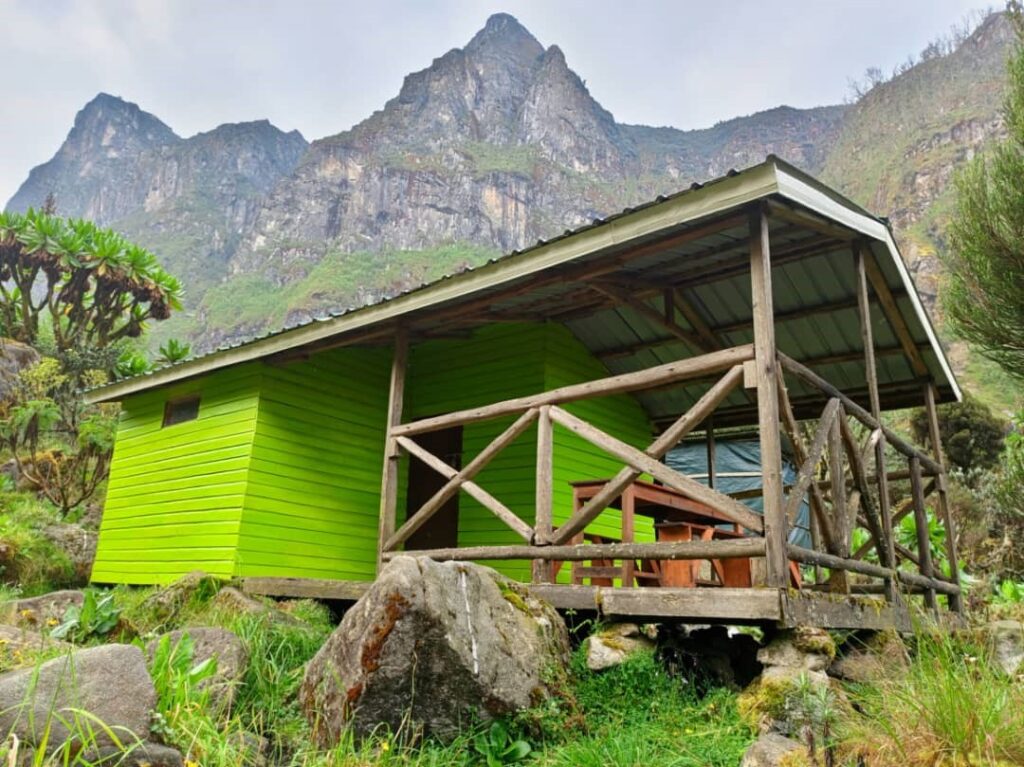
The full picture of accommodation options across both routes, including what to expect at each specific camp and hut, is covered in the comprehensive guide to accommodations inside and outside the Rwenzori Mountains, which is worth reviewing as part of your pre-trek planning.
Gear Requirements: What Each Route Demands and What We Provide
The core gear requirements are consistent across both routes: a waterproof shell jacket and trousers, genuinely waterproof hiking boots, full-length gaiters, warm base layers, insulation layers, a sleeping bag rated to -10°C for comfort, and trekking poles. These are the foundational items that the Rwenzori demands regardless of which trail you walk. The mountain’s wetness and cold are present on both routes in similar measure; your waterproof system does not change based on your route choice.
For trekkers targeting Margherita Peak via either route, technical summit gear is additionally required: 12-point crampons, a mountaineering ice axe, a sit harness, and a climbing helmet. These items are needed at the same point on both routes when you leave the final high camp for the glacier crossing and summit push. If you own this equipment from previous alpine experience, bring it with you. If you do not, we maintain a rental inventory of technical gear at our Kasese offices that is available to trekkers who arrange it through our booking process in advance. The details of what each summit trekker needs, what we provide, and how to plan your gear for either route are covered comprehensively in the guide to climbing gear requirements for a Rwenzori trek.
The Kilembe Trail is steeper and has more muddy areas than the Central Circuit Trail, so you need better quality boots and gaiters for it. If you are unsure whether your existing waterproof boots are adequate for the Kilembe Trail, it is better to err on the side of upgrading. The technical summit requirements are identical on both routes.
Which Route Is Right for Which Hiker?
Choose the Central Circuit if…
You are trekking the Rwenzori for the first time and want the most complete, best-supported, and most thoroughly tested route the mountain has to offer. The Central Circuit has been improved over many years, with boardwalks to help you cross muddy areas, a slower increase in altitude each day, and reliable huts at every campsite, making it the easiest way to start exploring the tough Rwenzori mountains. If your experience base includes serious multi-day trekking but not necessarily high-altitude or expedition mountaineering, the Central Circuit gives you the best combination of challenge and support.
You want to see the Kitandara Lakes and the Bujuku Valley. These are the two landscapes on the Rwenzori that most consistently leave trekkers speechless, and they are on the Central Circuit. If experiencing the mountain’s most celebrated scenery is a priority, the Central Circuit delivers it.
Your timeline is 7 days or fewer. The Central Circuit’s standard summit itinerary fits cleanly into 7 days in a way that the Kilembe Trail, which runs to 8 days for the summit, does not.
You want multiple summit options on a single itinerary. The Bujuku Valley hub gives the Central Circuit access to Stanley, Speke, and Baker with the most efficient camp-to-summit logistics of any route on the mountain. For the 9-day 3 Peaks circuit, the Central Circuit is the unambiguous choice.
Choose the Kilembe Trail if…
You have already done the Central Circuit and are returning to the Rwenzori for a second visit. The Kilembe Trail is the natural next chapter: different direction, different camps, different perspectives, and different peaks. Trekkers who have come back to Rwenzori after an initial Central Circuit experience consistently report that the Kilembe Trail feels like an entirely different mountain, which in many ways is approached from the opposite side.
You value solitude and the feeling of genuine exploration above the comfort of established infrastructure. The Kilembe Trail’s lower trekker numbers mean that on many days you will have the mountain effectively to yourself. Such solitude is a specific and increasingly rare quality in mountain trekking that the right kind of trekker values deeply.
Your summit ambitions include peaks beyond Margherita, specifically Luigi di Savoia, Emin, and Gessi. These summits are accessible from the Kilembe Trail in ways they cannot be reached via the Central Circuit, and the 13-day 6 Peaks Expedition and the 18-day traverse of all 8 peaks both incorporate the Kilembe approach as the gateway to the range’s full summit collection.
You are a confident, experienced trekker who is comfortable with steeper, less-managed terrain and who finds excessive infrastructure on mountain routes unsatisfying. The Kilembe Trail asks more of you physically in the lower sections and rewards that investment with an experience that feels more genuinely earned.
How to Plan Your Trek and Get Started
The best path for you is the one that fits your goals, timeline, experience level, and desired quality. That match is something we help every trekker who comes to us work through before they book. Browse the full Rwenzori trekking itineraries to get a sense of the specific options available on each route, and look at the complete trails and routes overview for the altitude profiles and terrain descriptions that directly affect the planning decision. The third trail option, the Bukulungu Trail, a wilder route with spectacular crater lake access, is also worth knowing about for trekkers willing to look beyond the two main routes.
If you are weighing the Rwenzori against other major African mountain experiences, the honest comparison piece on whether the Rwenzori is harder than Kilimanjaro gives context that directly affects which route you should consider as your first introduction to the range. For trekkers who are newer to high-altitude mountain travel and unsure whether they are ready, the guide on whether beginners can successfully climb the Rwenzori is the most useful starting point for the preparation conversation.
When you reach out to us, tell us which route you are leaning toward, what your timeline looks like, what your experience base includes, and what matters most to you in the experience. We will give you a direct, honest assessment—including whether a different route or a different itinerary might serve you better than the one you are currently considering. This is the kind of planning conversation that no algorithm and no generic comparison article can replace, and it is the one that makes the difference between a trek that is right for you and one that is merely available.
Frequently Asked Questions: Central Circuit vs Kilembe Trail
Which Rwenzori route is better, the Central Circuit or the Kilembe Trail?
Neither route is objectively better than the other; they are genuinely different experiences that suit different trekkers. The Central Circuit is the more established route with more developed infrastructure, boardwalk-assisted bog crossings, a classic hut system, and the most comprehensive access to the Rwenzori’s central peaks and celebrated landscapes, including the Bujuku Valley and Kitandara Lakes. It is the preferred choice for first-time Rwenzori trekkers and those who want the most complete introduction to the range. The Kilembe Trail is newer, less trafficked, steeper in its lower sections, and provides access to a different set of peaks and perspectives. It is the preferred choice for returning trekkers, those who value solitude and a more raw experience, and those targeting peaks beyond Margherita.
Which route is easier, the Central Circuit or the Kilembe Trail?
The Central Circuit is generally considered the more accessible route for first-time Rwenzori trekkers for several practical reasons: its trail infrastructure is more developed, including boardwalks over the Bigo Bogs; its daily altitude gain on the standard 7-day itinerary is more gradual; and its hut system provides reliable, weatherproof overnight shelter at every camp. The Kilembe Trail is steeper in its lower sections, has less boardwalk infrastructure in the bog terrain, and runs for 8 days for the standard summit itinerary. Regardless of the chosen trail, the Rwenzori’s physical demands are formidable, and neither route is easy by any means.
Can both routes reach Margherita Peak?
Yes. Both the Central Circuit and the Kilembe Trail can reach Margherita Peak at 5,109 meters, Africa’s third-highest summit. The standard Central Circuit summit approach departs from Elena Hut at approximately 4,541 meters. The standard Kilembe Trail summit approach departs from Margherita Camp at approximately 4,485 meters. Both summit approaches involve crossing glaciated terrain with crampons, ice axes, and roped glacier travel under guide supervision, and the technical requirements are essentially identical regardless of which route you are on.
Which route takes longer?
The Kilembe Trail takes one day longer than the Central Circuit for standard summit itineraries. The Central Circuit’s standard summit trek runs for 7 days; the Kilembe Trail’s standard summit trek runs for 8 days. The additional day on the Kilembe Trail reflects the different acclimatization needs of the southern approach and the extra altitude gain across the lower stages. Both routes can be compressed into shorter itineraries for experienced, fit trekkers, but the standard durations represent the pace at which acclimatization is safest and the experience most enjoyable.
Which route has more trekkers?
The Central Circuit is significantly more trafficked than the Kilembe Trail. As the Rwenzori’s original and most established route, the Central Circuit attracts the majority of trekkers who visit the range. The Kilembe Trail, officially launched only in 2011, sees a fraction of the traffic on the Central Circuit, and on many days, trekkers on the Kilembe route have large sections of the mountain to themselves. For trekkers who value solitude and the feeling of genuine exploration, the Kilembe Trail’s lower footfall is a significant advantage.
Which route has better scenery?
Both routes are scenically extraordinary, but they offer different landscapes. The Central Circuit’s highlights include the Bujuku Valley surrounded by three glaciated peaks at close range and the Kitandara Lakes, widely regarded as the most beautiful high-altitude lake landscape in East Africa. The Kilembe Trail’s highlights include the Mutinda Lookout, a panoramic viewpoint of the central peaks at approximately 4,000 meters that is one of the finest mountain views in the region, and the sense of discovery that comes from seeing the Rwenzori from its less-visited southern side. The Bujuku Valley and Kitandara Lakes are generally cited as the Rwenzori’s single greatest scenic experiences, which gives the Central Circuit a slight edge for pure landscape impact on a first visit.
Can I do both routes on one trip?
Yes. The 13-day 6 Peaks Expedition and 18-day traverse of all 8 major peaks combine elements of both the Central Circuit and the Kilembe Trail in a single grand traverse of the range, providing access to the full collection of Rwenzori summits and allowing trekkers to experience both the northern and southern approaches to the central massif. These are extended, demanding expeditions that require significant preparation and time, but they represent the most complete possible Rwenzori experience.
Which route is better for a first-time Rwenzori trekker?
For a first-time Rwenzori trekker, the Central Circuit is the recommended starting point. Its established infrastructure, more gradual acclimatization profile, boardwalk-assisted bog crossings, and access to the mountain’s most celebrated landscapes the Bujuku Valley, the Kitandara Lakes, and the full ecological sequence from rainforest to glacier make it the most complete and most accessible introduction to what the Rwenzori has to offer. The Kilembe Trail is an excellent route that is better appreciated by trekkers who have either prior Rwenzori experience or a specific interest in its more remote, wilder character.
Do I need different gear for the Central Circuit versus the Kilembe Trail?
The core gear requirements are essentially identical for both routes: a waterproof shell jacket and trousers, genuinely waterproof hiking boots with a full membrane lining, full-length gaiters, warm base and mid-layers, a sleeping bag rated to -10°C for comfort, and trekking poles. For summit itineraries on either route, technical gear is additionally required: 12-point crampons, a mountaineering ice axe, a sit harness, and a climbing helmet. We maintain a rental inventory of technical gear at our offices that is available to trekkers who arrange it in advance. The one practical difference is that the Kilembe Trail’s steeper lower terrain and less extensive boardwalk infrastructure place marginally higher demands on boot and gaiter quality.
Which route offers better access to the lesser-visited Rwenzori peaks?
The Kilembe Trail offers significantly better access to the Rwenzori’s lesser-visited peaks Mount Luigi di Savoia, Mount Emin, and Mount Gessi—than the Central Circuit, which is primarily oriented around Mount Stanley, Mount Speke, and Mount Baker. The Central Circuit provides the most efficient access to the three highest peaks through the Bujuku Valley hub, while the Kilembe Trail provides access to the entire collection. For trekkers whose ambition is to summit all of the major Rwenzori peaks, the Kilembe Trail is an essential component of the plan.
How do I decide which route is right for me?
The most useful way to decide is to have a specific conversation with our team rather than relying solely on a general comparison guide. When you reach out, tell us your timeline, your previous trekking experience, your summit objectives, and what matters most to you in the experience: challenge, scenery, solitude, wildlife, peak collection, or some combination. We will give you a direct recommendation based on those specific factors, including whether a modified or combined itinerary might serve you better than either standard route. The best path is the one that suits you, not the one that’s most popular or written about.
Ready to Choose Your Route? Let’s Build Your Trek Together.
The Rwenzori Mountains will reward any trekker who arrives thoroughly prepared and chooses the route that is genuinely right for them. The experience awaiting you in these mountains is one of the most extraordinary things available to any trekker on this planet, whether you take the classic Central Circuit, the wilder southern ascent of the Kilembe Trail, or a combined expedition.

We do not offer generic group departures on preset itineraries. We build treks around the individual trekker: your timeline, your experience, your objectives, and your vision of what a Rwenzori experience should be. The difference between a trek you finish and one you carry for life is personalization.
Reach out to our team via our contact and planning page and tell us where you want to go. Tell us which route you are considering, what your summit ambitions are, and when you want to travel. We will do the rest: a specific route recommendation, a personalized itinerary, gear guidance, and a planning conversation that gives you the most specific and honest preparation available for the Mountains of the Moon. The mountain is extraordinary. Let’s make sure your route to it is exactly right.