Are you curious about the possibility of snowfall in the Rwenzori Mountains? Our expert guide covers exactly where the snow is, which trek you need to reach it, the best seasons, glacier conditions, and what it genuinely feels like to walk on equatorial ice. Plan your custom Rwenzori trek with Rwenzori Trekking Safaris.
Picture the Equator. Most of us picture dense, shimmering tropical heat pressing down on rainforest and savannah alike. Snow is the last thing that belongs in the frame. And yet, straddling the border between Uganda and the Democratic Republic of Congo, rising from equatorial jungle at 1,600 meters to glaciated summits above 5,100 meters, the Rwenzori Mountains have carried permanent snow and ice since long before the first human explorer arrived to be astonished by them. The Greek geographer Ptolemy wrote about snow-capped peaks near the Equator in 150 AD. Medieval Arab scholars documented them. And when the British explorer Henry Morton Stanley first saw them clearly in 1888, the local peaks hidden for weeks by their characteristic cloud, he described the vision of glacial white above the tropical forest below as one of the most bewildering and magnificent sights he had ever witnessed.
That bewilderment is still completely accessible to you today. But whether you will actually see snow on the Rwenzori Mountains, let alone walk on it, touch it, stand in it on the Equator, and feel the particular, electric absurdity of that experience depends entirely on which trek you choose, how high you go, and how seriously you take the mountain’s demands. This is not a mountain that hands the snow experience to every visitor. It reserves that particular revelation for the trekker who commits to reaching it.
This guide tells you what to expect by altitude, route, season, and trekker type. If you have been asking yourself whether the Rwenzori’s snow is real, whether it’s accessible, whether you are the right person for the trek required to reach it, and what it actually feels like to stand on equatorial ice, this guide answers every one of those questions. And if you decide, by the end of it, that you are ready to start planning, our team at Rwenzori Trekking Safaris will build you an itinerary designed specifically for you, not a generic departure that happens to be available on your dates.
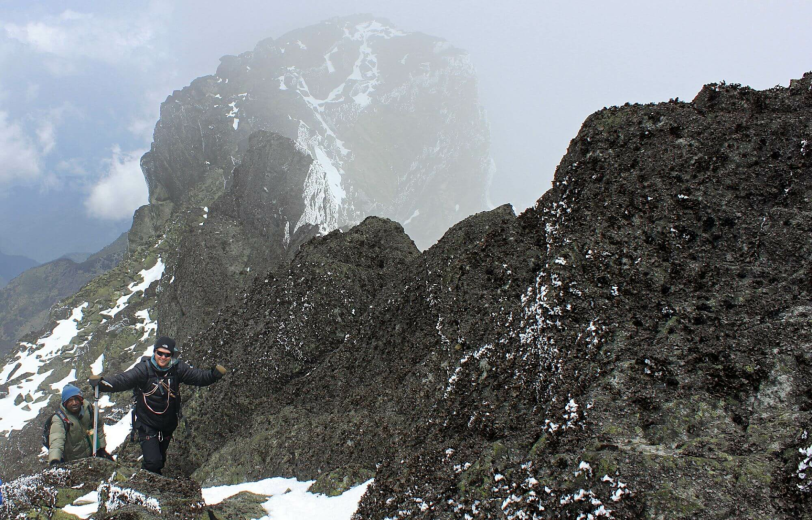
The Short Answer, and Why It Needs Unpacking.
Yes, there is snow on the Rwenzori Mountains. Permanent snow and ice cover the highest peaks of the range year-round, and fresh snowfall dusts the upper slopes in any month of the year. But whether you will see it depends on a single crucial variable: how high you trek.
The Rwenzori is a mountain of radical vertical contrasts. From the warmth of the forest at the trailhead to the glacier ice at the summit of Margherita Peak, the mountain spans five distinct ecological zones, each with its temperature, vegetation, and weather character. Snow that is permanent, touchable, and walkable does not appear until you are above approximately 4,500 meters. Below that, you may see snowfields as distant white shapes on the skyline or wake to find a light frost dusting the afro-alpine camps after a cold night, but the immersive snow experience belongs entirely to the summit zone.
The truth is that many trekkers who visit the Rwenzori region fail to reach the snowline. They have extraordinary experiences in the forest and moorland zones, encounters they describe as among the most beautiful of their lives, but they return from the mountain without having touched the ice. That is not a failure. The lower Rwenzori is magnificent in its own right. But for those who came specifically for the snow on the Equator, clarity about what it takes to reach it is the most useful thing this guide can provide.
How Does Snow Exist on the Equator? The Science of Rwenzori’s Ice
Altitude as the Great Equaliser
The fundamental reason for snow on the Equator is altitude. As air rises, it cools at a rate of roughly 6.5°C per thousand meters under dry conditions and somewhat less under the moist conditions that prevail on the Rwenzori. Across the 3,500 meters of vertical gain between the park gate and the summit of Margherita Peak, that temperature drop amounts to somewhere between 14°C and 20°C, sufficient to carry you from the warm, humid tropics into a world of permanent ice, regardless of your latitude.
At 5,109 meters above sea level, Margherita Peak on Mount Stanley sits well above the altitude at which air temperatures are cold enough to maintain permanent ice and snow year-round. The summit temperature on a typical morning ranges between -5°C and -15°C, and the glaciers have persisted there, albeit in dramatically reduced form, for thousands of years. The mountain’s position on the Equator means it receives intense solar radiation, which would ordinarily melt ice rapidly, but the Rwenzori’s persistent cloud cover and its exceptional moisture supply create a sheltered, perpetually cold microclimate in the summit zone that preserves the ice even at equatorial latitudes.
A Mountain That Makes Its Own Weather
Part of what gives the Rwenzori its permanent snow is the same quality that gives it its legendary rainfall: the mountain acts as a weather-generating machine rather than simply a recipient of the regional climate. Warm, moisture-laden air sweeps in continuously from the vast Congo Basin to the west, rises against the mountain’s flanks, cools, and falls as the most intense precipitation of any mountain range in Africa. Higher up, that precipitation falls as snow. The snowpack on the Stanley massif, on Mount Speke, and on Mount Baker is maintained not just by the temperature but by this continuous supply of moisture from the west, a climatic process so reliable that the ancient geographers who first heard reports of these mountains quite reasonably concluded that their snowmelt must be the source of the Nile.
They were not entirely wrong. The Rwenzori’s reputation as the Mountains of the Moon and its enduring mystique rest partly on this paradox: a range so wet that it grows perpetual ice on the Equator, feeding rivers that cross an entire continent.
Where Is the Snow? A Zone-by-Zone Guide to the Rwenzori’s Vertical World
The Montane Forest Zone (1,600m – 2,500m): Warmth, Mist, and Zero Snow
Your first days on any Rwenzori trek, whether you enter via the Central Circuit Trail from Nyakalengija or the Kilembe Trail from Kasese, are spent in the montane forest, and they feel about as far from snow as any environment on Earth. Temperatures here range from 15°C to 24°C during the day. The air is saturated with humidity. Enormous ferns line the trail, orchids cling to moss-draped branches, and the sound of water dripping, trickling, and rushing from waterfalls fed by the continuous rainfall above fills every quiet moment.
There is no snow here, and no prospect of it. The forest zone is a fully tropical environment, and the trekking challenge in this section is not cold but mud, humidity, and the constant moisture that permeates everything. On fine mornings, what you can see from clearings in the forest is the white of the upper massifs shining above the cloud line— distant, sharp, and impossibly white against a tropical sky. For many trekkers, that first glimpse of the snowfields from far below is one of the journey’s most powerful moments. Knowing you will reach your goal if you keep going improves every step.
The Heather and Moorland Zone (2,500m – 3,800m): Cold Arrives, Snow Stays Away

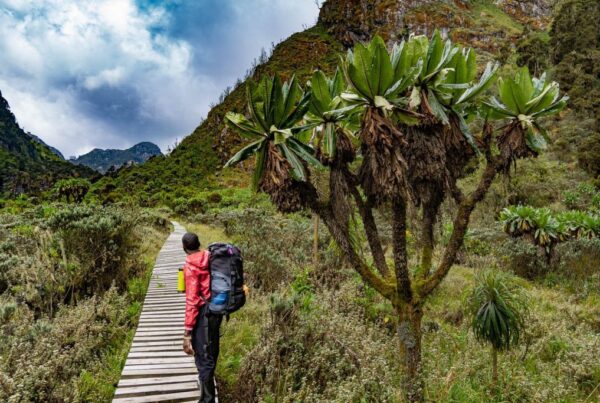
As you climb through the bamboo and into the giant heather zone, the forest canopy drops away and the character of the mountain changes entirely. Giant Erica arborea trees line the open moorland, their gnarled, lichen-draped branches reaching six meters above the trail line. The temperature drops to between 5°C and 15°C during the day, and on cold, clear nights the camp thermometers at John Matte Hut (3,414 m) hover just above freezing. Morning frost is common on exposed surfaces. Tufts of grass are occasionally edged with ice crystals at dawn. However, proper snow that has accumulated does not generally appear in this zone.
What you will encounter here, increasingly, is the cold that announces the snow zone above. And something else that trekkers consistently find as striking as the snow itself: the Rwenzori’s famous boglands. The Bigo Bog, which the Central Circuit crosses at around 3,400 meters, is a vast, saturated peatland. a spongy, waterlogged world where every step requires careful placement and where the ground holds centuries of rainfall in its dark, fibrous body. This place is the mountain at its most alien, and for many trekkers the bog is the single most vivid memory of the entire expedition, more visually arresting, in its way, than any other section of the route.
The Afro-Alpine Zone (3,800m – 4,500m): The Last World Before Ice
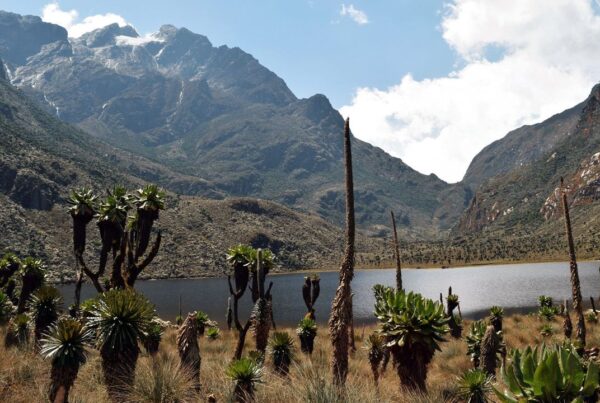
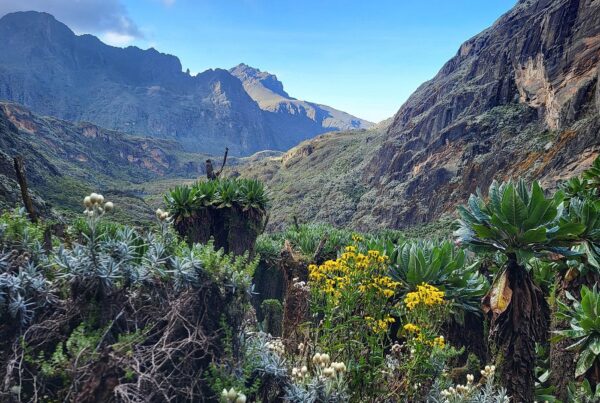
Above 3,800 meters, the Rwenzori reveals the landscape feature that surprises every first-time visitor: the giant groundsels and giant lobelias that define its Afro-alpine zone. Senecio adnivalis, the giant groundsel, grows to eight or ten meters in the valley floors, its cabbage-like rosette of leaves perched atop a thick, rough-barked trunk like something designed by a botanist with too much imagination. Lobelia wollastonii stands in sentinel rows along the ridgelines, its towering flower spike reaching skyward from a rosette of leaves that are themselves the size of a small shrub. These plants exist nowhere else on Earth in this form. They are one of the most amazing sights in African trekking, best seen in the mist and cold of the Afro-alpine zone.
Temperatures here range from -2°C to +8°C in the day, and overnight at Bujuku Hut (3,977 m), they drop regularly to -4°C or below in the dry season. Light snowfall is possible at any time of year in this zone, and on cold mornings after a clear night, the groundsel rosettes and the moorland grasses are sometimes frosted into a pale, crystalline version of themselves that vanishes within an hour of sunrise. The result is the closest thing to a snow experience available before reaching the summit zone—not the sustained glacier-depth snowfields above, but something transient and beautiful that the Afro-alpine zone produces on its coldest mornings.
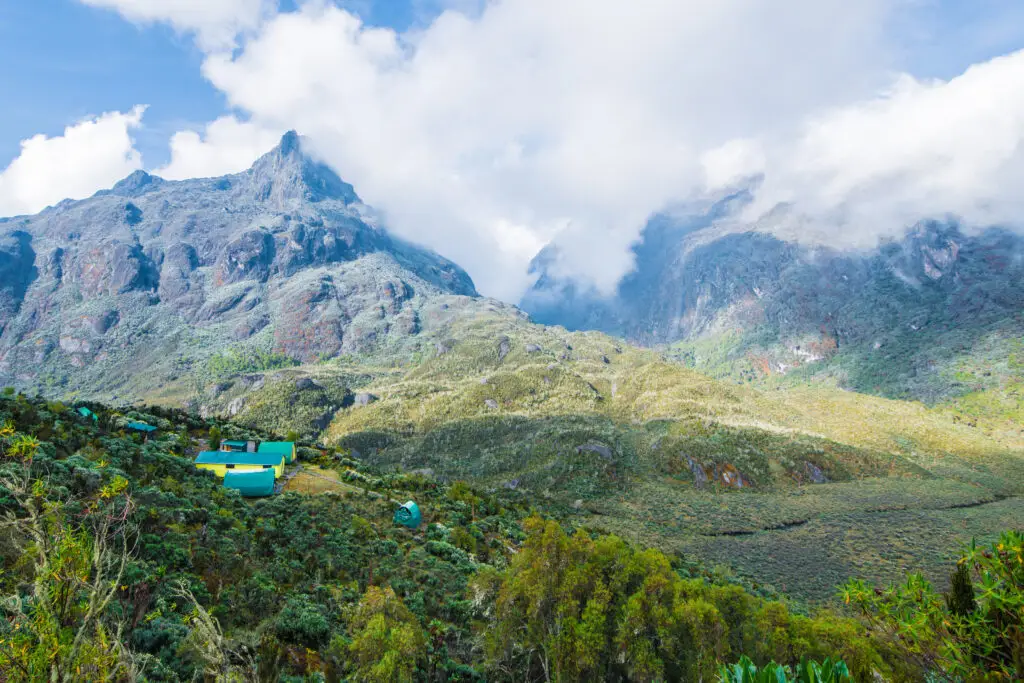
From the camps in this zone, particularly from the ridge above Bujuku toward the Elena approach, the glaciers of the Stanley massif are visible in clear conditions as a wall of blue-white ice hanging impossibly above the valley. This is the view that makes the summit feel real rather than theoretical. And for trekkers who reach the Afro-alpine zone, it fundamentally changes the nature of their relationship to the mountain, as they begin to experience the harsh realities of high-altitude trekking and the breathtaking beauty of the glaciers that surround them.
The Summit and Glacier Zone (4,500m – 5,109m): Snow, Ice, and the Edge of the World
Elena Hut at 4,541 meters is where the mountain transforms completely. You step outside on the morning of summit day, usually before 3am, in darkness, in temperatures between -5°C and -10°C, and the ground under your boots has changed. Ice crackles at the edges of puddles. The rocky slopes above the hut are dusted or plastered with snow. And ahead of you, the glacier, the thing that defines Margherita Peak and Mount Stanley as unlike any other mountain in equatorial Africa, begins within the first hour of climbing.
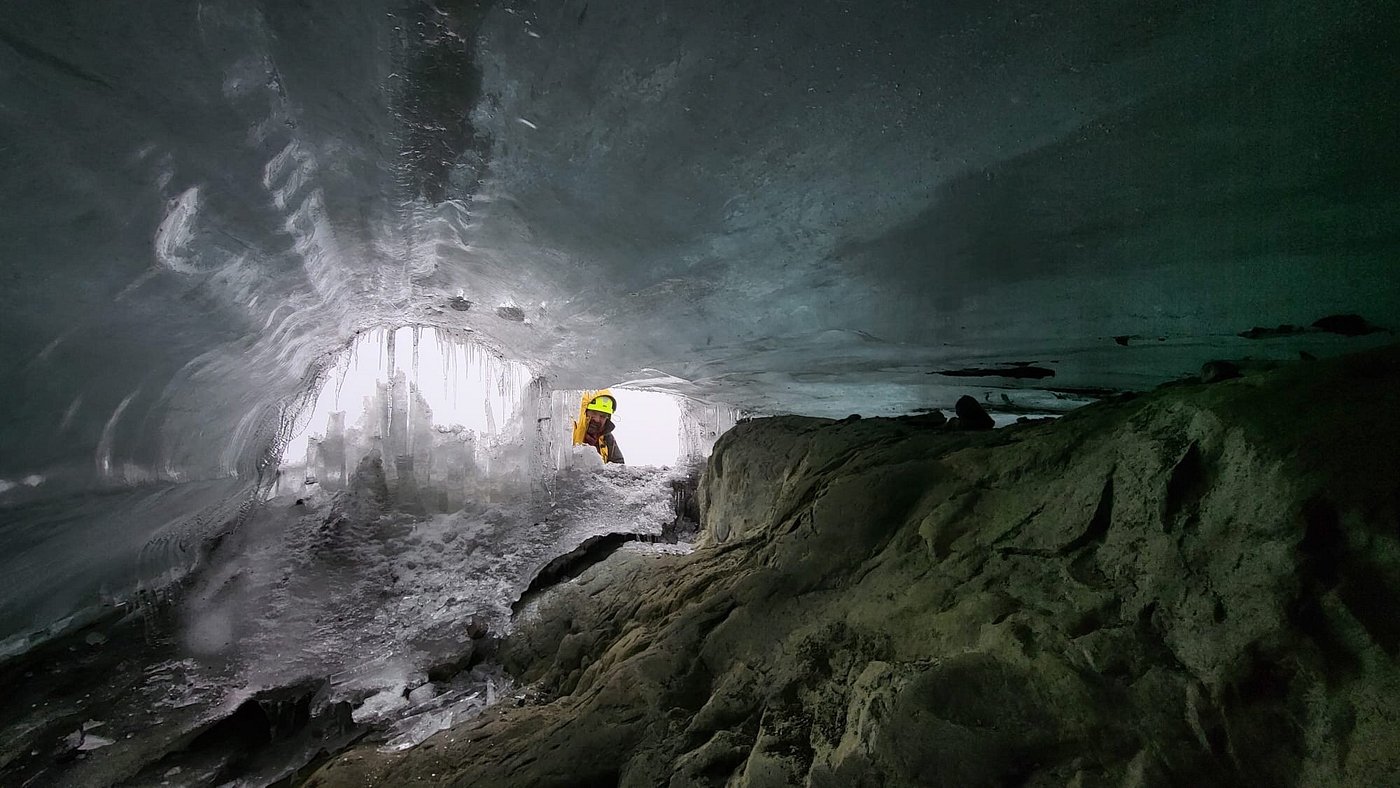
The glacier crossing on the summit approach to Margherita is not a footnote or a brief formality. It is a sustained experience of moving across equatorial ice, crampons biting into the surface, an ice axe in hand, your rope team moving in coordinated single file across a slope of hard snow and blue ice that has been here, at this latitude, since before any living person was born. The snow above the glacier and on the final ridge to the summit is permanent, rebuilt continuously by the mountain’s exceptional precipitation. On the summit of Margherita itself, you are standing on the Equator, in snow and ice, at 5,109 meters, with the glaciated ridges of the Stanley massif spread around you and, on a clear day, the vast shadow of the mountain extending west across the Congo forest below. There is no experience in African mountaineering that compares to it.
Will You See Snow? Matching Your Trek to the Experience You Want
If You Have Two to Four Days: Beautiful, But No Snow
Some of the most joyful and memorable Rwenzori experiences happen entirely below the snow line, and it is worth saying clearly that a shorter lower-mountain trek is not a compromise; it is a genuinely extraordinary experience in its own right. Treks like the 2-Day Lake Mahoma Loop, the 3-Day Mahoma Loop Hike, and the 4-Day Rwenzori Waterfalls Hike on the Kilembe Trail operate within the forest and lower heather zones, where the ecological richness of the mountain, its waterfalls, its extraordinary birds, its endemic plants, and the deep atmospheric quality of a forest that receives more rainfall than almost any other mountain in Africa are most dramatically on display.
You will not touch snow on these treks. But you will see it white and luminous on the skyline above, visible from ridges and clearings, and you will understand with enormous clarity why people climb toward it.
If You Have Five to Six Days: Into the Afro-Alpine, with Snow in Sight
Five or six days on the mountain brings you into a genuinely different category of experience. The 5-Day Bujuku Hike carries you deep into the Afro-alpine zone, through the Bigo Bog and up into the Bujuku Valley, where the glaciers of the Stanley massif are visible from camp and the giant groundsels and lobelias make the landscape feel genuinely unreachable from anywhere below. You will experience the cold nights of the upper mountain, the frost on the groundsel leaves at dawn, and the increasingly dramatic views of the ice above. You stop just short of the glacier itself, but you arrive close enough to understand viscerally what the summit involves.
The 5-Day Mount Speke Trek and the 6-Day Weismann Peak Expedition on the Kilembe Trail both reach significant high-altitude summits on massifs adjacent to the main Stanley glacier system. These summits carry their own permanent snowfields and offer genuine high-altitude summit experiences with snow underfoot, ice in the surrounding landscape, and cold that is unambiguous without requiring the full technical demands of the Margherita glacier crossing.
If You Have Seven Days or More: You Walk on the Equatorial Glacier
Seven days or more is where the full snow and glacier experience becomes available. The 7-Day Central Circuit Trek, our most booked itinerary, and with good reason, completes the full Central Circuit loop through all five ecological zones, stages a night at Elena Hut, and then makes the summit push to Margherita Peak across the glacier. This trek is where you cross permanent equatorial ice in crampons, reach the snow-covered summit at 5,109 meters, and stand in a world that most people never imagine existing on this continent.
For those who want to extend the snow experience across multiple peaks, the 8-Day Margherita Summit on the Kilembe Trail approaches the glacier from the south on a more remote, more demanding route through the Nyamwamba Valley. The 8-Day 3-Peaks Trek adds the glaciated summits of Mount Speke and Mount Baker to the Stanley summit, creating three separate snow and ice experiences across three of the range’s highest massifs. And for the most committed mountain traveler, the 13-Day 6-Peaks Expedition spans all of the major high-altitude massifs —Mot Stanley, Mount Speke, Mount Baker, Mount Emin, Mount Gessi, and Mount Luigi di Savoia offering an extended snow and high-altitude experience that has no equivalent anywhere in equatorial Africa.
The Best Season to See Snow on the Rwenzori
When the Snow Is Most Accessible
The Rwenzori’s snow is permanent, which means it is technically present in every month of the year. But the snow’s accessibility, the conditions on the glacier, and the likelihood of reaching the summit with visibility vary throughout the year.
The two drier windows, June through August and December through February, offer the most reliable conditions for summit attempts. During these periods, rainfall intensity on the upper mountain is reduced, the glacier approach is firmer and more predictable, and the windows of clear sky that allow summit views are somewhat more frequent. Summit temperatures in the dry season range from -5°C to -12°C on a typical pre-dawn departure from Elena Hut, and conditions are cold but manageable with the right gear. For the snowfield and glacier experience specifically, these are the windows most likely to deliver what you came for.
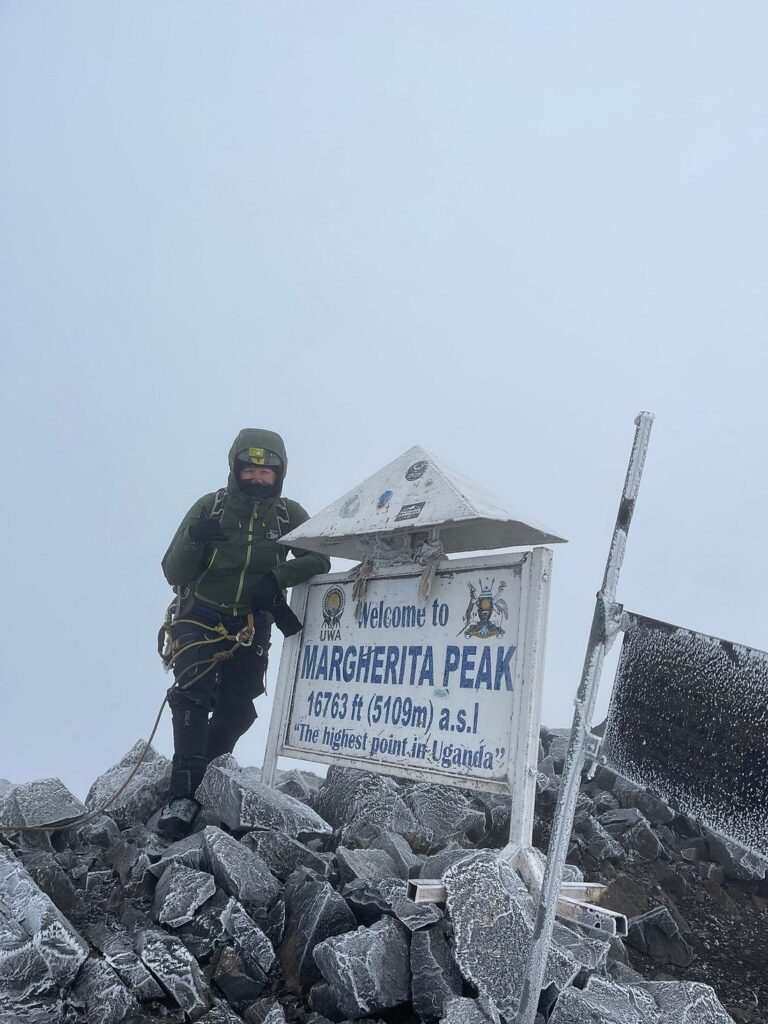
The two wetter seasons, March through May and September through November, bring heavier precipitation at all altitudes, which means more fresh snow on the upper mountain but also more frequent and sustained cloud cover, a higher probability of storm events on the summit approach, and wetter, colder conditions on the glacier that require more careful cold management. The snow experience itself is, in some ways, more dramatic in the wet season; fresh snowfall on the upper mountain intensifies the visual contrast between the white summit and the cloud-wrapped valley below, but the summit windows are shorter and less predictable. The conditions involved in wet-season summit trekking are explored in depth in our complete guide to trekking the Rwenzori in the rainy season.
The Question of Fresh vs. Permanent Snow
Fresh snowfall on the Rwenzori can occur at any altitude above approximately 4,000 meters in any month of the year. After a cold, clear night, the Afro-alpine camps sometimes wake to a light dusting of snow on the groundsels and the surrounding ridges, a transient, beautiful transformation of the landscape that vanishes by mid-morning. On the glacier itself, fresh snowfall can dramatically improve or complicate conditions depending on depth and whether it has consolidated over the ice beneath. Our guides assess overnight snowfall conditions before departure on summit day and adjust timing and route choices accordingly. This is precisely the kind of local, real-time judgment that cannot be replicated by any amount of pre-trip research.
The Glaciers: What Remains and Why You Shouldn’t Wait
A Snow and Ice World in Its Final Decades
The Rwenzori’s glaciers are vanishing. This is the hardest truth about the mountain’s snow experience, and anyone considering a Margherita summit should know it clearly before they plan. The equatorial ice fields that have defined these peaks since before human memory, collapsing at a rate that science has been documenting for decades, have already lost more than 80 percent of their coverage since the late nineteenth century. What remains is still magnificent, still real, still glacier ice that you can cross in crampons and stand beside in astonishment. But the glacier that exists today is a fraction of what stood here a century ago, and projections suggest the remaining ice may be entirely gone within ten to fifteen years.
This creates a specific and urgent kind of motivation for the Rwenzori snow experience. You are not simply planning a mountain trek. You are planning a visit to one of the last surviving equatorial glacier systems on Earth, in the window of time during which it still exists. The snow on Margherita Peak will remain for years, but the summit temperature at 5,109 meters ensures that the dramatic, sprawling glacier crossing, which is central to the summit day experience, is shrinking with every decade. The trekkers who went in 2005 crossed more ice than the trekkers who go today. The trekkers who go today will cross more ice than those who go in 2035. There is no other accurate way to frame it: the trip is a now-or-never experience for anyone who wants to stand on equatorial glacial ice.
What It Actually Feels Like to Walk on Equatorial Snow
The Particular Strangeness of Snow at the Equator
The snow experience on Margherita Peak is unique and cannot be fully described or replicated on other mountains. It is not merely the physical fact of snow and ice; you could find that in the Alps, in Patagonia, and in half a dozen Himalayan ranges. It is the specific cognitive vertigo of encountering snow on the Equator after starting your journey in a warm, dripping tropical forest four days earlier.

You left Uganda at the trailhead. You walked through cloud forest, through bog, through a landscape of alien giant plants, through increasingly cold and mist-shrouded moorland, and now you are standing on a glacier in Africa, on the Equator, in crampons, roped to your guide, watching the pre-dawn stars fade over the Congo Basin. Below you, somewhere beneath the cloud, is the same tropical forest you walked through four days ago. Above you is the summit at 5,109 meters, a final ridge of wind-packed snow, and beyond it, nothing but sky. The snow under your boots is permanent. It has been here through the entirety of recorded human history. It may not be here a generation from now. This is the experience the Rwenzori offers, and there is nothing else in Africa quite like it.
Who Is the Snow Experience on the Rwenzori Right For?
An Honest Assessment
The Rwenzori’s complete snow experience, which includes glacier crossing, summit push, and equatorial ice, is not designed for every trekker, and pretending otherwise would do you a disservice. The summit demands multi-day hiking at altitude across genuinely challenging, technically complex terrain. It requires comfort with cold, sustained wet conditions, and a physical fitness baseline that goes beyond an occasional weekend walk. It asks you to wake at 2am, dress in sub-zero darkness, and move for ten to sixteen hours through conditions that your body will find demanding and your mind will need to manage actively.
The hiker who thrives on Margherita has hiked at altitude before, knows that discomfort is an experience to be managed, and is truly motivated by the goal of standing on glacial ice on the Equator not just the idea of it but the physical, worked-for reality of it. If you have completed a multi-day trek elsewhere and found the challenge rewarding rather than punishing, a well-guided Rwenzori summit is within your reach.
If you are newer to high-altitude trekking, the mid-mountain options, the 5-Day Bujuku Hike, the Weismann Peak summit, and the Mount Speke ascent provide extraordinary Afro-alpine experiences that include snow views and high-altitude cold without the full technical demands of Margherita. They are not consolation prizes. They are experiences that many veteran trekkers consider among the finest of their careers.
Our guides have assessed and coached trekkers of every experience level and background. If you are genuinely uncertain where you fall on the readiness spectrum, the difficulty guide for Rwenzori trekking and the fitness requirements guide lay out the honest physical expectations at every level. And our page for first-time Rwenzori climbers addresses the specific question of whether a less experienced trekker can realistically reach the summit with a thorough and accurate answer.
Preparing for the Snow: What You Need to Know Before You Go
Gear, Cold, and the Technical Side of the Glacier
Walking on equatorial snow on Margherita Peak is not technically difficult for a trekker with a competent guide beside them, but it does require specific equipment that you probably lack if you have never done glacier travel. Crampons, an ice axe, a harness, a helmet, and a rope are all used on the summit approach, and our guides carry and manage this technical equipment as part of every summit expedition. What you bring yourself is the warmth and waterproofing system that keeps you functional throughout.
We provide a detailed breakdown that outlines the necessary technical gear, when to use it, what our team provides, and what you should expect from us. The critical truth about cold in the snow zone is that the Rwenzori’s -5°C to -15°C summit temperatures feel colder than equivalent temperatures on drier mountains because the persistent moisture and wet cold extract heat from the body far more efficiently than dry cold. The complete temperature analysis across every altitude zone, including what wind chill does to felt temperatures on the glacier, is in our Margherita Peak temperature and cold-weather guide, which covers everything from sleeping bag ratings for Elena Hut to the layering system for summit day.
Medically, the combination of altitude, cold, and sustained wetness creates a specific risk profile that every summit trekker should understand before arriving at the mountain. Hypothermia, frostbite, trench foot, and altitude sickness are all real considerations on a Margherita summit, not constant dangers, but risks that proper preparation eliminates. The comprehensive medical guide for Rwenzori trekking covers every condition in clinical detail and is essential reading before any summit attempt.
Regarding safety broadly, whether this mountain is genuinely safe to attempt and what the actual risk profile looks like compared to how it sounds in the description, the expert safety guide for Rwenzori trekking gives a balanced, experience-based assessment that goes well beyond reassurance.
Acclimatisation and Summit Success
Your itinerary’s ability to acclimate your body before summit day is more important than gear or fitness. Rushing the ascent to save a day or two is the most common reason for summit failure on the Rwenzori, and it is entirely avoidable with good planning. The question of how many days it actually takes to reach Margherita Peak, including the acclimatization logic behind the recommended schedules and the honest data on what the summit success rate actually is, will help you calibrate your expectations before committing to a specific itinerary length.
The Rwenzori Snow and the Wider Uganda Experience
Beyond the Summit: A Country of Astonishing Contrasts
The Rwenzori snow experience sits within the broader context of Uganda’s extraordinary natural offerings, and most international trekkers find that the most rewarding visits combine the mountain with at least one of the country’s other world-class wildlife experiences. The contrast between standing on equatorial snow at 5,109 meters and, two days later, sitting five meters from a mountain gorilla family in the jungle of Bwindi both experiences in the same small country, within a few hours’ drive of each other is one of the most dramatic natural contrasts available anywhere in Africa.
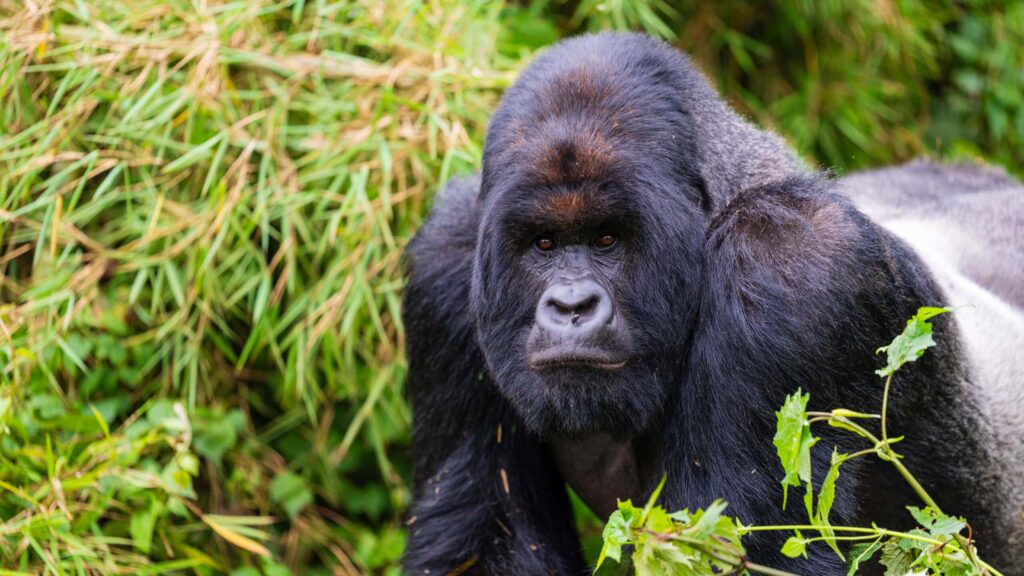
You can strategically align the timing of a Rwenzori trek with significant cost savings on the wildlife side of the itinerary. Uganda’s low season for gorilla and chimpanzee trekking is the months of April, May, and November, which correspond to the wetter periods on the Rwenzori and carry permit discounts of $200 per person. The full details of those savings for gorilla trekking permits and chimpanzee tracking permits are worth considering if your travel dates are flexible. Our Uganda safaris page explains the range of experiences we combine for international clients, providing a broader look at how to build the ideal itinerary around your Rwenzori trek.
Frequently Asked Questions: Snow on the Rwenzori Mountains
Is there really permanent snow on the Rwenzori Mountains?
Yes. Margherita Peak on Mount Stanley, Mount Speke, and Mount Baker all carry permanent snow and glacier ice year-round. The glaciers persist because the summit altitude above 4,800 meters on the major peaks maintains temperatures below freezing for most of the year, and the Rwenzori’s exceptional moisture supply continuously replenishes the snowpack. The glaciers are retreating due to climate change but remain present and crossing current summit routes, although their extent is diminishing as temperatures rise and precipitation patterns change.
At what altitude does snow begin on the Rwenzori?
Permanent snow and glacier ice begin at approximately 4,500 meters on the Rwenzori’s highest massifs. Light snowfall and overnight frost can occur as low as 3,800 meters in the Afro-alpine zone, and frost on exposed surfaces is possible at John Matte Hut (3,414 m) on cold dry-season nights. Fresh snow after overnight precipitation can occur above 4,000 meters in any month of the year.
Do I have to summit Margherita Peak to see snow?
No, but you need to reach the summit zone, above approximately 4,500 meters, to experience the glacier and sustained snowfield. The afro-alpine zone, located between 3,800 and 4,500 meters, offers views of the snow on the surrounding massifs and occasional light frost or fresh snowfall at camp level, but the glacier itself, which requires crampons to walk on, is part of the summit approach. If touching or walking on snow is specifically your goal, a summit-length itinerary of seven days or more is the right choice.
Will I see snow on a 7-day trek?
Yes, a 7-day Central Circuit Trek includes a summit attempt on Margherita Peak with a full glacier crossing. This is the most popular itinerary for trekkers specifically seeking the snow experience and provides enough time for adequate acclimatization and a summit push from Elena Hut.
What months have the best snow conditions on the Rwenzori?
The dry season windows of June through August and December through February offer the most reliable conditions for reaching the snow—reduced storm frequency, firmer glacier surfaces, and marginally better summit visibility. That said, the upper mountain carries permanent snow year-round, and fresh snowfall is possible in any month. The wet season (March–May, September–November) brings more fresh snow to the upper mountain but also more unpredictable summit weather. The full seasonal analysis lives in our detailed weather guide for the Rwenzori.
Are the Rwenzori glaciers disappearing?
Yes. The Rwenzori’s glacier coverage has declined by more than 80 percent since the late nineteenth century, driven by rising regional temperatures, changes in cloud cover, and the inherent fragility of small tropical glaciers near their survival threshold. Forecasts indicate that the remaining ice may disappear completely in ten to fifteen years. The glaciers are still present and still crossable on current summit routes, but their lifespan is a diminishing window, and the urgency for those who want the equatorial glacier experience is real.
Is the Rwenzori snow experience comparable to other African mountains?
The Rwenzori’s snow experience is distinct from both Kilimanjaro and Mount Kenya in ways that go beyond simply altitude. Kilimanjaro’s summit plateau is accessible via walk-up routes with no technical glacier crossing required. Mount Kenya’s summit routes are technical but dry by comparison. The Rwenzori’s summit approach combines genuine glacier travel with the extraordinary ecological richness of the lower mountain’s five ecological zones, endemic giant flora, persistent mist, and atmosphere in a way that neither of the other two major African summits replicates. A detailed scientific and practical comparison of all three mountains lays out the full case for anyone building an African mountaineering itinerary.
Do I need special equipment to walk on the snow?
Yes. The glacier crossing on the Margherita summit approach requires crampons, an ice axe, a harness, a helmet, and a rope. Our guides manage all technical equipment and provide a full briefing on glacier travel before departure from Elena Hut. Trekkers need to arrive with appropriate cold-weather clothing and waterproof gear. The full breakdown of what technical equipment is needed and when covers every item in detail.
How cold is it in the snow zone on the Rwenzori?
In the glacier and summit zone above 4,500 meters, daytime air temperatures typically range from -5°C to -15°C, with wind chill reducing felt temperatures to -20°C or below in exposed conditions. Elena Hut, the summit staging camp at 4,541 m, sees overnight temperatures of -3°C to -8°C in the dry season. The complete temperature guide for every zone of the Rwenzori covers conditions from the forest trailhead to the summit in full, including sleeping bag recommendations, layering systems, and wind chill data.
Can a first-time high-altitude trekker reach the snow?
With appropriate preparation, a properly paced itinerary, and expert guiding, motivated first-time high-altitude trekkers can reach the Margherita summit and its snow. The complete guide for first-time Rwenzori climbers addresses fitness requirements, preparation timelines, and realistic expectations in full detail. We assess every trekker individually, speak to our team before committing to an itinerary, and give you an honest, personalized evaluation of your readiness.
How does Rwenzori snow compare to the Kilimanjaro experience?
On Kilimanjaro, the summit snowfields are largely remnant glacier rather than active, dynamic ice, and reaching them requires sustained altitude tolerance but no technical glacier skills. On the Rwenzori, the summit approach involves active glacier travel with crampons and rope, making it technically more demanding but also, for those who complete it, more authentically a mountaineering experience. The expert comparison of Rwenzori and Kilimanjaro’s difficulty makes the full case, and our dedicated Kilimanjaro page provides additional context for those considering both summits as part of an African mountaineering journey.
The Snow Is Waiting, But Not Indefinitely
The Rwenzori’s equatorial snow has persisted at these summits for millennia. It is one of the most astonishing natural phenomena in Africa—and one of the most quietly urgently finite. The glaciers that give the snow experience its full drama are leaving, which poses a significant threat to the unique ecosystem and water supply in the region, particularly as they are crucial for maintaining the local climate and supporting biodiversity. Not immediately. Not this season. However, it will be within the trekking lifetime of anyone who reads this article today.
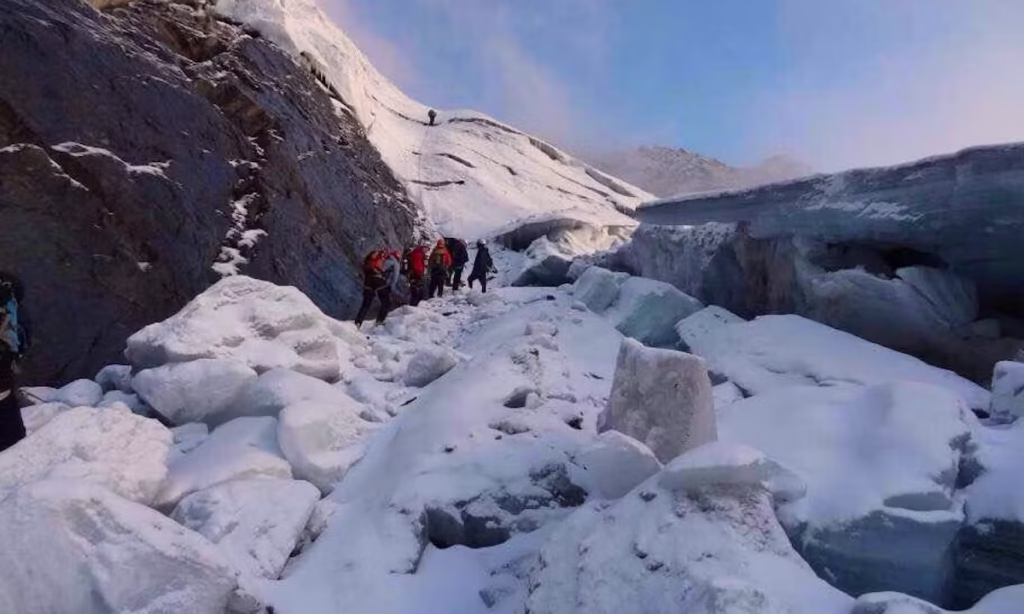
What remains is still magnificent. The snow on Margherita Peak is real, cold, and hard underfoot. The glacier crossing is a genuine piece of alpine mountaineering conducted on the Equator. The view from the summit of glaciated ridges, of the Congo cloud forest far below, of a mountain range that looks nothing like anything else in Africa, has not diminished, despite everything the climate has taken from it. But the window for the complete experience, with active glacier ice in full dramatic form, is narrowing.
At Rwenzori Trekking Safaris, we build every expedition around the individual trekker. Not a fixed group. This is not a generic itinerary designed to accommodate the average traveler. A plan tailored to your experience level, fitness, available days, and specific goals, including a route and schedule designed to give you the best realistic chance of standing on equatorial snow.
Start Planning Your Rwenzori Snow Trek
Please reach out to our team today and let us know what you are looking for. We respond personally to every inquiry, usually within 24 hours, with an honest assessment of what your window allows and a proposed itinerary built specifically for you.
If you want to keep exploring before you reach out, browse our full range of Rwenzori trek packages, check available routes and departure dates, read through our expert answers to the most common trekking questions, learn about our guides and what makes our approach different, or dive into the full story of the Rwenzori Mountains, the range that carries snow on the Equator, that built glaciers in the tropics, and that is waiting, right now, for the right trekker to come and see it.