Find out exactly what climbing gear you need for a Rwenzori trek, what you must bring yourself, and what you can rent at the trailhead. Expert advice from Rwenzori Trekking Safaris Uganda’s specialist mountain guides.
There is a question that arrives in our inbox almost every week, usually typed at a late hour, often by someone who has just watched their first footage of the Rwenzori’s ice-draped ridgelines and spent two hours in a gear shop rabbit hole before deciding to ask a real person instead. The question is: Do I need to bring all this gear, or can I get it when I arrive?
It’s a reasonable question, and since the Rwenzori is more than just a single mountain experience, the truth is more complex than most gear blogs will tell you. They are many, stacked inside a single range, spanning a 3,500-meter vertical journey from lowland equatorial rainforest to permanent glaciers sitting on the equator. The gear you need for a three-day walk through the Mahoma forest is profoundly different from what you need to stand on Margherita Peak at 5,109 meters. And what you must bring yourself is different again from what you can legitimately rent from us before your trek begins.
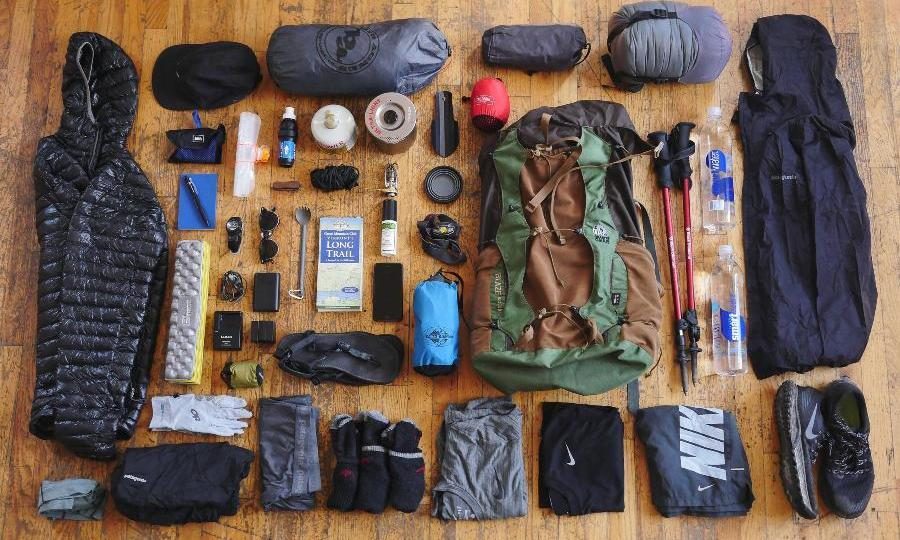
This guide is written for trekkers who want a clear, honest, experience-based answer, not a generic packing list copied from a Kilimanjaro blog and relabeled. Whether you are flying in from London, New York, or Nairobi with a full quiver of alpine gear, or you are a first-time trekker wondering whether your weekend hiking boots will suffice, this is the most complete resource we have ever put together on Rwenzori climbing gear. Read it before you pack a single thing.
Why the Rwenzori’s Gear Requirements Are Uniquely Complex
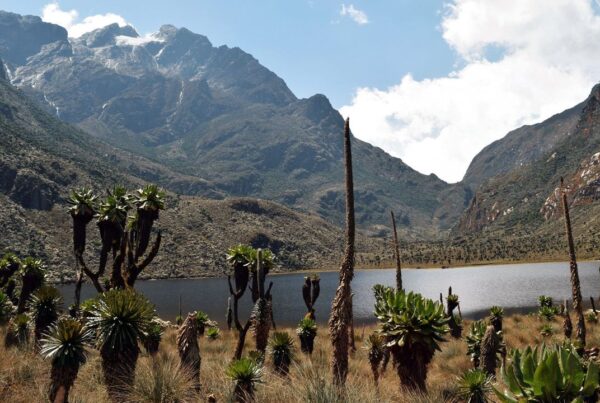
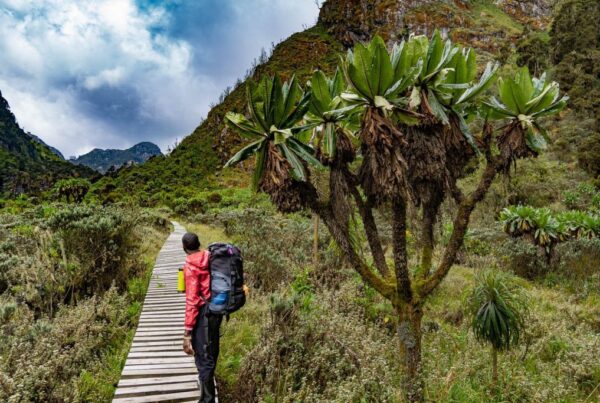
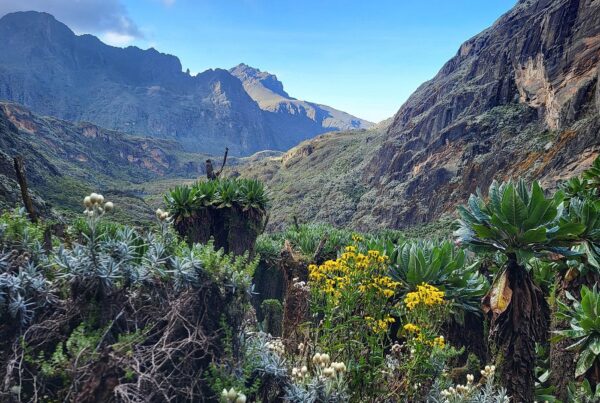
Most mountains ask you to prepare for one type of environment. The Rwenzori asks you to prepare for five. A trekker walking from the Nyakalengija trailhead on the Central Circuit to the summit of Mount Stanley passes through dense montane rainforest soaked by near-daily rainfall, bamboo zones where the trail surface is slick organic matter, moorland bogs where you can sink knee-deep without warning, Afro-alpine heath where night temperatures fall below freezing, and finally glaciated high-alpine terrain where permanent ice and crevasse risk make technical equipment a genuine necessity rather than a precaution.
Each zone has a main hazard, gear priority, and equipment failure type that can ruin your trip if you don’t plan. The persistent wetness of the lower mountain will destroy inadequate waterproofing within hours. The cold of the upper camps will make an insufficient sleeping bag a miserable experience. The glaciers above Elena Hut will be genuinely dangerous without crampons and the ability to use them.
This aspect is also why the Rwenzori rewards trekkers who choose a personalized experience over a generic group package. When you trek with Rwenzori Trekking Safaris, we do not hand you a one-size-fits-all gear list and send you shopping. We speak with you about your specific route, your specific objective, and your prior experience, and then give you specific, route-calibrated advice. That conversation is where real trip preparation begins, and it is where many trekkers discover they have been overpacking some categories and dangerously underpacking others.
The Short Answer: What You Must Bring, What You Can Rent.
Before going deep into category-by-category guidance, here is the clearest possible answer to the headline question.
You do not have to bring all of your own climbing gear. We maintain a rental equipment pool at our offices, which includes technical items such as crampons, ice axes, helmets, and harnesses. Trekkers who don’t have this gear or don’t want to carry it can rent it from us before or at the start of their trek. This rental equipment is inspected and maintained to our own safety standards before every use, and we will verify fit and function with you before you head up the mountain.
However, there are categories of gear that we strongly recommend you bring yourself. Your boots, in particular, cannot be rented or improvised on arrival. Your waterproof outerwear, your thermal and mid-layers, your sleeping bag, and your personal trekking poles are items that should fit your body, suit your personal thermoregulation (the body’s ability to maintain its core internal temperature), and, critically in the case of boots, be broken in before you arrive. The Rwenzori is not a mountain that forgives new, untested footwear. Blisters and wet feet caused by boot failure account for more ruined Rwenzori treks than any technical hazard.
So the practical answer is this: your clothing, boots, sleeping system, and everyday trekking kit are yours to bring. Your technical summit gear, if your itinerary requires it, can either come with you or be rented from us, with advance arrangement being essential for the latter. We will tell you exactly which items your specific route demands. That specificity is something only a team that guides these mountains weekly can provide.
Gear by Route: Matching Equipment to Your Actual Objective.
Forest and Lower Mountain Routes (Up to ~3,200m)
If your Rwenzori objective involves the forest trails and lower moorland zones, the 3-Day Mahoma Loop, the 4-Day Mutinda Lookout trek via the Kilembe Trail, a short approach day to Nyabitaba Camp, or any route keeping you below the bamboo zone, the gear picture is relatively simple. You need excellent waterproofing, ankle support, and warmth for the night. You do not need crampons, an ice axe, a harness, or a helmet.
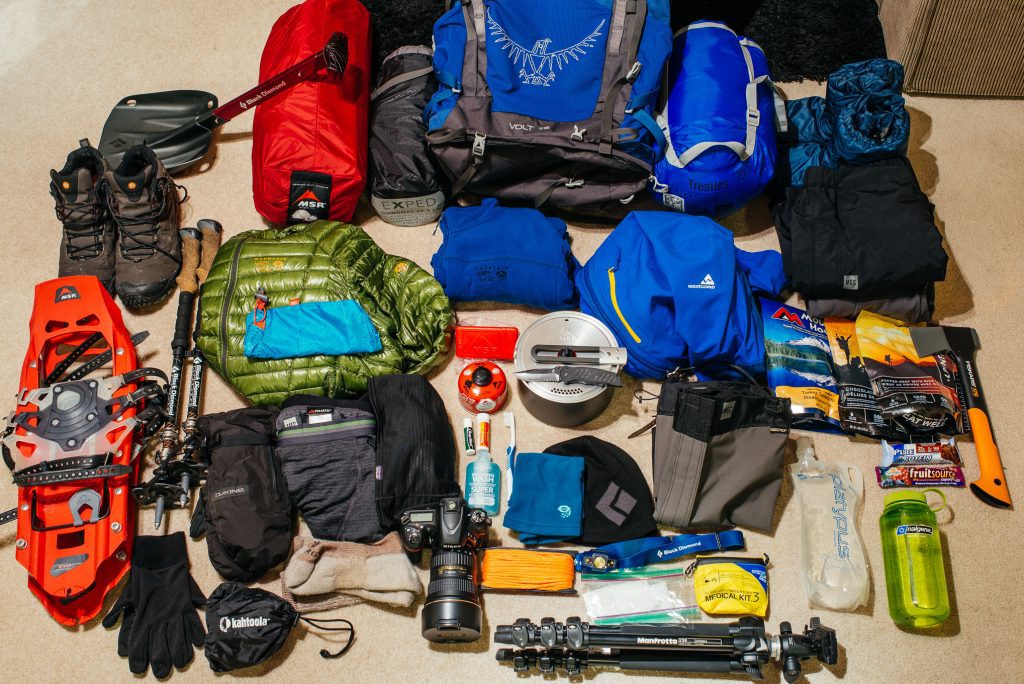
What you genuinely need in this zone: a waterproof jacket and waterproof trousers rated to handle sustained rain across multiple consecutive days (not shower-resistant, not “DWR treated,” genuinely waterproof with taped seams), waterproof hiking boots with ankle support and a lug sole, full-length gaiters, a base layer and mid-layer fleece for evenings and cool mornings, a sleeping bag rated to at least 0°C (32°F), a headlamp with spare batteries, and trekking poles. Porters carry your main pack; a daypack for water, snacks, and layers is all you need to carry yourself.
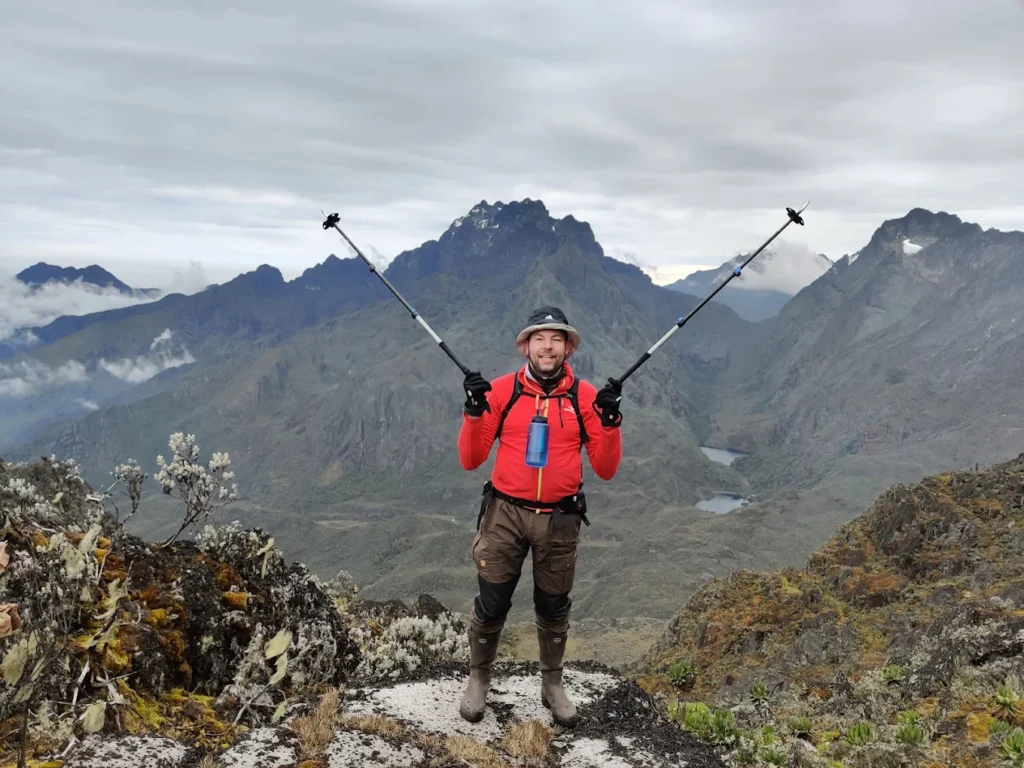
None of these items are particularly exotic, but the quality bar matters more on the Rwenzori than on many mountains because of the relentless wetness. A waterproof jacket that performs adequately in a Scottish hillwalk will be tested harder here. Boots that are “water resistant” rather than genuinely waterproof will leave you with wet feet within the first morning and will stay that way. If you are unsure whether your existing gear meets the bar, write to us before you pack.
Mid-Mountain Routes: Central Circuit and Kilembe Trail Without Summit.
For trekkers completing the classic Central Circuit Trail, the 7-day or 8-day loop that takes you through Nyabitaba, John Matte, Bujuku, Kitandara, and Guy Yeoman camps, or the Kilembe Trail without a technical summit push, the gear requirements step up from the forest routes but remain non-technical in the mountaineering sense. Crampons are not required. Ice axes are not required. Technical rope equipment is not required.
What changes in this zone are the severity of the cold and the altitude at which you are operating. Upper camps on the Central Circuit sit at between 3,900 and 4,372 meters at Freshfield Pass, and the temperatures at night in these camps, particularly at Elena and Kitandara, can drop to -5°C or lower. Your sleeping bag rating matters here. We recommend a sleeping bag rated to -10°C for comfort or -5°C for survival if you run warm; a 3-season summer bag is inadequate. An insulated down or synthetic puffy jacket for camp use, thermal baselayers both top and bottom, and a warm hat and gloves are all non-negotiable at this elevation.
Your boots remain the single most important item. The trail surface on both the Central Circuit and Kilembe Trail is dominated by wet organic terrain, roots, bog, mud, and waterlogged heather moorland, and your boots must be capable of providing sustained grip and waterproofing across six to twelve consecutive days of movement in these conditions. We recommend mid-to-heavyweight waterproof hiking boots that have a Vibram or equivalent lug sole, which provides excellent traction, a full Gore-Tex membrane lining for waterproofing, and genuine ankle support for stability. A Vibram sole is designed with a specific tread pattern to enhance grip on various surfaces, while Gore-Tex is a waterproof and breathable fabric that keeps your feet dry. More than any other piece of kit, boots deserve your budget and your attention.
Summit Routes: Margherita Peak and the Glaciated Peaks
Here is where the gear picture changes fundamentally. For trekkers with their sights on Margherita Peak (5,109 m) on Mount Stanley, or on other glaciated summits including Mount Speke’s Vittorio Emanuele Peak and Mount Baker’s Edward Peak, the mountain demands a technical toolkit that goes beyond anything required on the approach trails below.
The standard Margherita summit approach involves crossing the Stanley Plateau glacier above Elena Hut, navigating snowfields and potentially crevassed terrain, and making the final push to the summit over mixed snow and rock. This is genuine high-alpine terrain. The consequences of inadequate equipment are not discomfort; they are genuine safety risks. A trekker without crampons on glacier ice is not just underprepared in theory; they pose a hazard to themselves and to everyone else on the rope team.
For the technical summit routes, you need to bring specific personal gear, which includes mountaineering boots that work with 12-point technical crampons, those crampons tested at home before you leave, a suitable ice axe that is usually 60–70 cm long, a sit harness, a lightweight climbing helmet, and all the necessary clothing and waterproof gear mentioned for mid-mountain routes, plus an extra down layer for the summit day.
All of these technical items crampons, ice axe, harness, and helmet can be rented from us if you do not own them or prefer not to travel with heavy technical gear. To ensure availability, please book ahead; we cannot guarantee walk-in requests at the trailhead. If you are planning one of our multi-summit expeditions, like the 13-Day Rwenzori 6 Peaks Expedition across Stanley, Speke, Baker, Gessi, Emin, and Luigi di Savoia, we will plan all your gear requirements with you before you travel.
The Five Critical Gear Categories.
1. Footwear: The Decision That Matters Most.
Every Rwenzori guide will tell you that the boot is the most important gear choice you’ll make for this mountain. It is also the one area where rental and improvisation are simply not viable options. Your boots need to be yours, and they need to be broken in.

For non-technical routes, the ideal boot is a mid-to-heavyweight waterproof hiking boot with full ankle support, a Vibram-style outsole with deep lugs, and a genuine Gore-Tex (a waterproof and breathable fabric) or equivalent waterproof membrane. Water-resistant boots, which are those sprayed with DWR (Durable Water Repellent) treatment but lacking a waterproof membrane, will be soaked through within an hour on the Rwenzori’s trails. Look for boots labelled GTX (Gore-Tex) or with an equivalent waterproof membrane designation from the manufacturer.
For Margherita and technical summit routes, you additionally need mountaineering boots compatible with 12-point crampons. Many trekkers on summit itineraries bring two pairs: standard waterproof trekking boots for the lower approach and technical mountaineering boots for the upper mountain. Whatever boots you choose, wear them on multiple full-day hikes before you arrive. The Rwenzori will test your boot fit harder and for longer than any day hike can.
2. Waterproof Outerwear: Your Shield Against the Rwenzori’s Climate
The Rwenzori receives more rainfall than almost any other mountain range in Africa. Rain can arrive at any time, at any altitude, in any season. Your waterproof jacket is not an emergency layer you pull out for storms. It is a daily piece of kit that you will rely on for the entire duration of your trek.
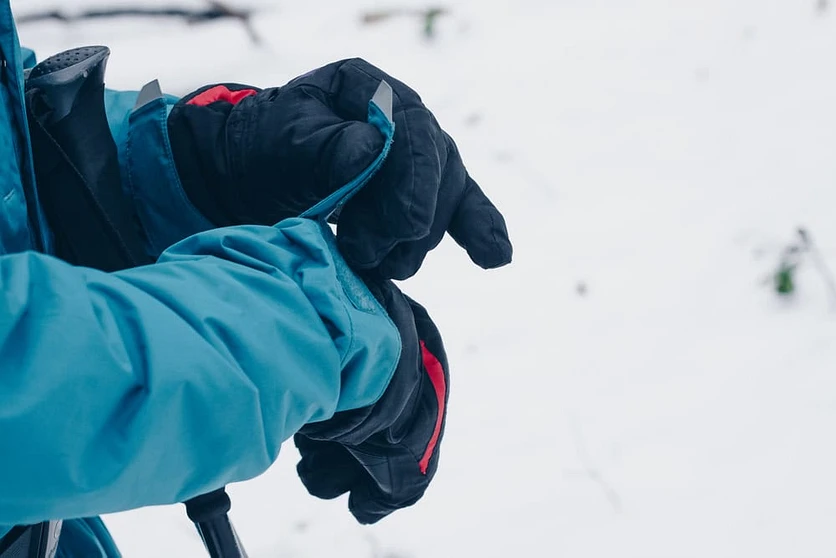
The standard for Rwenzori outerwear is a hardshell waterproof jacket and matching waterproof trousers with taped or fully sealed seams. Soft-shell jackets with weather-resistant coatings are inadequate. Pack both jacket and trousers regardless of the forecast; the Rwenzori writes its own weather. Such a jacket is an item to bring rather than rent; fit and familiarity matter.
3. Thermal and Insulation Layers: Building a System That Works.
The Rwenzori’s layering demands are driven by the combination of high moisture and increasing cold with altitude. The layering system that works here: a moisture-wicking synthetic or merino base layer (not cotton), a mid-layer fleece or lightweight down jacket for the middle-altitude camps, and a heavier insulated jacket (down or synthetic) for the upper camps and summit day. Temperatures at Elena Hut camp can drop below -5°C before dawn on summit day, and standing still on a glacier at 4,800 meters in the early hours requires substantial warmth.
4. Sleeping Bag: Warmth on the Upper Mountain
The sleeping bag question is one we see trekkers get wrong more often than almost any other item. A bag rated to -10°C for comfort is our recommendation for upper camps and summit itineraries. A bag rated to 0°C is the absolute minimum for the mid-mountain camps. Standard three-season summer bags rated to +5°C are inadequate for nights at Elena Hut or above.
5. Technical Summit Gear: Crampons, Ice Axe, Harness, Helmet.
For routes that include Margherita Peak or any other glaciated Rwenzori summit, these four items are required: 12-point technical crampons compatible with your mountaineering boots, a general mountaineering ice axe of appropriate length, a sit harness for glacier rope travel and fixed-line sections, and a lightweight alpine climbing helmet.

You can bring these yourself, or you can rent them through us. Both are legitimate options. If you own technical equipment from previous alpine experience, bring gear you know performs well. If you are new to this category, arrange rental through our team when you book. We need a lead time of at least four to six weeks to confirm availability, size-match equipment for you, and ensure everything is ready before your trek departure.
Who This Rwenzori Experience Is Designed For.
Experienced alpine trekkers who have previously climbed on glaciated terrain will find the technical requirements familiar. For this group, the main adaptation is the climate: the moisture levels and sustained wetness require a different outerwear strategy than dry alpine environments. If you have been comparing the Rwenzori to Kilimanjaro, the detailed piece on whether the Rwenzori is harder than Kilimanjaro will calibrate your expectations honestly.
Fit trekkers without technical alpine experience who are targeting a non-summit route need no technical gear at all and can focus entirely on the clothing, boot, and sleeping system guidance above. If you are in this group, our guide on whether beginners can climb the Rwenzori answers the preparation questions in full.
Trekkers targeting Margherita Peak without prior technical experience are a group we work with carefully. The summit is achievable for motivated, fit, well-guided trekkers without a deep alpine background, but it requires honesty about the preparation needed. When you reach out to us before booking a summit itinerary, be direct about your experience level. Our detailed post on how technical the climb to Margherita Peak actually is is required reading for this group.
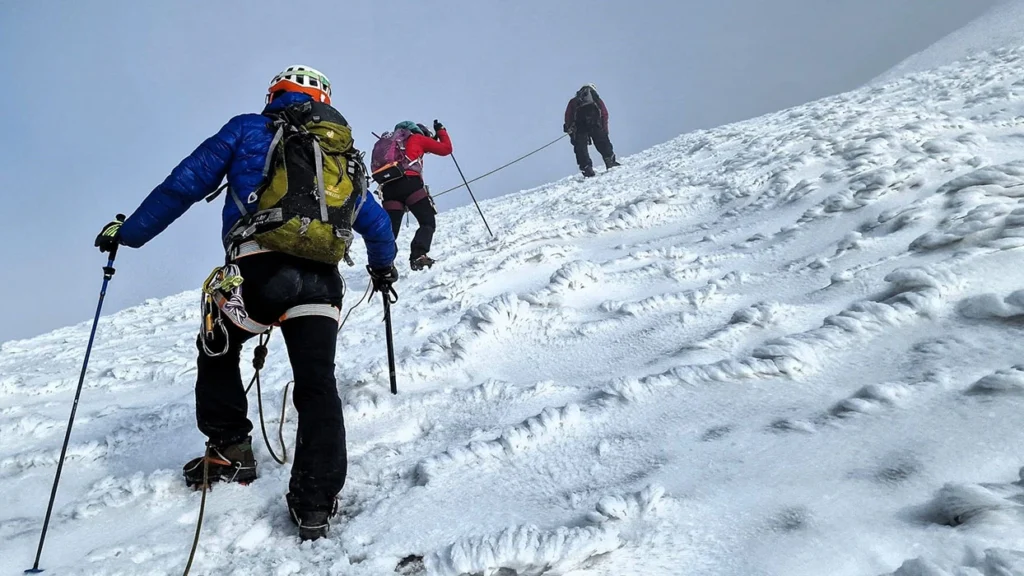
Multi-peak expedition trekkers those planning to traverse Mount Gessi, Mount Emin, or Mount Luigi di Savoia alongside the higher peaks are the group for whom gear preparation is most involved and for whom the personalized planning process matters most. For this group, we recommend beginning the gear planning conversation with us at least three months before your intended departure date.
What Happens at Our Offices Before Your Trek Begins.
When your trek with us begins, your first point of physical contact is our offices in Kasese. This is where gear verification and rental collection happen, and it is a step that saves trekkers from discovering equipment problems at altitude.
Before you leave our offices, we will check your waterproofing gear (jacket, trousers, boots, gaiters), confirm that your sleeping bag rating is appropriate for your route, assess your layering system, and, for technical summit routes, fit and check your crampons, ice axe, harness, and helmet. If you are renting technical gear from us, this is when those items are issued, fitted, and explained. If you have brought your own, the moment is when we verify that your crampons are compatible with your boots and that your harness fits correctly.
This pre-trek gear check is not a formality. It is the moment when problems that would otherwise surface on day four at 4,000 meters get caught and resolved at 900 meters, one hour from town. Trekkers who have rented crampons that do not fit their boots, trekkers who brought waterproof trousers but forgot gaiters, trekkers whose sleeping bags are 10 degrees warmer than appropriate we have seen all of these, and the Kasese office check is where we catch them.
The Glacier Reality: What Retreating Ice Means for Your Gear Plan.
Any honest guide writing about the Rwenzori in 2026 has to acknowledge the state of the glaciers. The ice fields that once covered the upper reaches of Mounts Stanley, Speke, and Baker have retreated dramatically over the past century and continue to retreat. There are summit seasons where the Stanley Plateau presents classic glacier travel over broad snowfields, and there are seasons, increasingly common, where significant sections of the approach involve more mixed rock and ice than pure glacier walking.
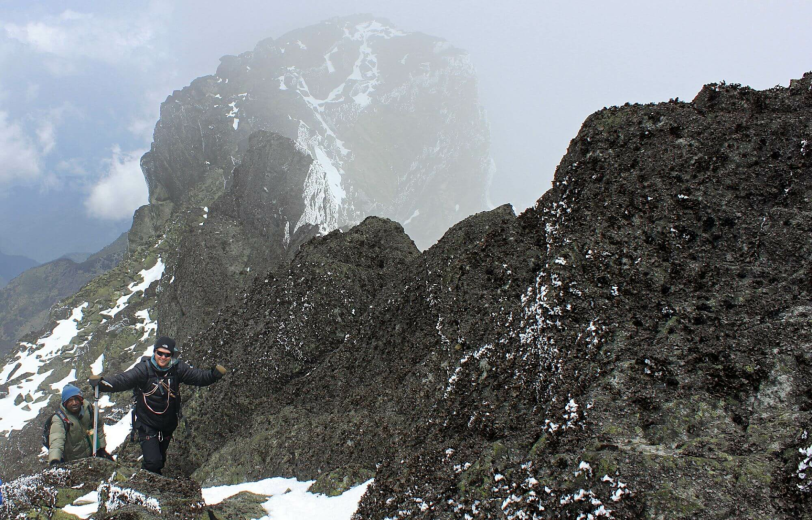
What this means for your packing decision is simple: always bring or arrange for technical crampons and an ice axe if your itinerary includes any glaciated summit, regardless of what recent trip reports suggest about conditions. The cost of carrying technical equipment you do not ultimately use is negligible. The cost of arriving without it in a season when the glacier demands it is not a risk worth taking.
Before You Travel: The Planning Conversation That Makes All the Difference.
Gear decisions made in isolation, without specific knowledge of your route, your experience level, and current mountain conditions, are gear decisions made in the dark. Before shopping or packing, consult someone who has recently been to the mountain. When you reach out to us through our planning and contact page, tell us your summit objective, your prior trekking experience, your preferred dates, and any specific gear concerns. We will reply with specific, route-calibrated advice.
For deeper background on safety planning, the guide on what it takes to trek the Rwenzori safely covers the full picture of risk management on the mountain. We also recommend spending time on our routes and trail overview and full treks listing before that conversation, so you arrive at the discussion with a sense of which itinerary suits your objectives.
Frequently Asked Questions: Climbing Gear for the Rwenzori
Do I need to bring my own climbing gear for a Rwenzori trek?
Not necessarily. Whether you need to bring your own climbing gear depends entirely on your route. For non-technical routes including the Central Circuit Trail, the Kilembe Trail (without a summit push), the Mahoma Loop, and the Bukulungu Trail, no technical climbing gear is required at all. For summit routes to Margherita Peak and other glaciated peaks, technical gear is required, but you have two options: bring your own (strongly preferred if you own it) or rent from Rwenzori Trekking Safaris at the start of your trek. Rental must be arranged in advance through our booking process.
What climbing gear is required for Margherita Peak specifically?
You need 12-point technical crampons that fit a semi-rigid or rigid mountaineering boot (B2 or B3 rated), a general mountaineering ice axe that is usually 60–70 cm long, a sit harness for crossing glaciers with ropes and using fixed lines, and a lightweight alpine climbing helmet. Your guide provides fixed rope infrastructure and manages team roping on the glacier. You do not need to bring your own rope.
Can I rent crampons and technical gear at the Rwenzori trailhead?
We maintain a rental inventory of crampons, ice axes, harnesses, and helmets at our offices. This is available to trekkers who do not own their own technical gear, subject to advance arrangement. We cannot guarantee availability for walk-in requests at the trailhead. Contact us at least four to six weeks before your trek to confirm rental availability, size requirements, and to arrange a pre-departure gear check.
What kind of boots do I need for the Rwenzori?
For all non-technical routes, you need a mid-to-heavyweight waterproof hiking boot with a Gore-Tex or equivalent membrane lining, a Vibram-style lug sole, and full ankle support. The boot must be genuinely waterproof and broken in before arrival. For Margherita Peak and glaciated summit routes, you additionally need a semi-rigid or rigid mountaineering boot compatible with 12-point technical crampons. Many summit trekkers bring two pairs of boots: one for the lower approach and one for the upper mountain.
What does Rwenzori Trekking Safaris provide, and what am I responsible for?
Your guide team provides route knowledge, weather and safety monitoring, altitude sickness assessment, emergency medical equipment, supplementary oxygen on summit routes, and all fixed rope infrastructure on technical sections. You are responsible for all personal footwear, personal waterproof outerwear, personal thermal and insulation layers, personal gaiters, trekking poles, a sleeping bag appropriate for the altitude, and, for technical routes, personal technical equipment or rented equivalents arranged in advance through us.
How much technical experience do I need to climb Margherita Peak?
We strongly recommend prior experience with crampons on snow or ice, as well as some exposure to roped movement. A single alpine skills course or a previous ascent of a glaciated peak at a comparable altitude provides a solid baseline. Trekkers without any prior technical experience should discuss their background with us before booking. Our full piece on the actual success rate for summiting Margherita Peak is essential background reading before you decide on a summit objective.
Do I need two pairs of boots for a Margherita summit trek?
For most trekkers targeting Margherita, yes, two pairs is the most practical and comfortable approach. Technical mountaineering boots are not designed for six to nine days of walking on rooted forest trails and boggy moorland; they are heavy, stiff, and blister-prone at lower altitudes. Standard waterproof hiking boots are unsuitable for crampon use on the glacier. Wearing the right tool for each zone makes the entire trek more comfortable and safer.
What sleeping bag rating do I need for the Rwenzori?
We recommend a sleeping bag rated to -10°C for comfort (or -5°C survival) for summit routes and any itinerary spending nights at upper camps above 4,000 meters. A bag rated to 0°C is the absolute minimum for the mid-mountain camps. Standard three-season summer bags rated to +5°C are inadequate. If you are unsure about your bag’s suitability, tell us the specific model when you contact us, and we can advise based on actual temperatures at the relevant camps.
What is the best time of year to trek the Rwenzori with the least demanding conditions?
The drier seasons, December to March and June to September, offer the most stable conditions and the best visibility. Even within these windows, rain can arrive unexpectedly; the Rwenzori is a wet mountain by nature. The gear requirements described in this guide apply year-round; the practical difficulty of keeping gear dry is somewhat lower in the dry season, but the core equipment needs do not change.
Is the Rwenzori suitable for people who usually only do non-technical hiking?
Absolutely, and in fact the majority of our trekkers are experienced hikers rather than technical mountaineers. The Central Circuit and Kilembe Trail without a summit push are achievable for fit, well-prepared trekkers with no technical background. The key qualities for these routes are multi-day hiking fitness, comfort with sustained movement in wet and cold conditions, and a willingness to follow your guide’s assessment of conditions and pace.
Start Planning Your Custom Rwenzori Trek. Today
The Mountains of the Moon have been waiting a long time for the right kind of traveler, not the one who books a package and arrives on autopilot, but the one who wants to understand what they are walking into, who asks the real questions in advance, and who arrives prepared for what the mountain actually is rather than what they imagined it to be.
If you have read this far, you are that traveler.
Tell us your dates, your summit objective, your experience level, and your current gear situation. We will give you a specific, honest, experience-based gear plan of what to bring, what you can rent, what to buy, and what to leave at home, tailored to your exact itinerary on a mountain our team walks every week. There is no guesswork, no generic checklists, and no upselling. Just the most accurate advice available from a team that knows these mountains better than anyone.
Get in touch with our team today and start planning the Rwenzori trek you have been thinking about. We have mapped the mountains, answered your gear questions, and mapped the routes; all you need to do now is decide whether to go.