
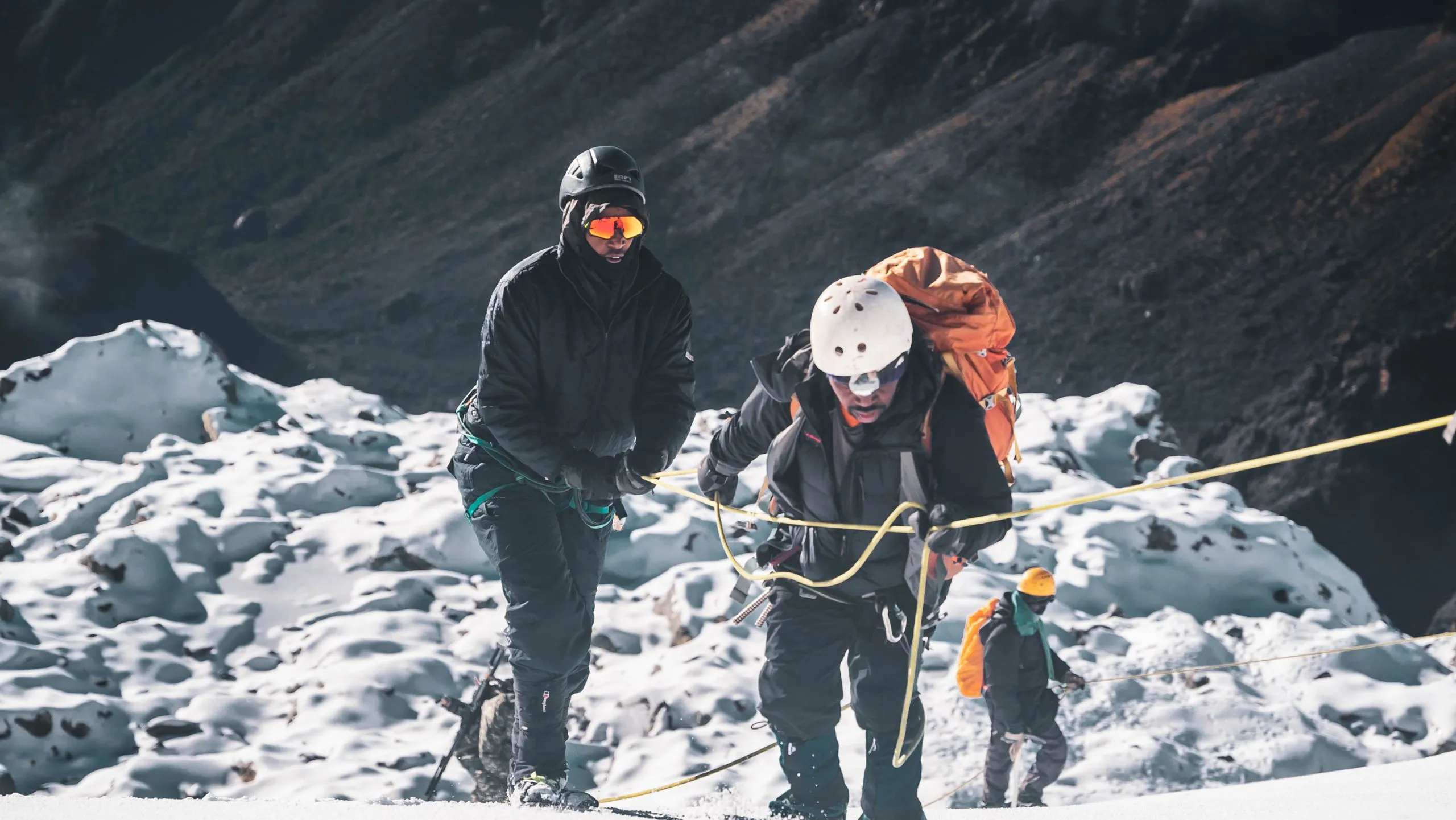
Staying warm on the summit of Mount Rwenzori is not a simple question of packing heavier insulation or adding more layers. The challenge of staying warm on Rwenzori comes from a mix of cold and constant moisture, as well as changes in how our bodies react to high altitude, wind, and tiredness. Unlike dry alpine summits like Kilimanjaro, where cold is episodic and predictable, the Rwenzori summit environment combines wet cold, low solar radiation, and prolonged saturation, which significantly accelerates heat loss and increases the risk of hypothermia even at temperatures that may appear moderate on paper.
We will explain in technical but practical terms how heat is lost on Rwenzori, why standard alpine warmth strategies often fail, and how trekkers and Rwenzori expedition planners can design layering, pacing, nutrition, and risk-management systems that maintain core temperatures during summit attempts. The emphasis is on real-world constraints, failure modes, and evidence-based best practices rather than idealized gear lists

The summit morning experience from Mount Stanley Glacier to Margherita Peak.
Step-by-Step: Staying Warm on Summit Day on Mount Rwenzori.
- Start the summit push with the driest possible clothing
- Add insulation early, before feeling cold
- Control pace to limit sweating
- Protect extremities proactively
- Eat and drink regularly
- Minimize stop duration
- Monitor teammates for cold stress
Understanding the Summit Environment of the Rwenzori Mountains
Altitude and Summit Definitions
The Rwenzori massif contains several high peaks, with Mount Stanley’s Margherita Peak reaching approximately 5,109 meters above sea level. Summit attempts typically involve glacier travel and exposed ridgelines, depending on the route and season. While the altitude is comparable to lower Himalayan peaks, the equatorial latitude and extreme humidity create a thermal environment unlike most high mountains in the world.
Temperature Ranges and Variability
Exact summit temperatures vary by season, weather pattern, and time of day. Nighttime and early-morning summit pushes often occur near or below freezing. However, temperature alone is not a reliable indicator of cold stress. Wind, moisture, and metabolic state have a greater impact on perceived cold and heat loss.
Where precise temperature data is unavailable or inconsistent, it is safer to plan for worst-case wet-cold exposure rather than average conditions.
Wind and Exposure
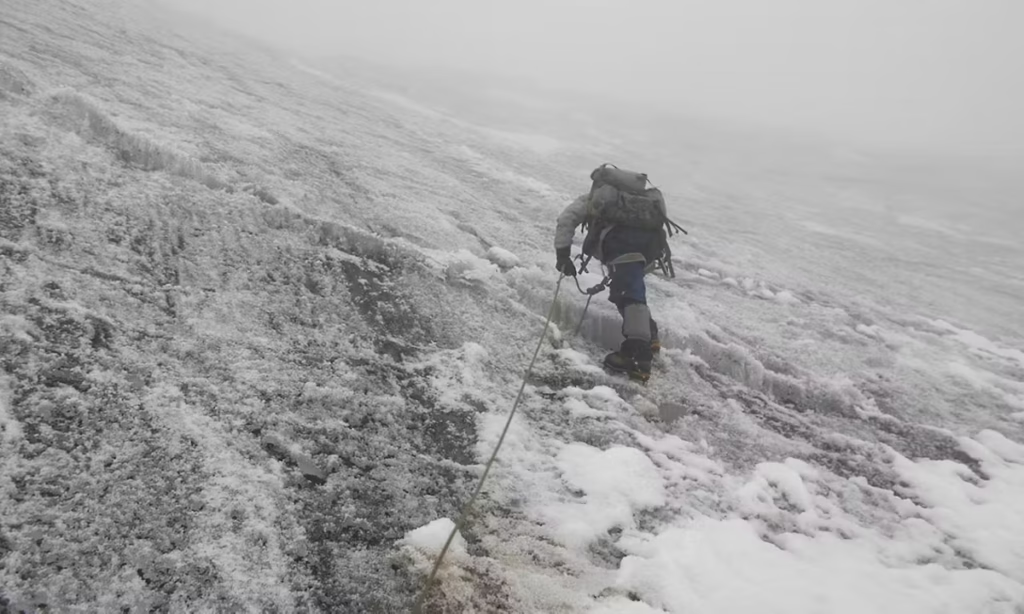
Wind speeds on exposed ridges can increase convective heat loss dramatically. Even moderate wind strips heat from wet clothing and skin. On Rwenzori, wind often coincides with cloud cover, eliminating solar warming and compounding cold stress.
Moisture Sources at the Summit
Moisture at high elevation comes from multiple sources:
- Snow and ice contact during glacier travel
- Wind-driven precipitation
- Cloud immersion and condensation
- Internal moisture from sweat and respiration
This constant moisture load is the defining feature of the Rwenzori summit environment.
How the Human Body Loses Heat at Altitude
Conduction
Conduction is heat loss through direct contact with colder surfaces, such as ice, snow, rock, or wet ground. Sitting, kneeling, or standing still on cold surfaces rapidly drains heat, particularly through feet and lower limbs.
Convection
Convection occurs when moving air removes heat from the body. Wind dramatically accelerates convective heat loss, especially when clothing is wet or compressed.
Evaporation
Evaporative heat loss occurs when moisture on the skin or in clothing evaporates. In cold, humid environments, evaporation is slower but still significant, particularly during exertion followed by rest.
Radiation
Radiative heat loss increases when cloud cover blocks solar input and when the body is exposed to open sky. This is a subtle but constant factor on Rwenzori summits.
Altitude-Related Physiological Changes
At altitude, the body’s ability to generate heat is reduced by:
- Decreased oxygen availability
- Suppressed appetite
- Dehydration
- Fatigue and muscle depletion
These factors reduce metabolic heat production, making passive insulation more critical.
Why Staying Warm on Rwenzori Is Harder Than on Other Mountains
Wet Cold vs Dry Cold
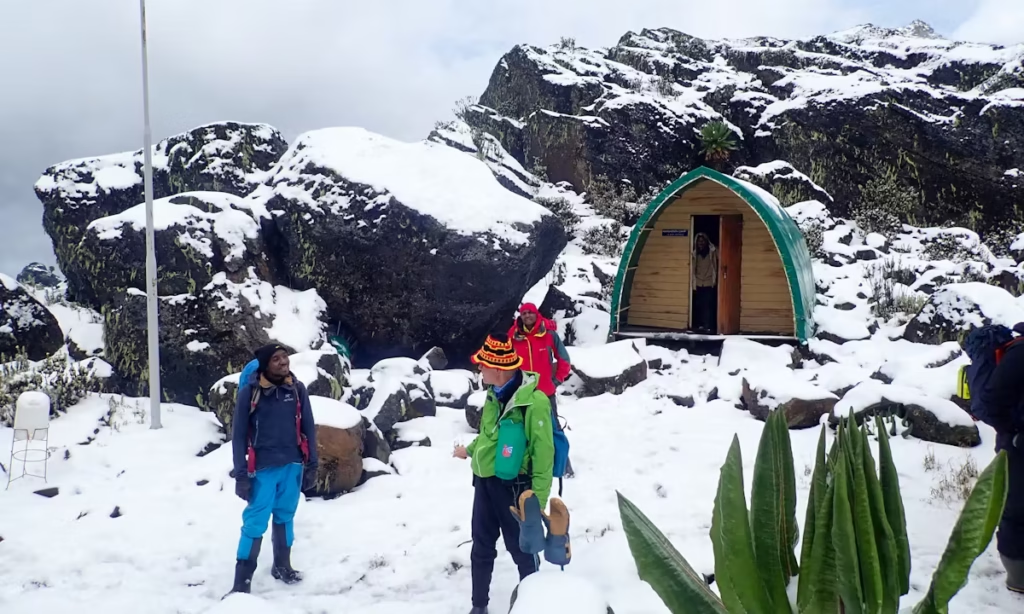
Wet cold extracts heat faster than dry cold due to increased conduction and evaporative loss. A damp insulating layer at 0°C can feel colder than a dry layer at much lower temperatures.
Limited Drying Opportunities
Once insulation becomes damp on Rwenzori, it often remains damp through the summit push. This eliminates the margin for error that exists on drier mountains.
Continuous Layer Use
On many mountains, summit layers are added briefly. On Rwenzori, heavy layers may be worn continuously for hours, increasing sweat accumulation and internal moisture buildup.
Fatigue Accumulation
Deep mud approaches, technical terrain, and altitude combine to exhaust trekkers before summit day, reducing their ability to thermoregulate.
Layering Strategy for Summit Warmth in the Rwenzori Mountains
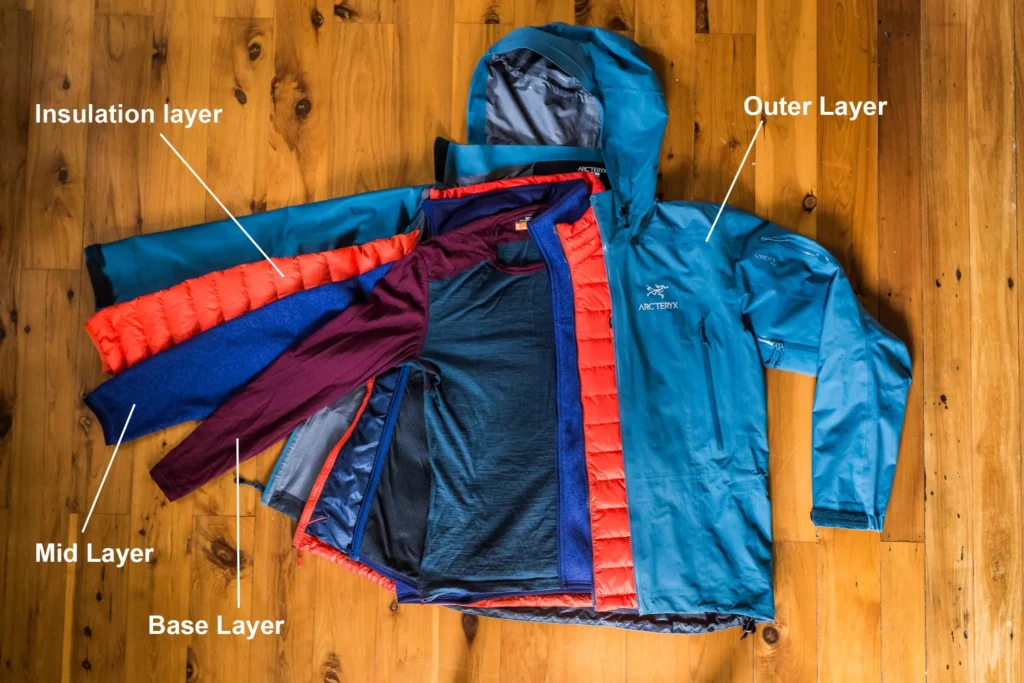
Core Principle: Manage Moisture First, Insulation Second
Warmth on the summit is determined more by moisture control than by insulation thickness alone. A perfectly warm jacket becomes ineffective when saturated.
Base Layers
Base layers should prioritize moisture transport over warmth. Synthetic or merino-synthetic blends are preferred. Cotton is unsafe due to its high moisture retention.
Base layers worn during the summit push should be as dry as possible at the start. This may require changing into a reserved summit base layer shortly before departure.
Mid Layers
Mid layers provide active insulation while allowing movement. Fleece and light synthetic insulated jackets perform well when damp and allow controlled heat output.
Avoid stacking multiple absorbent layers that trap moisture.
Insulation Layers
A primary synthetic insulated jacket is the cornerstone of summit warmth. Synthetic insulation retains loft when damp and tolerates repeated compression. Down insulation can work only if fully protected from moisture and backed by redundancy, which increases complexity and risk.
Insulated pants significantly reduce heat loss from large muscle groups and are often underutilized.
Shell Layers
Shell layers must block wind and precipitation while resisting abrasion from ice tools, ropes, and packs. Breathability is secondary to weather resistance during summit conditions.
Extremity Management: Hands, Feet, and Face
Hands
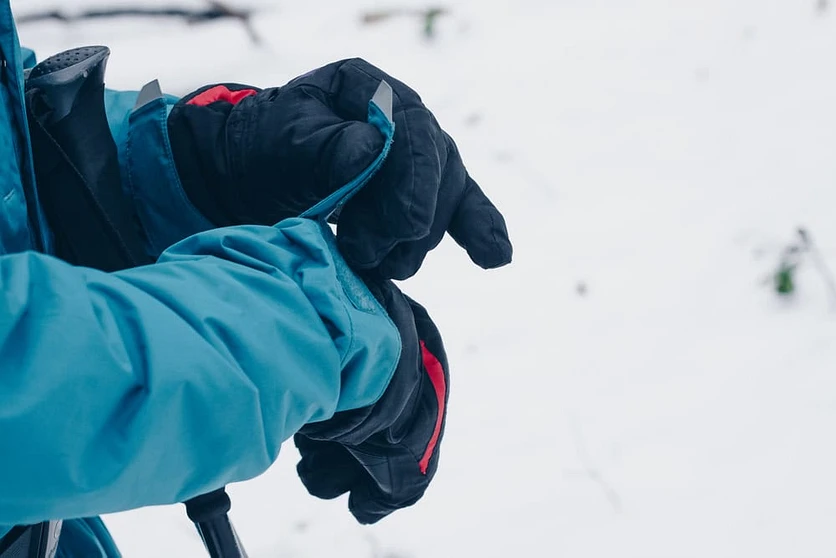
Hands lose heat rapidly due to high surface area and low muscle mass. A layered glove system is essential:
- Thin liner gloves for dexterity
- Insulated gloves or mitts for warmth
- Waterproof outer layer for moisture protection
Wet gloves are a common failure point.
Feet
Feet are exposed to conductive heat loss through snow and ice. Insulated mountaineering boots or heavily insulated trekking boots are required for summit routes involving glaciers.
Dry socks reserved for summit day are critical. Vapor barrier strategies may be appropriate for experienced users.
Face and Head
Significant heat is lost through the head and face. Balaclavas, neck gaiters, and windproof hoods reduce exposure and frost risk.
Nutrition and Hydration for Thermal Regulation in the Rwenzori Mountains.
Caloric Intake
Heat production depends on available energy. Summit day requires easily digestible carbohydrates and fats. Appetite suppression at altitude is common and must be managed intentionally.
Hydration
Dehydration impairs circulation and heat production. Cold environments reduce thirst perception, increasing risk.
Warm fluids improve morale and core temperature but require insulated containers.
Movement, Pacing, and Heat Balance at the Rwenzori Summit
Moving too slowly leads to heat loss; moving too fast leads to sweating and subsequent chilling. Pacing must balance metabolic heat production with moisture management.
Planned micro-stops, rather than long breaks, reduce convective and conductive heat loss.
Risk Warnings: Hypothermia on the Rwenzori Summit
Hypothermia can occur even at above-freezing temperatures in wet, windy conditions. Early signs include uncontrolled shivering, impaired coordination, and cognitive slowing.
Summit attempts should be aborted if rewarming becomes difficult or if weather deteriorates beyond planned margins.


