Yes, the Rwenzori Mountains offer outstanding 3–4 day treks. Discover the Mahoma Loop, Mutinda Lookout, Waterfalls Hike, and more. Expert route guidance from Rwenzori Trekking Safaris, Uganda’s specialist mountain guides.
The question arrives in different forms. Sometimes it is someone with a tight travel itinerary who has been given five days between other Uganda commitments and wants to know whether the Rwenzori Mountains are worth fitting in. Occasionally, a traveler who has never done a multi-day trek is drawn to the idea of the Mountains of the Moon but is not yet ready to commit to seven or eight days on genuinely challenging mountain terrain. Sometimes it is an experienced trekker who has already done the big routes on other mountains and wants something short, intense, and entirely different before their flight home. And occasionally it is simply someone who looked at the standard Rwenzori itineraries, saw the words “seven days” and “eight days” repeated, and assumed that was the minimum entry requirement for the mountains.
The honest answer is this: not only can you trek the Rwenzori Mountains in 3 to 4 days, but some of the most memorable experiences this range has to offer are available within that window. The Rwenzori is not a mountain where the best things are reserved exclusively for those who commit to a long expedition. Its extraordinary rainforest ecology, its endemic wildlife, its crater lakes, its moorland panoramas, and its waterfall-threaded river valleys are all accessible to trekkers with limited time if they choose the right route and arrive with the right preparation.
What you will not reach in 3 to 4 days is the glaciated high alpine zone and the summit of Margherita Peak. That requires more time and more technical preparation, including skills in mountaineering and the use of specialized equipment, such as ice axes and crampons, to safely navigate the challenging terrain. But the Rwenzori’s short routes are not consolation prizes for trekkers who could not manage the summit. They are rewarding experiences, and for the right traveler, they are the right amount of mountain.
This guide covers every realistic short trek option in the Rwenzori Mountains, what each one involves, who each one suits, and how to plan one that is genuinely personalized to your timeline and your objectives. Read it before you decide that the Rwenzori is “too long” for your trip.
Why Short Rwenzori Treks Are More Rewarding Than Most People Expect
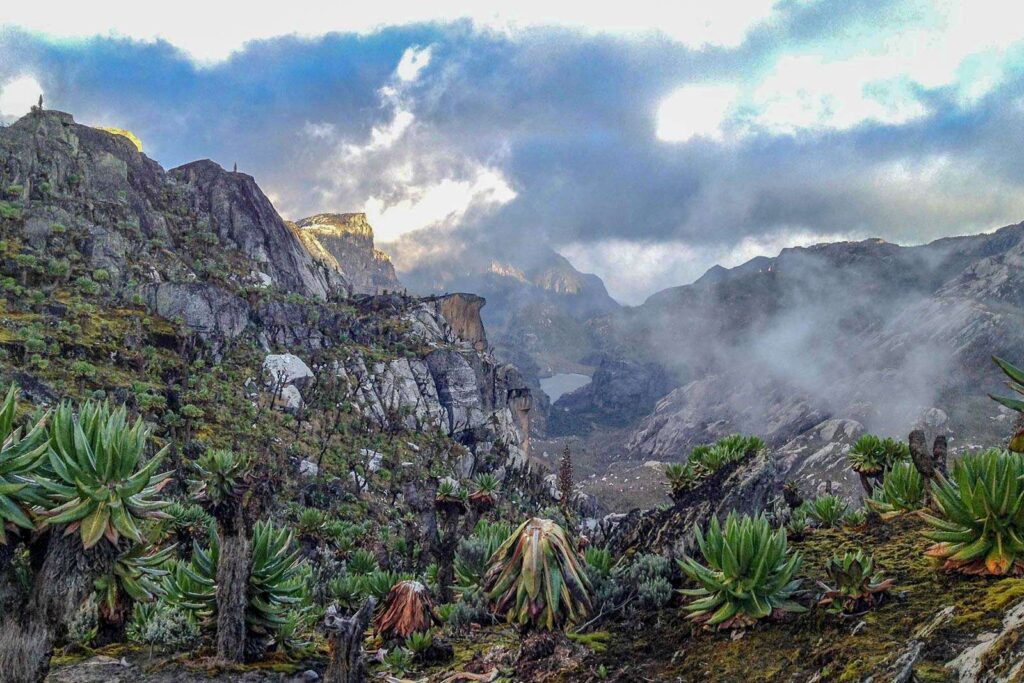
The assumption that a mountain range only reveals its character on extended expeditions is understandable but often wrong, and nowhere is it more wrong than on the Rwenzori. The ecological richness that makes the Rwenzori a UNESCO World Heritage Site and one of Africa’s outstanding natural treasures is not concentrated exclusively at the summit. It is distributed across the full vertical range of the mountain, and some of the most extraordinary aspects, particularly the endemic wildlife and the ancient rainforest ecology of the lower slopes, are encountered in the first two to three days of any Rwenzori route.
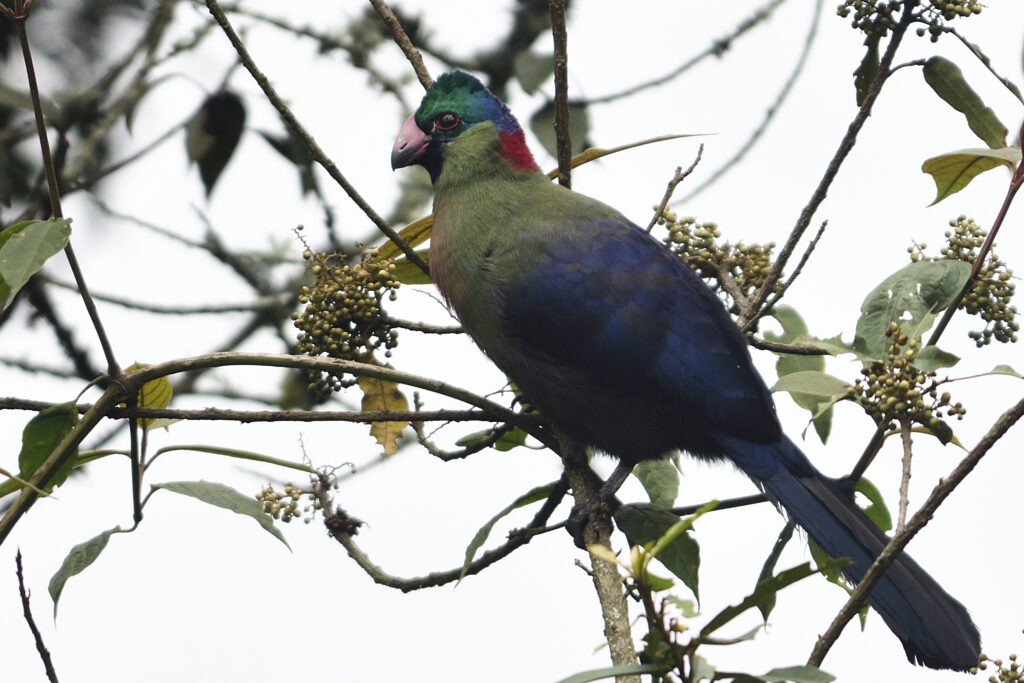
The montane forest that covers the lower flanks of the Rwenzori between approximately 1,650 and 2,500 meters is among the richest and least disturbed in East Africa. L’Hoest monkeys, black-and-white colobus monkeys, the rare Rwenzori turaco, blue monkeys, three-horned chameleons, and the Rwenzori otter shrew inhabit a forest that has been shaped by millions of years of evolution in geographic isolation. Walking through this forest for a day is a genuinely different encounter with African nature than anything available on a game drive or a beach. Walking through it for three days, ascending through the bamboo zone into the lower moorland, reaching a glacial crater lake at 3,000 meters, and returning via a different ridge is a complete and deeply satisfying mountain experience that needs nothing added to be remarkable.
The practical advantages of a short Rwenzori trek are also real. The gear requirements are less extensive than for a summit expedition; the technical summit equipment that summit trekkers need is not required on routes that stay below the permanent snow line. The physical demands, while still genuine, are within reach of fit travelers without specialist mountain experience. The logistical complexity of a 3- or 4-day trek, including packing, preparation, and travel to the trailhead, is significantly lower than that of a 7- or 8-day expedition, which is relevant for travelers fitting the Rwenzori into a broader Uganda itinerary.
The Short Trek Options: What Is Actually Possible in 3–4 Days
The 3-Day Mahoma Loop: The Rwenzori’s Classic Short Trek
The 3-Day Mahoma Loop is the most established short trek in the Rwenzori Mountains and the one that most reliably delivers a complete, varied, and deeply satisfying experience within a three-day window. It begins at Nyakalengija, passing through the mountain community’s plantations and homesteads before entering the montane rainforest via the Mubuku Valley and Kyambogho Ridge. The first day’s ascent to Omukakiizi Rest Camp at approximately 2,500 meters takes trekkers through dense virgin rainforest, where primates like blue monkeys, colobus, and the L’Hoest monkey, which is rarely seen at accessible altitudes on other East African mountains, are regularly encountered in the canopy above the trail.
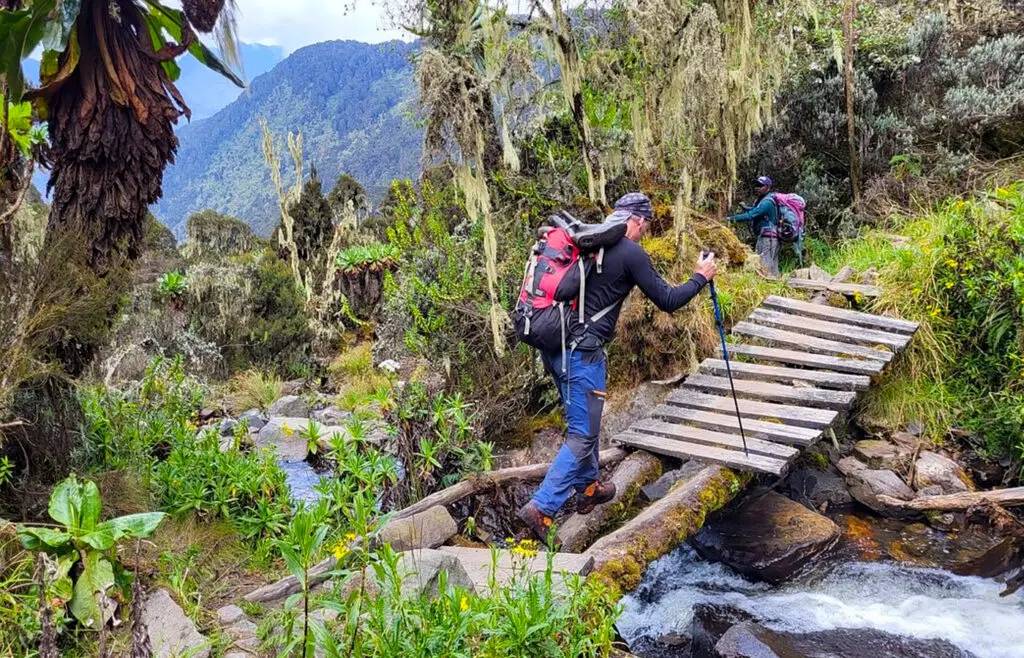
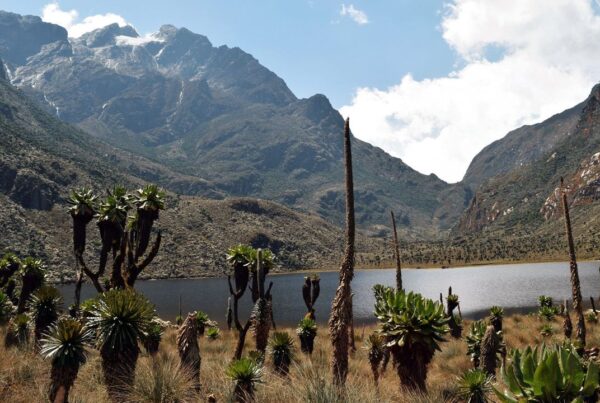
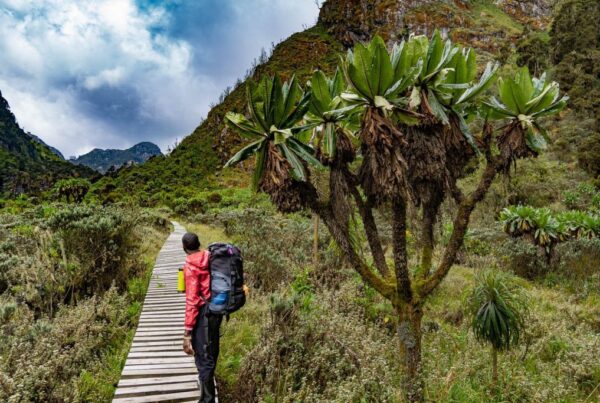
The second day is the route’s centerpiece: an ascent through remarkable forest featuring towering tree heathers draped in bearded lichen and lush moss layers, passing along the path used by mountain elephants as they move between foraging grounds, and climbing the Rukenga Valley ridge where giant lobelias and everlasting flowers create a landscape that has no equivalent anywhere else in Africa. The destination is Lake Mahoma at approximately 3,000 meters—a pristine glacial crater lake set in a bowl of heather forest, with views on clear days extending to Mount Baker, Mount Stanley, and the Portal Peaks. Lake Mahoma is not a consolation for not reaching the glaciers. It is one of the most beautiful natural environments in Uganda, full stop.
The third day descends via Nyabitaba Ranger Post and the Mpanga Ridge, passing through the three-horned chameleon habitat of the lower Mubuku Valley before returning to the trailhead. The loop structure ascending one way and descending another means that trekkers see meaningfully different terrain on the way down than on the way up, which is a practical and experiential advantage over out-and-back routes.
The 2-Day Lake Mahoma Trek: Rwenzori Immersion for the Time-Pressed
For trekkers with genuinely limited time, the 2-Day Lake Mahoma hike is a compressed version of the Mahoma Loop that reaches the same destination, the crater lake, at approximately 3,000 meters in two days rather than three. The first day pushes from Nyakalengija through the forest to Lake Mahoma directly, a longer and more demanding day than the 3-day version’s paced first stage. The second day descends. It is less leisurely than the loop and does not offer the same variety of terrain, but for a traveler who genuinely has only two days and wants to experience the Rwenzori forest and the moorland lake, it delivers a complete and authentic experience within that constraint.
The 2-Day Sine Camp Trek via the Kilembe Trail
On the Kilembe Trail side of the range, the 2-day trek to Sine Camp offers a brief introduction to the Rwenzori from its southern approach, entering through the Kilembe Valley and ascending 9.5 kilometers each way to Sine Camp at approximately 2,600 meters. The forest in the lower parts of the Kilembe Trail is different from the northern route: the river valley is wide and impressive, there are many waterfalls, and the variety of birds, like colorful sunbirds and unique weavers, and the three-horned chameleon hiding in the bushes makes it a wonderful spot for nature lovers. Blue monkeys and the distinctive forest birds of the southern Rwenzori are regular companions. The return follows the same route. This trek is ideal as either a Rwenzori introduction for trekkers considering a return for a longer trip or as a standalone short experience for those combining the Rwenzori with other Uganda activities.
The 3-Day Sine Camp and Samalira Falls Trek
For trekkers who want a three-day Kilembe Trail experience that extends beyond Sine Camp, the 3-Day Sine Camp and Samalira Falls Trek adds an excursion to the Samalira Falls, one of the most spectacular waterfall environments in the Rwenzori Mountains, to the Sine Camp base itinerary. The falls are reached via a trail that passes through bamboo forest and heather moorland, and the combination of forest, river, and waterfall environments encountered across the three days makes this one of the most scenically varied short options available on either route. It is particularly well suited to travelers who want physical engagement with the mountain but are more drawn to landscape and natural beauty than to altitude gain and summit objectives.
The 4-Day Mutinda Lookout Loop via the Kilembe Trail
The 4-Day Mutinda Lookout Trek is, in our assessment, the finest short trek available in the Rwenzori Mountains for trekkers who want to push altitude, see the central peaks at close range, and experience the Kilembe Trail’s distinctive character within a four-day window. The route ascends from Kilembe through the forest and montane zones to Mutinda Camp at approximately 3,688 meters in the heather and moorland zone, well above the bamboo belt, where the Mutinda Lookout delivers one of the most panoramic views of the Rwenzori’s central peaks available from any accessible point on the mountain.
From the Mutinda Lookout, you can see the icy peaks of Mount Stanley, the ridges of Mount Baker, and the high moorland between the mountains all in one stunning view, which experienced guides say is the most impressive mountain viewpoint in the area for trekkers who aren’t trying to reach the summit. The route’s structure, ascending to Mutinda and then looping back via a different trail line, means that the descent covers terrain not seen on the ascent, adding variety and extending the ecological range of the experience.
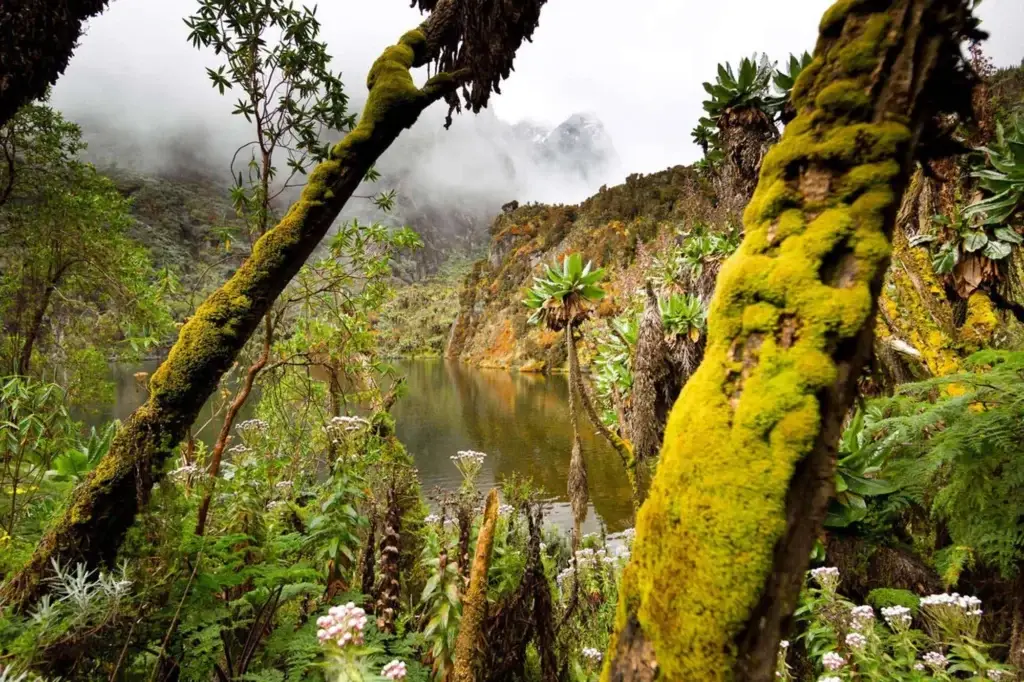
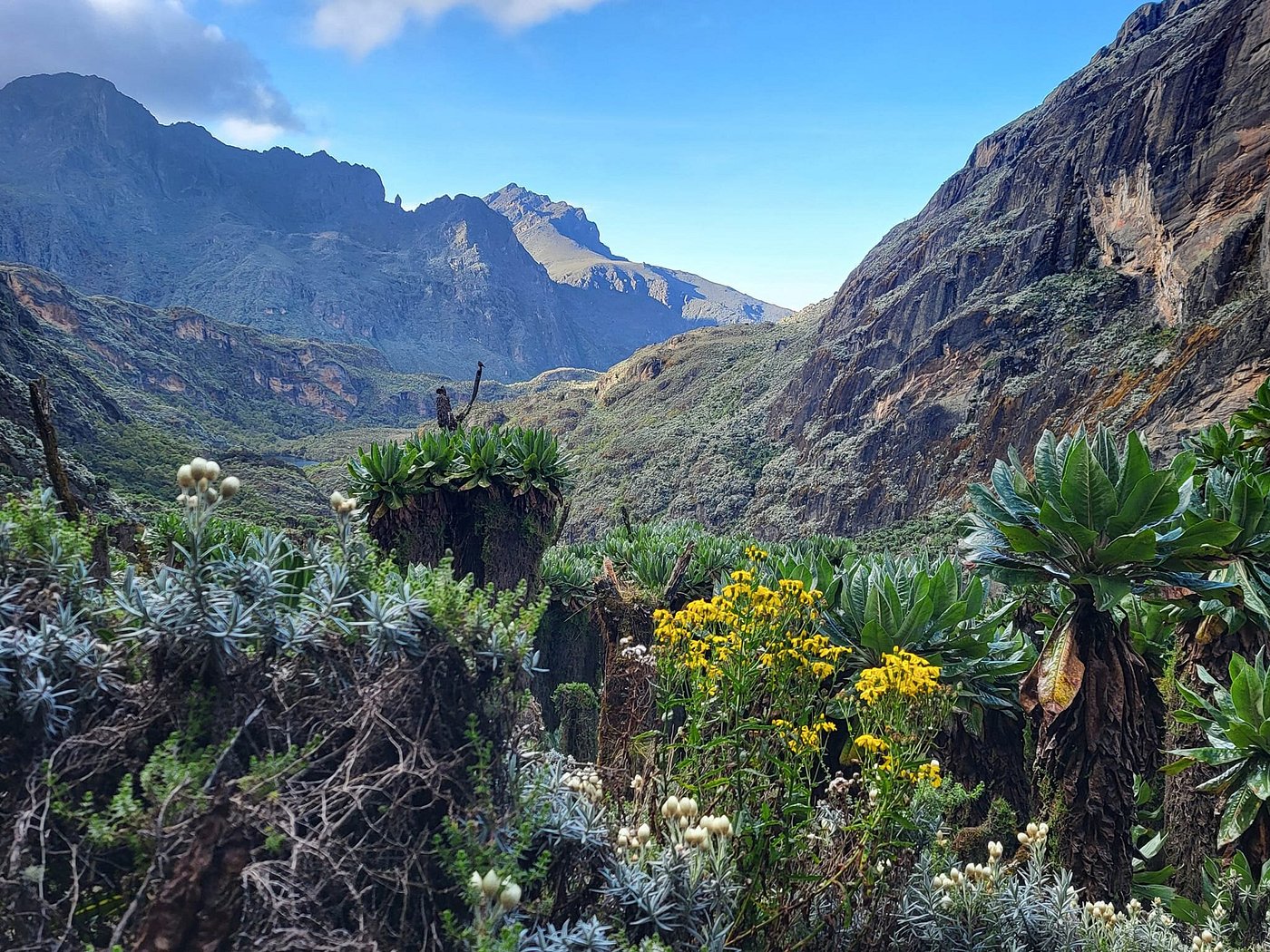
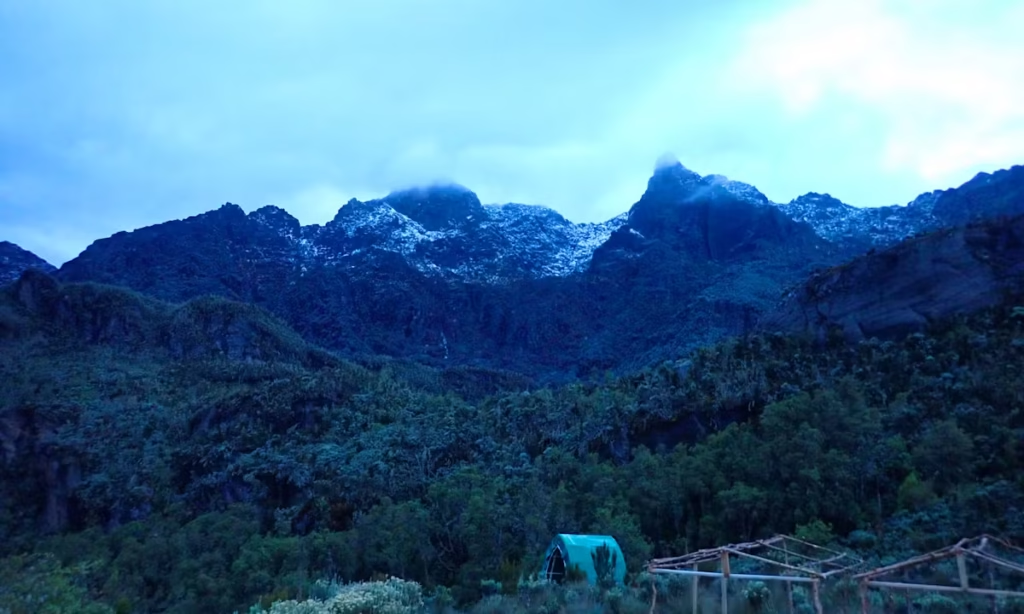
At about 3,688 meters high, the Mutinda Lookout is in the Afro-alpine moorland area, filled with unique plants like giant heathers, giant lobelias, and everlasting flowers, allowing trekkers on this four-day trip to truly experience the Rwenzori’s amazing landscape without needing extra days and complicated preparations for the higher summit areas above 4,200 meters. This is not a summit attempt; it is something subtly different and, for many trekkers, more rewarding: a deep immersion in the mountain’s middle-altitude character.
The 4-Day Rwenzori Waterfalls Hike
The 4-Day Rwenzori Waterfalls Hike via the Kilembe Trail takes a different approach to the short Rwenzori experience: rather than maximizing altitude gain, it follows the Kilembe Trail through river valleys and forest zones specifically to encounter the series of waterfalls for which this trail is remarkable. The Kilembe Trail’s river valley character gives it an exceptional concentration of waterfalls across its lower and mid sections, and this itinerary is designed to visit the most spectacular of them while covering meaningful terrain through the forest and bamboo zones. It is an ideal short trek for travelers who are motivated by landscape photography, the encounter with the Rwenzori’s distinctive sound ecology of water in the forest, and the particular kind of physical pleasure that comes from moving through dramatic river and waterfall terrain at a sustained pace.
The 1-Day Nyabitaba Hike: The Fastest Rwenzori Introduction
The 1-Day Nyabitaba Hike on the Central Circuit Trail offers travelers with very limited time, possibly just one clear day between other commitments in Uganda, a genuine introduction to the Rwenzori forest and an ascent to Nyabitaba Camp at approximately 2,651 meters. The trail passes through the Mubuku Valley’s montane forest with its primates and forest birds, and Nyabitaba’s position gives views down the valley and across to the lower flanks of the central peaks. The trip is not a deep Rwenzori experience in the way a 3-to-4-day trek is, but it is a genuine encounter with the mountain that is vastly more rewarding than driving past its base or viewing it from Kasese town. For travelers combining the Rwenzori with other activities in Uganda and who have only one day to spare, this option is far better than nothing.
What You Will and Will Not Experience on a Short Trek
The most important thing to understand about a 3-to-4-day Rwenzori trek is not what it lacks compared to a longer itinerary, but what it genuinely offers. Setting realistic expectations is the foundation of a satisfying experience, and the Rwenzori’s short routes offer things that are entirely their own, not simply reduced versions of what the summit routes provide.
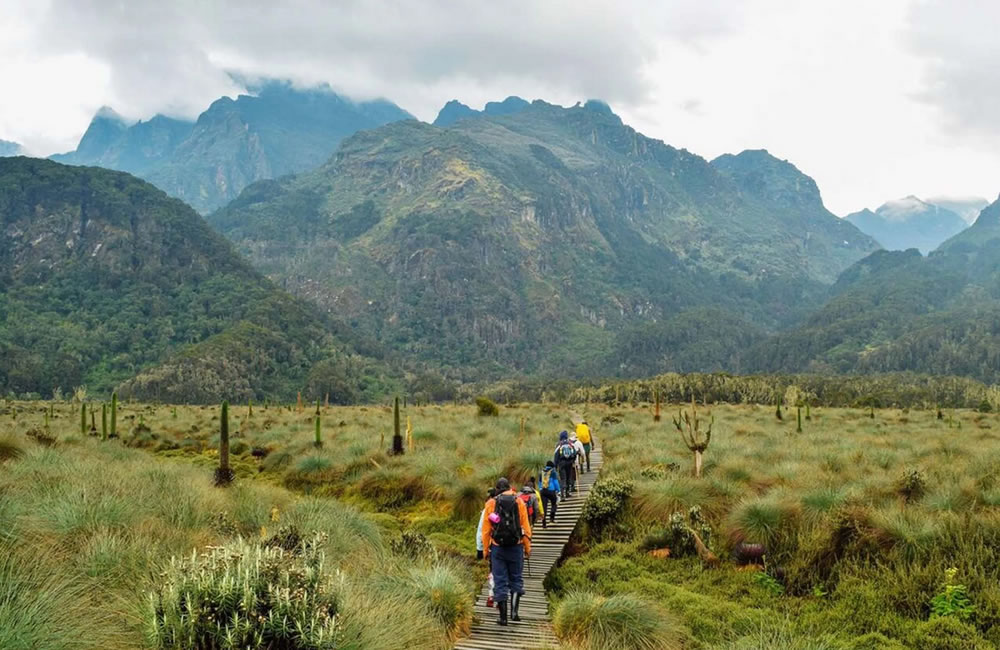
In 3 to 4 days you will experience the Rwenzori’s ancient montane rainforest in sustained, immersive depth that day visitors from Kasese never access. You will encounter the endemic and near-endemic wildlife that makes this range one of Africa’s outstanding biodiversity hotspots: the L’Hoest monkey, the Rwenzori turaco, the three-horned chameleon, a stunning variety of high-altitude birds, and the extraordinary Afro-alpine flora of giant lobelias and groundsels that exists nowhere else on Earth in this form. You will sleep on the mountain, experiencing the Rwenzori’s particular quality of evening silence and the character of its camps in a way that day trekkers completely miss. And on the Mutinda Lookout itinerary, you will see the central peaks of the Rwenzori from a panoramic high-altitude viewpoint that is genuinely breathtaking.
A 3-to-4-day trek does not cover the icy high mountain area above about 4,200 meters, the paths leading to Margherita Peak and other icy peaks, or the unique environment around the Elena Hut, where permanent ice meets equatorial mountains, which is a rare combination found in only a few places on Earth. Those experiences require a longer itinerary and additional technical preparation, such as specialized climbing gear and knowledge of high-altitude mountaineering techniques. They are worth that investment if you can make it. But they are not the only things the Rwenzori has to offer.
Gear for a Short Rwenzori Trek: What You Need and What You Can Rent
The gear requirements for a 3-to-4-day Rwenzori trek are meaningfully less extensive than for a summit itinerary, but they are not trivial. The mountain’s wetness and its cold evenings do not become more forgiving simply because your trek is shorter, and arriving with inadequate waterproofing or insufficient warmth for the camp nights will make a three-day experience significantly harder than it needs to be.
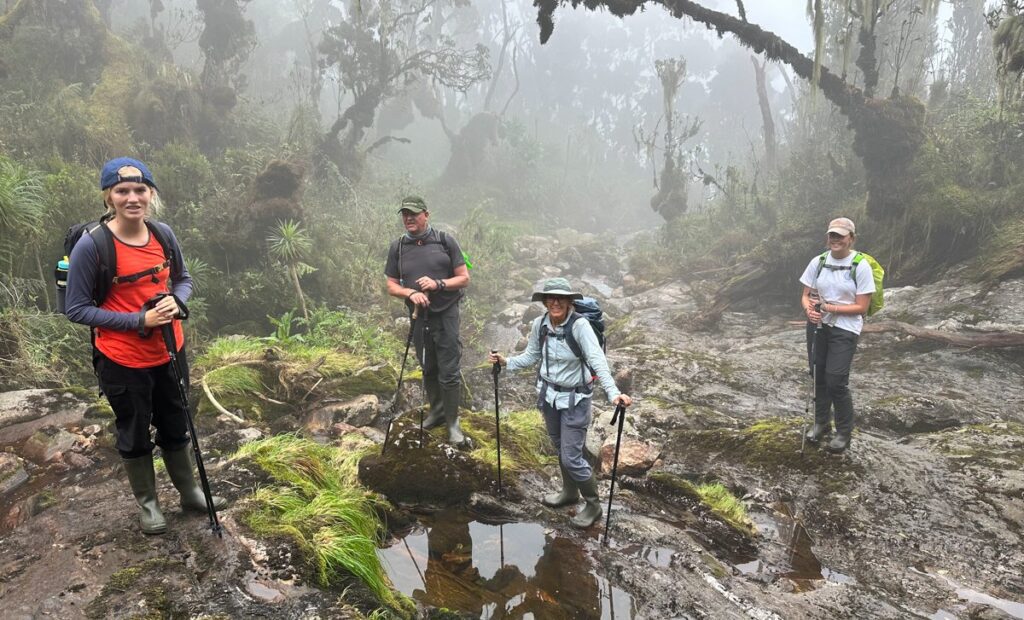
The core gear list for any short Rwenzori trek: a fully waterproof shell jacket with a Gore-Tex or equivalent membrane and completely taped seams, waterproof shell trousers, and genuinely waterproof hiking boots with full ankle support and a lug sole that are not water-resistant but properly waterproof, with a full membrane lining and full-length gaiters for the moorland sections. A moisture-wicking base layer in merino wool or synthetic, a mid-layer fleece, warm camp clothes for the evenings, a sleeping bag rated to at least 0°C (we recommend -5°C for comfort on the Mahoma and Mutinda routes where overnight temperatures can drop significantly), a headlamp, trekking poles, and a daypack or duffel that can be transferred to our porters.
The important distinction for short-trek trekkers: no technical summit gear is required. Crampons, ice axes, harnesses, and helmets are all summit-specific items that are irrelevant below the permanent snow line where all 3-to-4-day Rwenzori routes operate. You do not need to research, purchase, or transport any of these items for a short trek. This simplifies your packing considerably compared to summit itinerary preparation.
We have options if you don’t want to buy certain items in the standard trekking kit for a short trip. Our offices in Kasese maintain a selection of equipment that can be arranged for trekkers who need it. Technical items like crampons, ice axes, harnesses, and helmets for summit treks are available for rental, and we can advise on locally available trekking equipment options for other items when you contact us through our planning page. The single non-negotiable is your boots: waterproof trekking boots need to be broken in before the trek and cannot be improvised from a local rental in a way that will serve you properly across three days of wet Rwenzori terrain. This is the one item that must come with you from home, tested and prepared.
Short Rwenzori Treks Are Ideal For
The Traveller Embedding the Rwenzori in a Broader Uganda Itinerary
Uganda’s greatest attractions are spread across a country with excellent road networks and a wildlife and landscape offering that rewards travellers who move between multiple destinations. Gorilla trekking in Bwindi, chimpanzee tracking in Kibale, the savanna wildlife of Queen Elizabeth National Park, and Nile rafting at Jinja are experiences that many travellers combine in a single Uganda visit, and the Rwenzori Mountains sit naturally within that circuit as a 3-to-5-day component. For a traveler who has allocated four days to the Rwenzori within a 14-day Uganda itinerary, the Mutinda Lookout trek or the 3-Day Mahoma Loop delivers a complete and deeply satisfying Rwenzori experience that fits perfectly within that window without compromising the rest of the itinerary.
The First-Time Mountain Trekker Testing the Waters
A trekker who has never done a multi-day mountain trek but who is drawn to the idea of the Rwenzori will find the short routes an excellent introduction to what sustained mountain hiking actually involves physically, logistically, and experientially. The 3-Day Mahoma Loop is physically demanding enough to be genuinely challenging and rewarding for a fit person who does not regularly hike, while being well within reach for someone who exercises frequently and has excellent general fitness. It gives a real experience of what multi-day mountain trekking feels like: the rhythm of daily stages, the reward of camp arrivals, and the particular pleasure of sleeping at altitude without the scale of commitment that a summit itinerary requires. Many trekkers who start with the Mahoma Loop or the Mutinda trek return the following year for a longer route.
The Experienced Trekker Looking for Something Concentrated and Different
Experienced mountain trekkers who have done routes like Kilimanjaro’s Lemosho, the Tour du Mont Blanc, or comparable long-distance trails sometimes choose a short Rwenzori trek specifically because the Rwenzori’s lower and mid-altitude zones offer something genuinely different from everything they have previously experienced. The unique plants, diverse wildlife, and special mountain climate can be enjoyed on shorter trails, and for trekkers who have already reached many high peaks and want a different kind of mountain adventure instead of just climbing higher, the 4-Day Mutinda trek or the 4-Day Waterfalls Hike can be very rewarding in ways that don’t depend on how high they go.
The Nature and Wildlife Enthusiast
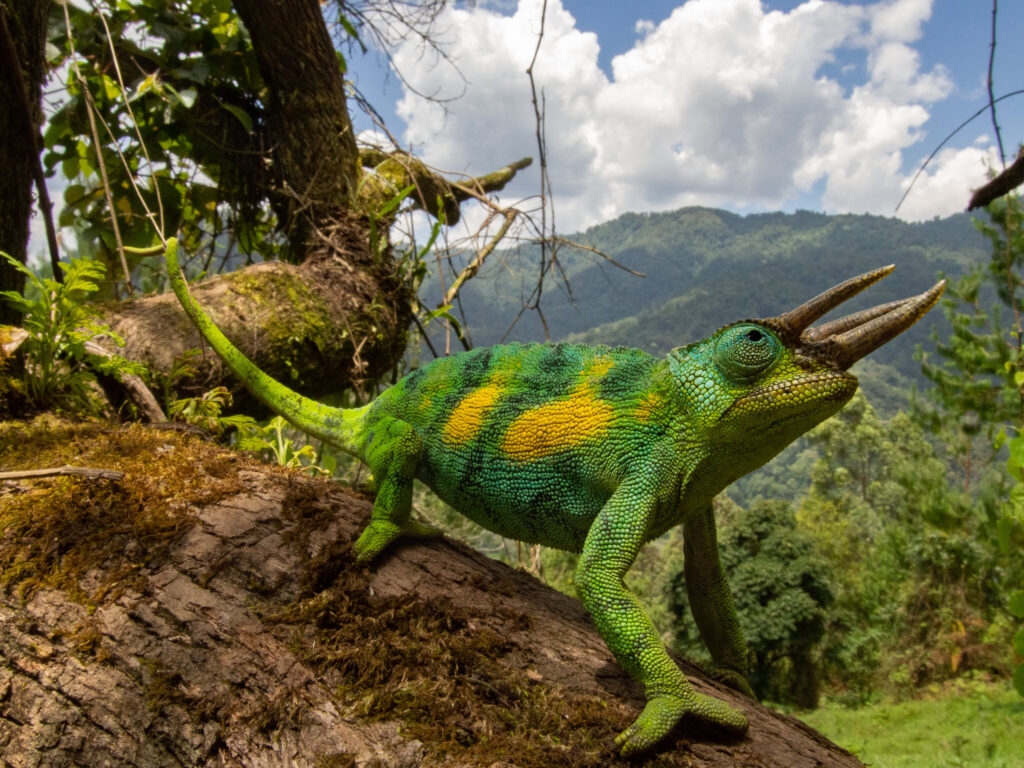
The Rwenzori’s short routes pass through some of the richest wildlife habitat accessible on foot in East Africa. For birdwatchers, the 3-to-4-day window covers multiple avian habitat zones from the lowland forest edge through montane forest to bamboo regions and heather moorland and provides access to endemic and near-endemic species that cannot be found anywhere else in the world. For mammal watchers, the primate communities of the lower forest are reliably present and accessible. For botanists and nature lovers, moving through the different plant zones of the Rwenzori, each with unique plants influenced by height, moisture, and the mountain’s unique history, offers a chance to explore one of the most amazing plant environments in Africa.
The Traveller Combining the Rwenzori With Uganda Wildlife and Primate Safaris
The Rwenzori sits within a broader western Uganda circuit that includes some of Africa’s greatest wildlife experiences. For travelers planning a trip that includes the Rwenzori and gorilla trekking in Bwindi, both the 12-Day Rwenzori and Gorilla Trekking package and the 16-Day Uganda Gorillas and Rwenzori Climbing package include mountain trekking as part of a larger wildlife and primate safari. For travelers who want an even more expansive experience combining the Rwenzori with Queen Elizabeth National Park wildlife and Nile activities, the 19-Day Uganda Adventure Safari builds a comprehensive itinerary that uses a shorter Rwenzori component within a multi-destination program.
What to Expect: A Day on a Short Rwenzori Trek
Understanding the rhythm of a short Rwenzori trekking day helps calibrate preparation and expectation. The structure is consistent across all short routes, with variations in terrain and duration.
After breakfast at camp, usually between 7 and 8 am, the trekking day starts. Your guide walks at a speed that suits the ground and the group’s fitness level, stopping to share information about fascinating plants and animals you see, like the types of moss on rocks, the behavior of monkeys above you, and how the lobelia plant gets water to its roots in the rainy Rwenzori area. These pauses are part of what separates a guided Rwenzori trek from a self-navigated walk: the guide’s knowledge transforms what might otherwise be a physical exercise into an education.

Daily hiking time on the 3-Day Mahoma Loop and similar short routes is typically between four and seven hours depending on the stage, the conditions, and the pace. The terrain is consistently challenging, wet, and rooted, and occasionally steep, and trekking poles are genuinely useful for balance on the descents. Lunch is taken on the trail or at an intermediate rest point. Arrival at camp is typically in the early to mid-afternoon, leaving time to rest, explore the immediate camp environment, and acclimatize before the evening temperature drops.
Camp evenings on the Rwenzori have a distinctive quality that regular day hikers never experience and that many trekkers cite as one of the most memorable aspects of their time on the mountain. The forest goes quiet in a different register after dark. The altitude brings a clarity to the air that is palpable on clear nights. The simple pleasure of a meal at camp after a day’s hiking, with the mountain around you and the day’s images processing quietly, is something that photographs cannot fully capture. Bring it home in your memory.
Planning Your Short Rwenzori Trek: Practical Considerations
Getting to the Rwenzori
The Rwenzori Mountains are accessed via Kasese in western Uganda, approximately 400 kilometers from Kampala on a smooth tarmac road. The drive from Kampala takes between 5 and 6 hours by private vehicle, making a same-day arrival possible from an early morning start. Domestic flights between Entebbe and Kasese also operate, reducing the journey to approximately one hour. For travelers building the Rwenzori into a wider Uganda circuit, Kasese sits naturally on the route between Queen Elizabeth National Park to the south and Fort Portal to the north. Full transport logistics for getting to the trailhead are covered in our guide on how to get to the Rwenzori Mountains.
The Best Time of Year for Short Rwenzori Treks
Short Rwenzori treks are possible throughout the year, but the drier seasons—December to March and June to September offer more consistent conditions and better visibility for the forest and moorland routes. The forest is beautiful in all seasons, but the panoramic views from the Mutinda Lookout and Lake Mahoma that make those routes spectacular are more reliably clear in the drier months. Even in the dry season, the Rwenzori receives significant rainfall; your waterproof gear is required year-round. The guide to the best time to visit the Rwenzori Mountains covers the detailed seasonal picture.
Fitness Requirements for a 3–4 Day Trek
Short Rwenzori treks are within reach of fit travelers without specialist mountain experience. The 3-Day Mahoma Loop involves sustained uphill walking across multiple hours each day on wet, rooted terrain. It will challenge trekkers who are not physically active in everyday life, but it is well within the capability of someone who exercises regularly, walks or runs several times per week, and has done some hill or stair work in the weeks before departure. The 4-Day Mutinda Trek is more demanding, with greater altitude gain and more sustained exposure to challenging terrain. Both require genuine cardiovascular fitness and functional leg strength. The Rwenzori fitness guide gives the most complete, honest picture of the physical preparation that delivers the best experience on any Rwenzori route.
What a Personalised Short Trek Looks Like
One of the clearest advantages of booking a personalized short Rwenzori trek rather than joining a group departure is the ability to calibrate the daily pace, the side-trail detours, and the specific emphasis of the experience to what you actually care about. A hiker who is primarily interested in birds can have a guide who knows the endemic species by phone and can position the group to maximize sightings. A trekker who wants to understand the Rwenzori’s geology can have that woven into every camp conversation. A small group of friends can move faster and cover more terrain without being limited by a larger group’s average pace. This personalization is not possible on a generic group trek, and it is precisely what we build into every itinerary.
Short Treks as a Gateway: Coming Back for More
A significant proportion of the trekkers who come back to the Rwenzori for a second or third time began with a short route. The 3-Day Mahoma Loop or the 4-Day Mutinda Trek introduced them to the mountain’s character, gave them a feel for what multi-day trekking in this environment involves, and left them wanting to go deeper. Some of those trekkers return for the 7-day Central Circuit to Margherita. Some come back for the 8-day Kilembe Trail to the summit. Some progress on the 13-day 6 Peaks Expedition or the 18-day traverse of all 8 major peaks. In every case, the short trek was not a lesser version of the full experience; it was the beginning of a relationship with a mountain that rewards repeated encounters.
If you complete a short Rwenzori trek and find yourself already thinking about coming back, that is not an accident. It is what the mountain does. Tell us when you book your short trek that you want to understand what a longer route would involve, and we will give you the most honest and specific account of what the progression looks like. There is no pressure and no upselling—just the information that helps you make the right decision for your next trip.
Frequently Asked Questions: Short Treks in the Rwenzori Mountains
Can I do a shorter trek in the Rwenzori, like 3–4 days?
Yes, absolutely. The Rwenzori Mountains offer several excellent trekking options within a 3-to-4-day window, including the 3-Day Mahoma Loop on the Central Circuit Trail, the 4-Day Mutinda Lookout Trek via the Kilembe Trail, the 3-Day Sine Camp and Samalira Falls Trek, and the 4-Day Rwenzori Waterfalls Hike. These trails take you through the Rwenzori’s mountain rainforests, bamboo areas, moorlands, glacial lakes, and amazing viewpoints, and you don’t need to commit to longer trips or complicated itineraries. They are complete and deeply rewarding trekking experiences in their own right, not abbreviated versions of longer treks.
What can I see and experience on a 3–4 day Rwenzori trek?
A 3-to-4-day Rwenzori trek lets you explore the amazing mountain rainforest, where you can see unique animals like L’Hoest monkeys and black-and-white colobus, special birds like the Rwenzori turaco, three-horned chameleons, and incredible plants like giants. Depending on the specific route, the experience also includes glacial crater lakes (Lake Mahoma on the Mahoma Loop), panoramic summit views from the Mutinda Lookout, dramatic waterfall environments on the Kilembe Trail routes, and the full sensory immersion of multi-day trekking in one of Africa’s most biodiverse mountain ranges.
Can I reach a summit in 3–4 days on the Rwenzori?
The glaciated high summits of the Rwenzori—Margherita Peak at 5,109 meters on Mount Stanley, Edward Peak on Mount Baker, and similar objectives—cannot be reached safely in 3 to 4 days. The standard summit itinerary requires at least 7 to 8 days to allow adequate acclimatization and to cover the physical distance involved. However, meaningful altitude can be reached on short routes: the 4-Day Mutinda Lookout Trek reaches approximately 3,688 meters, well into the Afro-alpine moorland zone, and provides exceptional views of the central peaks and glaciers. For trekkers specifically seeking the highest possible altitude within a short timeframe, the Mutinda itinerary is the optimal choice.
How fit do I need to be for a 3–4 day Rwenzori trek?
A good baseline of cardiovascular fitness and leg strength is required for any Rwenzori trek of 3 to 4 days. The terrain is consistently challenging—wet, steep in sections, and with trail surfaces dominated by roots, mud, and waterlogged bog that place sustained demands on balance and lower body strength. A traveler who exercises regularly, walks or runs several times per week, and can manage extended periods of uphill movement without significant distress is well-prepared for the 3-Day Mahoma Loop or the 3-Day Sine Camp trek. The 4-Day Mutinda Lookout trek demands more, with greater altitude gain across the daily stages. The 4-Day Waterfalls Hike is more moderate in its altitude demands but still requires solid general fitness. We do not recommend any Rwenzori trek for trekkers who are not physically active in everyday life.
Do I need technical climbing gear for a 3–4 day Rwenzori trek?
No, you only need special climbing gear like crampons, ice axes, harnesses, and helmets for routes above about 4,200 meters where there is permanent ice, especially if you want to reach the top of Margherita Peak and other icy summits. All 3-to-4-day Rwenzori routes operate below the permanent snow line and do not involve glaciated terrain. The gear requirements for short treks are confined to standard trekking equipment: a waterproof shell jacket and trousers, genuinely waterproof hiking boots, full-length gaiters, warm base and mid-layers, a sleeping bag rated to at least 0°C, trekking poles, and a headlamp.
Can I rent gear for a short Rwenzori trek?
Your most critical personal gear items, including waterproof boots, a shell jacket, and shell trousers, should be brought from home, as these items depend on fit and need to be broken in before use. Waterproof boots rented at the trailhead will not be fit to your foot and will cause blisters and discomfort across three days of wet-terrain hiking. We maintain equipment at our Kasese offices and can advise on specific items that are available locally when you contact us during the planning process. For technical summit equipment on longer treks, we maintain a full rental inventory of crampons, ice axes, harnesses, and helmets available by advance arrangement.
What is the cheapest short Rwenzori trek?
The one-day Nyabitaba hike, starting at $120 per person, is the most accessible entry point. The 2-day Sine Camp Trek starts at approximately $250 per person, and the 3-day Mahoma Loop starts at $700. The 4-Day Mutina Lookout Trek starts at $645. Prices include guide fees, porter fees, park fees, and camp accommodation. Our Rwenzori trekking costs guide provides a detailed cost breakdown for each itinerary.
What is the best short Rwenzori trek for wildlife?
The 3-Day Mahoma Loop is the best short Rwenzori trek for seeing wildlife because it goes through different types of forests and areas where many unique animal species live. With an experienced guide, you can reliably encounter L’Hoest monkeys, colobus, blue monkeys, the three-horned chameleon, and the Rwenzori turaco on this route. The 2-Day Sine Camp Trek on the Kilembe Trail is an excellent alternative for birdwatchers specifically, as the Kilembe Valley’s southern forest edge habitat is particularly rich in sunbirds and forest specialists.
What is the best short Rwenzori trek for views of the central peaks?
The 4-Day Mutinda Lookout Trek via the Kilembe Trail delivers the finest panoramic views of Rwenzori’s central peaks, available on any route that stays within a four-day timeframe. The Mutinda Lookout at approximately 3,688 meters provides a wide, unobstructed view of Mount Stanley, Mount Baker, and the upper moorland in a single panoramic frame. On a clear morning, the glaciated summits are visible in sharp relief. The 3-Day Mahoma Loop provides views of Mount Baker, Mount Stanley, and the Portal Peaks from Lake Mahoma on clear days, though the viewpoint is less elevated and less panoramic than Mutinda.
Can I add a short Rwenzori trek to a Uganda gorilla or wildlife safari?
Yes. Short Rwenzori treks combine naturally with other Uganda activities. The 12-Day Rwenzori and Gorilla Trekking combination incorporates a full Rwenzori climb, but the Rwenzori component can be adjusted to a shorter 3-to-4-day itinerary within a broader safari package. For travelers building a fully personalized Uganda itinerary that includes the Rwenzori, Bwindi gorillas, Queen Elizabeth wildlife, and other activities, we design the mountain component around the time available and the experience desired. Contact us with your full Uganda itinerary, and we will integrate the right Rwenzori experience within it.
Are you ready to Plan Your Short Rwenzori Trek? Let’s Make It Exactly Right.
The Rwenzori Mountains do not require a two-week expedition to reveal their character. With the right guide and itinerary, you can see one of Africa’s amazing natural wonders in three or four days in the right part of these mountains. It will not look like consolation for not completing the summit. It will look like exactly what it is: a personalized, carefully designed immersion in a mountain range that offers more at every altitude than most people realize before they arrive.
We tailor each Rwenzori trek to the individual trekker. That means understanding your timeline, your fitness level, your interests (wildlife, landscape, altitude, history, all of it), and designing an itinerary that makes the best possible use of the time you have. There is no generic product here, and there is no minimum commitment that excludes you from a genuine Rwenzori experience.
Tell us how many days you have, what you are hoping to see and feel, and what the rest of your Uganda trip looks like. Reach out to our team today and let us do what we do best: match you to the perfect Rwenzori trek for exactly the traveller you are.