
White Water Rafting in Jinja, Uganda: The Ultimate Guide to Rafting the Nile.
Discover whitewater rafting in Jinja, Uganda: Nile River rapids, safety, the best time to go, trip options, history, and travel tips. This guide provides the most detailed and authoritative information about the top rafting destination in Africa.
White water rafting in Jinja is an authentic adventure, not a tourist gimmick or a ride to “just try for fun.” It is one of the most serious, celebrated, and geographically significant rafting experiences on Earth. Fresh from its birthplace, the Nile River remains young, swift, and muscular before it stretches into the long, slow artery that feeds half the African continent.
Rafting here is an opportunity to encounter a river at its most powerful. The rapids are big, technical, and legendary. The setting is lush, equatorial, and alive. The experience is intense but welcoming, adrenaline-heavy yet astonishingly accessible to first-timers. That balance is what made Jinja Africa’s white water rafting capital and one of the world’s outstanding adventure destinations.
Why the Nile River in Jinja Is Globally Unique
Lake Victoria directly feeds the stretch of the Nile River around Jinja. This matters. Unlike rivers dependent on snowmelt or seasonal storms, the Nile here flows with remarkable consistency year-round. That stable volume creates predictable, powerful rapids ideal for both safety planning and pure, sustained thrill.
Before the construction of dams upstream, this section was known for some of the largest commercially rafted rapids in the world, including Grade 5 monsters that earned names whispered with reverence among rafters. While modern dam projects have altered sections of the river, Jinja still delivers long sequences of high-quality rapids that rival anything in Zambia, Nepal, or Costa Rica.
The riverbanks frame the rainforest, papyrus wetlands, and red-earth cliffs, and village life unfolds just beyond the trees. You’re not rafting through an empty canyon; you’re moving through a lived landscape where fishermen wave from dugout canoes and birds cut across the spray.
The White Rafting Experience: What Actually Happens in Jinja.
A typical whitewater rafting day in Jinja begins early. The heat builds fast near the equator, and mornings offer cooler air and clearer light. We always provide a detailed safety briefing before equipping you with a helmet, buoyancy aid, and paddle. Guides explain commands clearly and repeat them until everyone understands. This activity is controlled chaos, not reckless thrill-seeking.
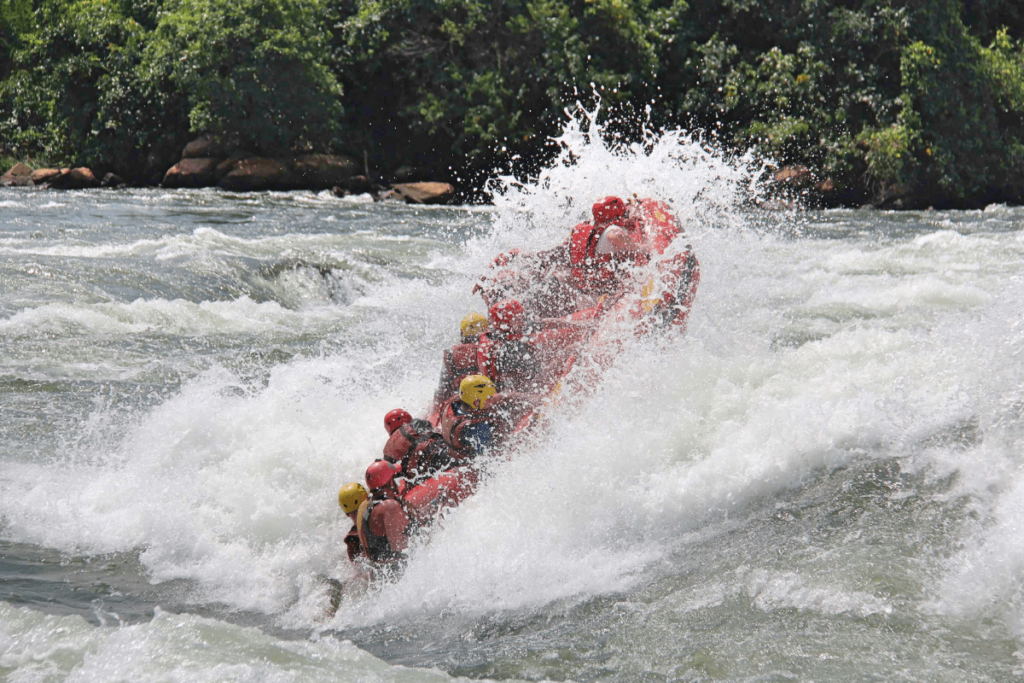
Once on the river, the day unfolds as a rhythm of anticipation, explosion, recovery, and laughter. Calm stretches allow you to float, swim, and soak in the surroundings. Then the river tightens. The raft angles downstream. The roar builds. Suddenly you’re dropping into standing waves taller than the raft itself, water slamming your chest, the guide shouting commands that cut cleanly through the noise.
You will get wet. You may get flipped. That’s part of the design, not a failure of it. Safety kayakers shadow every rapid, ready to scoop swimmers within seconds. The Nile is powerful, but it is also deeply studied, professionally managed, and respected.
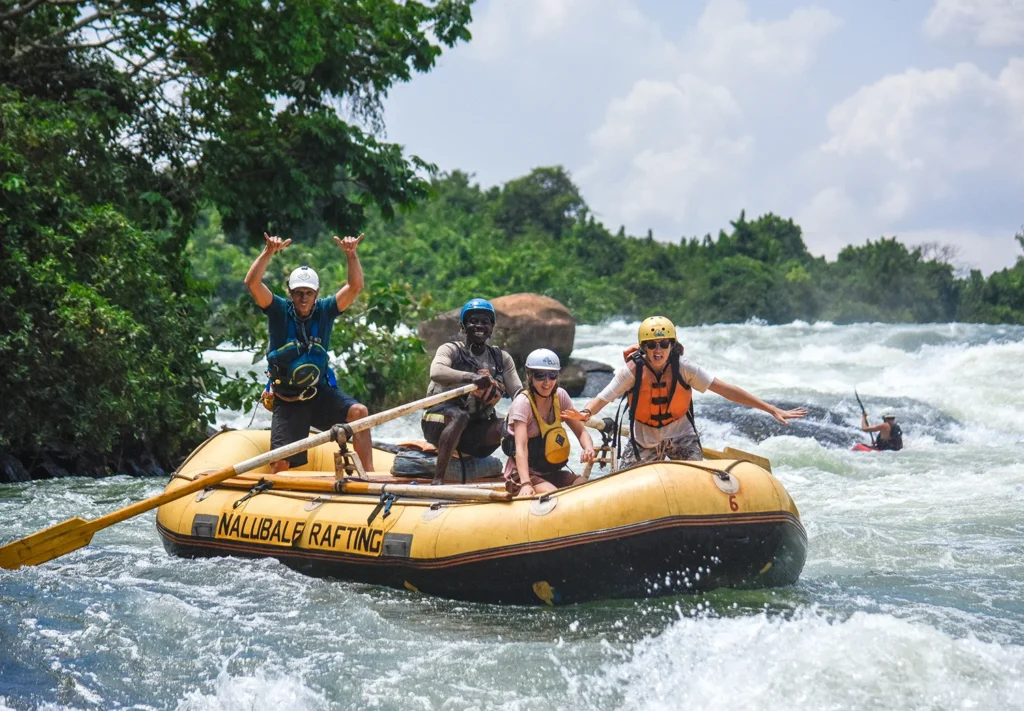
Between rapids, there’s time to breathe, joke, float on your back, and look up at fig trees hanging over the riverbanks. This contrast of violence and calm, adrenaline and serenity, is what makes rafting in Jinja so addictive.
Rapid Grades and What They Mean for You
The Nile River in Jinja offers Grade 3 to Grade 5 rapids. That sounds intimidating, but context matters.
Grade 3 rapids are fun, splashy, and forgiving, perfect for warming up. Grade 4 rapids demand teamwork and attention but reward you with massive waves and long rides. Grade 5 rapids are serious, technical, and optional. Commercial operators scout conditions daily and make conservative calls based on water levels and group ability.
First-time rafters regularly tackle this river. The key is not prior experience; it’s listening, paddling when told, and staying calm if you end up swimming. Fear dissolves quickly when you realize the system works.
Whitewater Rafting Safety.
White water rafting in Jinja has one of the strongest safety records in African adventure tourism. This is not accidental.
Guides are internationally trained and often have decades of experience on the Nile. Rescue kayakers are positioned at every major rapid. Equipment is modern and regularly inspected. Safety briefings are thorough, not rushed.
Swimming in rapids is treated as normal, not a disaster. You’re trained on how to float defensively, how to hold onto your paddle, and how to respond to rescue instructions. The river is powerful, but the operation is disciplined.
If you are pregnant, have serious heart conditions, or cannot swim at all, rafting may not be appropriate. For most reasonably healthy adults, it is well within safe limits.
Half-Day vs Full-Day Rafting: Choosing What’s Right for You.
Full-day rafting is the classic Nile experience. It covers the most rapids, includes long river stretches, swimming opportunities, and usually ends with a riverside meal. This is the option for travelers who want the complete story.
Half-day rafting suits those short on time or easing into adventure travel. It still includes major rapids but compresses the experience into a manageable window.
Some operators also offer family-friendly or Grade 3–only trips, designed for older children or travelers who want excitement without maximum intensity.
Best Time of Year to Go Rafting in Jinja.
Rafting on the Nile River is possible all year-round, which is rare globally. Dry seasons (December–February and June–August) offer sunny weather and slightly lower water levels, making rapids more technical and defined.
Rainy seasons (March–May and September–November) bring higher water levels and bigger waves. The river feels wilder, but safety systems adapt accordingly.
There is no “bad” time, only different personalities of the river.
Jinja Beyond the Rapids and Rafting
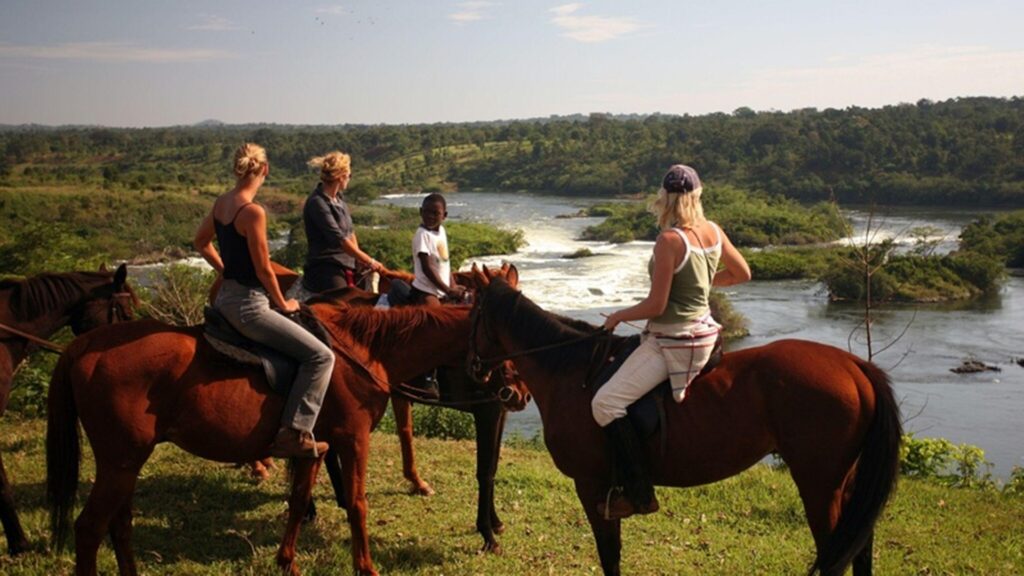
Rafting is the anchor, but Jinja is more than a single activity. The town sits near the historic Source of the Nile, a place layered with mythology, colonial exploration, and modern symbolism. You can pair rafting with kayaking, quad biking, horseback riding, bungee jumping, fishing, or simple riverside downtime.
Jinja exudes a relaxed, social, and international atmosphere. Here, backpackers, families, overland travelers, and luxury guests come together. Evenings drift toward riverfront restaurants, fire pits, and conversations that stretch late into the night.
Who is white water rafting in Jinja for?
This experience attracts a wide spectrum of travelers. Adventure seekers come for the rapids. First-timers come to prove something to themselves. Couples come for shared intensity. Solo travelers come and leave with new friends. Even travelers in their 50s and 60s regularly raft here, guided by professionals who understand pacing and limits.
What unites them is curiosity and the willingness to trust a river and a team.
Why This Experience Defines Adventure Travel in Uganda
Uganda is famous for gorilla trekking, vast savannahs, and mist-covered mountains. White water rafting in Jinja shows a different side of the country: youthful, energetic, outward-looking, and joyfully wild.
It is one of the few places on Earth where you can raft a legendary river, in warm water, with professional safety standards, in a landscape that still feels intimate and human. The Nile here is not a backdrop. It is the main character.
Rafting in Jinja often serves as a pivotal experience for travelers, redefining Uganda not only as a wildlife destination but also as a formidable playground for the adventurous and inquisitive.
White water rafting in Jinja doesn’t just give you a thrill. It gives you a story worth retelling long after the river’s roar fades from your ears.