

What is the real success rate for summiting Margherita Peak in the Rwenzori Mountains? This expert guide explains statistics, risks, preparation, and how trekkers improve their chances.
A reality-checked, data-informed guide for trekkers, first-timers, and serious planners
Margherita Peak, rising to 5,109 meters on Mount Stanley, is the highest point in Uganda and the Democratic Republic of Congo and the crown jewel of the Rwenzori Mountains.
The question almost everyone asks before committing to the trek is deceptively simple:
“What’s the success rate?”
If you’re expecting a single clean percentage, you’re already asking the wrong question.
The honest answer is that Margherita Peak does not have one fixed success rate. It has ranges, conditions, and human variables. We will break down those ruthlessly with no marketing fog and no summit-post bravado so you can understand what success actually looks like, why people fail, and how beginners and experienced hikers alike dramatically improve their odds.
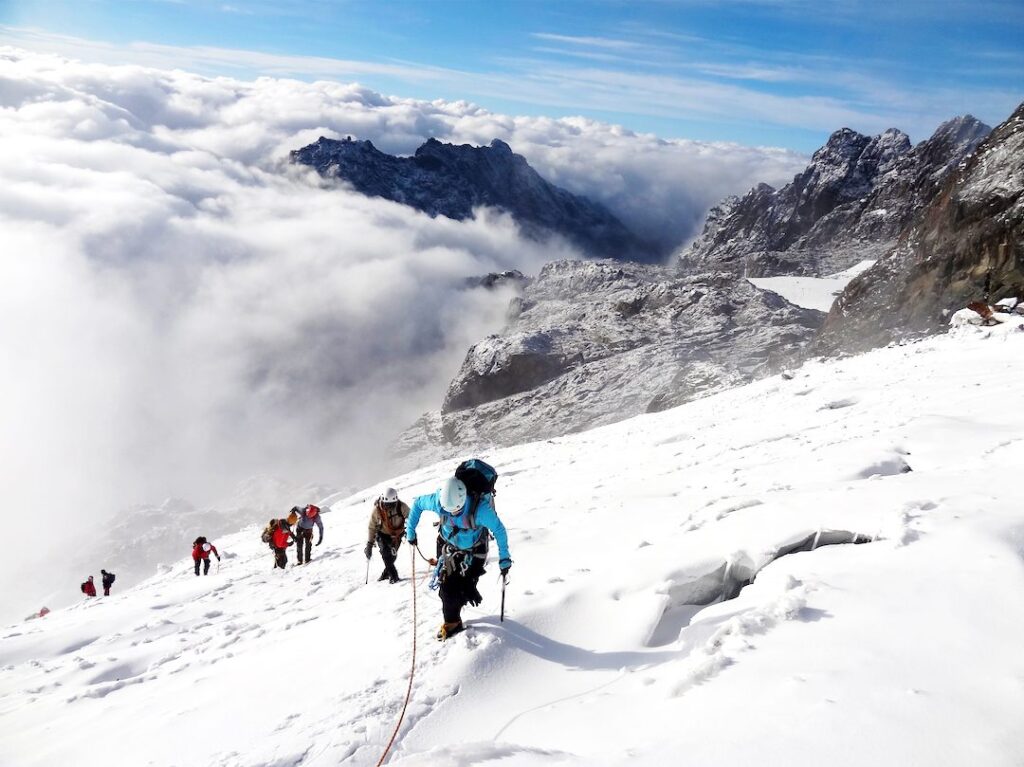
Across properly planned expeditions on the Central Circuit, the realistic summit success rate for Margherita Peak sits between 65% and 85%.
That range widens or collapses depending on four factors:
-
Itinerary length
-
Acclimatization discipline
-
Weather and glacier conditions
-
Decision-making on summit day
Anyone quoting a flat “95% success rate” is selling confidence, not accuracy.
Why Margherita Peak Is a Special Case
Margherita Peak is often misunderstood because it sits in an odd middle ground of Mount Stanley.
It is:
-
Not a technical alpine climb in the classic sense
-
Not a simple high-altitude walk-up either
Its hybrid nature explains the mixed outcomes.
What Makes It Achievable
-
Gradual altitude gain over multiple days
-
Permanent glaciers but limited exposure time
-
Fixed ropes on steeper sections
-
Professional guides and established infrastructure
What makes it somewhat unachievable.
-
The region experiences persistent wet conditions throughout the year.
-
Rapid weather changes near the summit in the Wet seasons
-
Psychological fatigue after many days of mud and cold from the Lower Rwenzori Slopes
-
Summit day decisions made too late or too optimistically
Margherita Peak is less about raw strength and more about endurance plus clear judgment.
Breaking Down the Success Rate by Trek
Well-Planned 7–9 Day Central Circuit Treks
Success rate: ~80–95%
These itineraries:
-
Include proper acclimatization nights
-
Schedule summit day early and conservatively
-
Allow weather buffers
-
Attract trekkers who prepared physically and mentally
Most successful summits come from these kinds of itineraries. The matter of fact is that almost all these itineraries reach Margheritah Peak.
Climb Margherita Peak Kilembe Trail
$1700 Per Person
Margherita Peak Climb (5,109 m)
$1400 Per Person
Compressed or Rushed Rwenzori Itineraries
Success rate: ~50–70%
Shortened treks sacrifice:
-
Acclimatization
-
Rest days
-
Weather flexibility
Failures here are rarely dramatic; they’re usually strategic turnarounds due to exhaustion, altitude symptoms, or deteriorating conditions.
4-Day Rwenzori Trek to Margherita Peak
5-Day Rwenzori Trek to Margherita Peak
The Real Reasons Some People Don’t Summit Margherita Peak.
Altitude Effects
Even with gradual ascent, some bodies struggle above 4,500 meters.
Symptoms don’t always show early, and summit day is when they collect interest.
Weather and Glacial Conditions
Glacier sections require visibility, stability, and time.
If clouds thicken or ice hardens, guides turn people around. That’s competence, not defeat.
Fatigue Accumulation
By summit day, you’ve already trekked for nearly a week through mud, cold, and uneven terrain.
Margherita doesn’t overwhelm you instantly; it gradually wears you down.
Late Starts and Slow Pacing
Summit attempts that start late almost always fail.
This is nonnegotiable physics
Can Beginners Summit Margherita Peak?
Yes, but only beginners who stop romanticizing the word “beginner.”
Successful first-timers share these traits:
-
They choose longer itineraries
-
They listen to guides without debate
-
They pace conservatively from day one
-
They care more about finishing safely than “standing on top.”
Many failures come from experienced hikers who underestimate the Rwenzori’s cumulative demands

Margherita Peak is not conquered. It is attempted. That mindset alone increases survival and, paradoxically, summit success.
Why the Rwenzori Have a Higher Completion Rate Than You’d Expect
Despite the challenges, Margherita Peak has a better success profile than many famous summits at similar altitudes because:
-
The ascent is gradual
-
The infrastructure is stable
-
The guiding culture is conservative and safety-first
-
There is no “summit or die” culture here
This is a mountain that quietly filters people rather than spectacularly breaking them.
So, what is the success rate for summiting Margherita Peak?
-
High enough to justify the effort
-
Low enough to demand respect
-
Heavily dependent on preparation, not bravado
For hikers at any level, especially those new to high altitude, Margherita Peak is one of the most ethically climbable 5,000+ meter summits on Earth. This is not due to its ease of ascent, but rather because it enables individuals to achieve success by adhering to ethical principles and taking their time.
That combination is rare.
And that’s why people who summit Margherita Peak don’t brag loudly.
They come back quieter, changed by the work it took to earn that view.


