What Are the Rwenzori Mountains Famous For? The Complete Guide to Africa’s Most Extraordinary Mountain Range
What are the Rwenzori Mountains famous for? 12 reasons, from Africa’s last equatorial glaciers & giant lobelias to the 3rd-highest peak & UNESCO status.
People ask me what the Rwenzori is famous for, and I always pause before answering, because the honest answer is everything. Its glaciers, plants, history, rain, difficulty, beauty, and the unique feeling it gives those who have been inside them make it famous. The Rwenzori is not famous for one thing. It is famous for being the most complete mountain experience on the African continent.
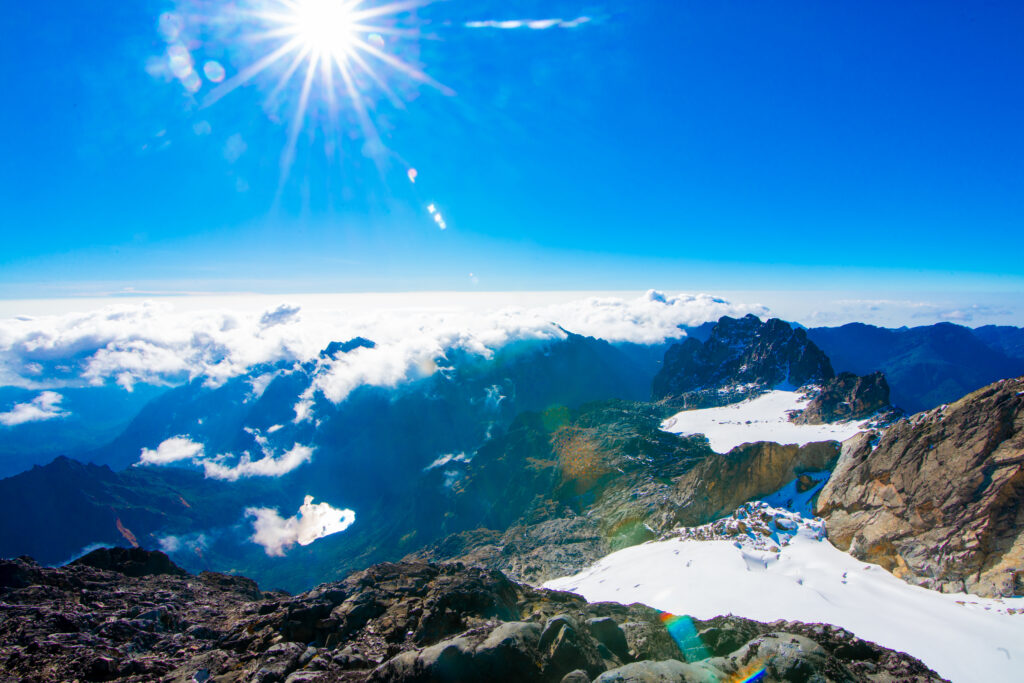
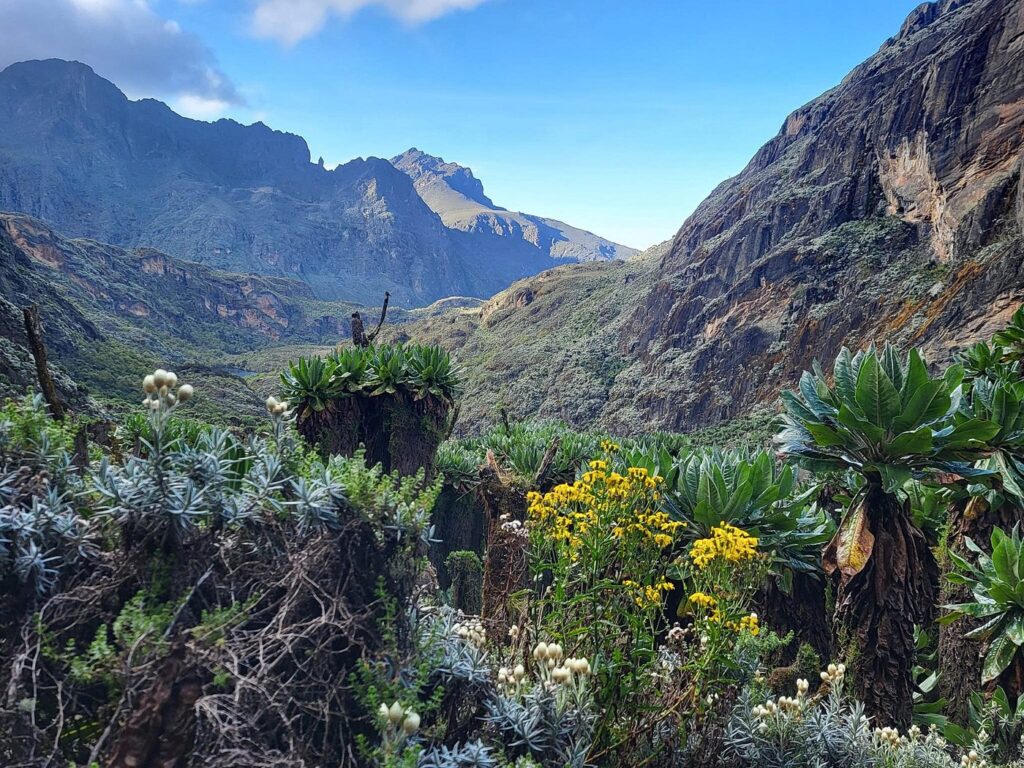
The Rwenzori Mountains of western Uganda are famous for many things simultaneously, which is part of what makes them so difficult to compress into a single definition. They are famous as the “Mountains of the Moon,” a name that appears in Ptolemy’s second-century geography and has never stopped resonating. They are renowned for their summit glacier on Mount Stanley, one of the last equatorial ice masses remaining in Africa. They are renowned for their giant plants: the five-meter giant lobelias and the tree-like groundsels of the Afroalpine zone that exist nowhere else on Earth in quite this abundance. They are renowned for their five intact vegetation zones, the completeness and quality of which earned them UNESCO World Heritage Site status in 1994. They are famous for being the third-highest mountain range in Africa, with Margherita Peak on Mount Stanley reaching 5,109 meters, higher than anything in Europe outside the Caucasus. They are famous for being extraordinarily, persistently, and legendarily wet.
They are also famous, among the international trekking community, for being the most underrated major mountain destination in Africa, which is itself a kind of fame. Ask any experienced East African mountain guide to name the range that most rewards the trekker who actually spends time inside it, and the Rwenzori will appear on virtually every list. Its relative obscurity compared to Kilimanjaro is not a reflection of its quality; it is a reflection of its difficulty, its remoteness, and the demanding conditions that deter casual visitors while creating exactly the kind of expedition atmosphere that serious trekkers travel a very long way to find.
This article covers everything the Rwenzori Mountains are famous for, in the depth that each claim deserves. This article is written for trekkers who are seriously researching whether the Rwenzori should be on their expedition list, and the honest answer, which it will substantiate across every dimension, is yes.
What the Rwenzori Mountains Are Famous For: At a Glance
The table below summarizes the ten most significant things the Rwenzori Mountains are internationally famous for, with the key facts and the reason each one is relevant for trekkers planning an expedition.
Famous For
The Detail
Why It Matters
Name: Mountains of the Moon
Referenced by Ptolemy c. 150 AD as “Lunae Montes,” source of the Nile
One of the oldest named geographical features in the world, with nearly 2,000 years of recorded human fascination
Third-highest peak in Africa
Margherita Peak, 5,109m higher than anything in Europe outside the Caucasus
A genuine world-class mountaineering objective on an accessible guided expedition
UNESCO World Heritage Site
Designated 1994 for outstanding biodiversity and ecological integrity
One of only two UNESCO World Heritage Sites in Uganda; internationally protected status
Last equatorial glaciers in Africa
Stanley Glacier on Mount Stanley one of the last remaining equatorial ice masses in the world
A vanishing natural phenomenon, climate science research hub, and an urgent reason to visit now
Giant lobelias and groundsels
Lobelia wollastonii (5m+) and Senecio adnivalis Afroalpine giants found nowhere else
The defining botanical spectacle of any African mountain; produces the most otherworldly landscapes on the continent
Five intact vegetation zones
Unbroken transect from tropical rainforest to equatorial glacier in 3,660 vertical metres
The most complete mountain ecosystem sequence in Africa; primary reason for UNESCO status
Albertine Rift endemics
13+ bird species endemic to the Albertine Rift, primates, plants found nowhere else
One of the planet’s most important biodiversity hotspots in a compact, trekable range
Exceptional wetness
Annual rainfall exceeds 2,500mm; cloud cover for most of the year; the “Rainmaker”
Creates the extraordinary moss-draped landscapes that make the Rwenzori visually unique
Non-volcanic geology
An ancient tectonic block, not a volcano unique among Africa’s high mountains
Different ecology, different history, different character from Kilimanjaro and the Virungas
The Bakonjo people
Indigenous mountain community with a centuries-old relationship with the range
Cultural depth that no other East African mountain destination matches
1. The Mountains of the Moon: The Most Ancient Name in African Geography
The single most persistent and evocative thing the Rwenzori Mountains are famous for is their name, the Mountains of the Moon. This name has a recorded history stretching back nearly two thousand years, making it one of the oldest surviving place names in African geography and one of the most enduring geographical mysteries in the history of cartography. Claudius Ptolemy of Alexandria, writing his Geographia in approximately 150 AD, described snow-capped equatorial mountains he called “Lunae Montes,” or Mountains of the Moon, as the source of the Nile. He placed them at approximately the correct latitude for the Rwenzori, 33 kilometers north of the equator on the border of modern Uganda and the Democratic Republic of Congo.
The name passed through the Arab geographical tradition as “Jabal al-Qamar” (Mountain of the Moon), appearing on medieval Islamic maps and in the writings of al-Idrisi and other Arab geographers who preserved and elaborated Ptolemy’s account. It entered European cartography and remained there for centuries as a theoretical feature mountains described in ancient texts but never confirmed by direct observation until Henry Morton Stanley’s Emin Pasha Relief Expedition of 1887–1889 placed him near the range and allowed him, on 24 May 1888, to watch the snow-capped peaks through a break in the cloud and confirm that the Mountains of the Moon were real, located, and exactly as remarkable as their reputation suggested.
The name carries a quality that is almost pre-rational in its appeal. “Mountains of the Moon” conveys remoteness, mystery, and a geological improbability: snow and ice at the equator, in the heart of tropical Africa, that no description can fully replace. It is the reason that trekkers from every continent know the name before they know anything else about the range, and it is the reason that a first clear view of the snow-capped summits from the valley below produces, in almost every visitor, a moment of recognition that feels older than their experience of the mountain.
2. The Third-Highest Mountain in Africa and Why That Matters More Than the Number
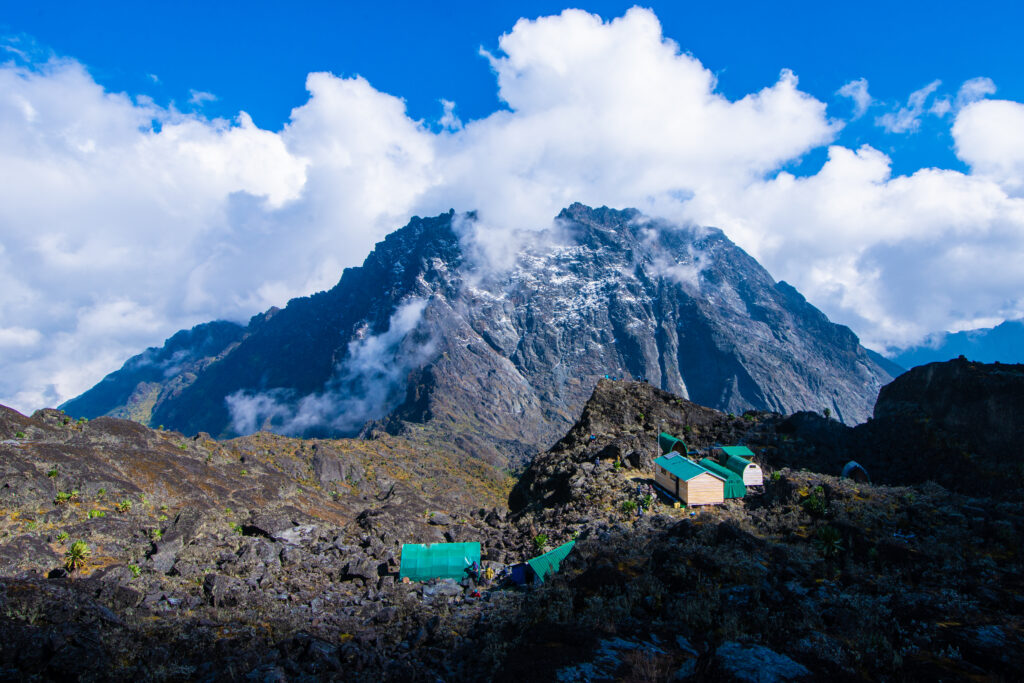
The Rwenzori Mountains are famous for containing the third-highest summit in Africa and for holding four of the continent’s seven highest peaks. Margherita Peak on Mount Stanley reaches 5,109 meters above sea level, the highest point in Uganda, the highest in the Democratic Republic of Congo, and a summit that towers above everything in Europe outside the Caucasus range. But raw altitude rankings, while impressive, do not fully capture why this peak matters for a trekker deciding where to invest in an expedition.
Summit
Height
Africa Rank
Country
Type
Kilimanjaro (Uhuru Peak)
5,895 m
1st
Tanzania
Dormant stratovolcano
Mount Kenya (Batian)
5,199 m
2nd
Kenya
Extinct volcano (eroded)
Margherita Peak, Rwenzori
5,109 m
3rd
Uganda/DRC
Tectonic block mountain
Mount Stanley (Alexandra)
5,091 m
4th
Uganda/DRC
Tectonic block mountain
Mount Speke (Vittorio Emanuele)
4,890 m
5th
Uganda
Tectonic block mountain
Mount Baker (Edward Peak)
4,843 m
6th
Uganda
Tectonic block mountain
Mount Emin (Umberto)
4,798 m
7th
Uganda/DRC
Tectonic block mountain
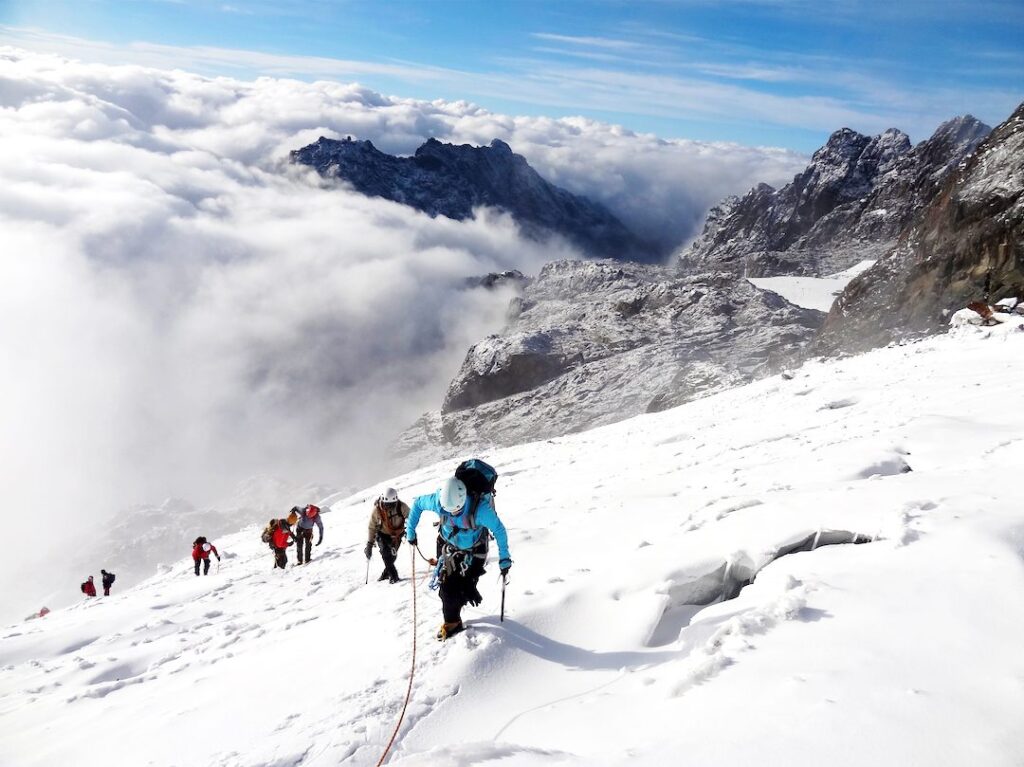
What the altitude ranking actually communicates, in the context of the Rwenzori, is that Margherita Peak is a genuinely serious mountaineering objective, not a high-altitude walk like the non-technical routes on Kilimanjaro, but a real glacier climb requiring crampons, ice axes, roped teams, and the physical and psychological preparation appropriate to a summit at over 5,000 meters. The Uganda Wildlife Authority has installed a glacier bridge and fixed climbing lines on the critical crevasse section of the Stanley Plateau approach, improving safety and accessibility, but the summit remains a technical achievement by any objective standard.
What is equally significant is that the Rwenzori does not peak at a single summit; it is a range of massifs, each carrying multiple named peaks above 4,600 meters. Mount Speke (4,890 m), Mount Baker (4,843 m), Mount Emin (4,798 m), Mount Gessi (4,715 m), and Mount Luigi di Savoia (4,627 m) are all real mountaineering objectives in their own right, each with distinct approaches and summit characters. The Rwenzori is the only range in Africa where a single expedition can legitimately target multiple glaciated summits above 4,600 meters, a claim that no other East African mountain destination can make.
3. Africa’s Last Equatorial Glaciers: A Natural Wonder Under Threat
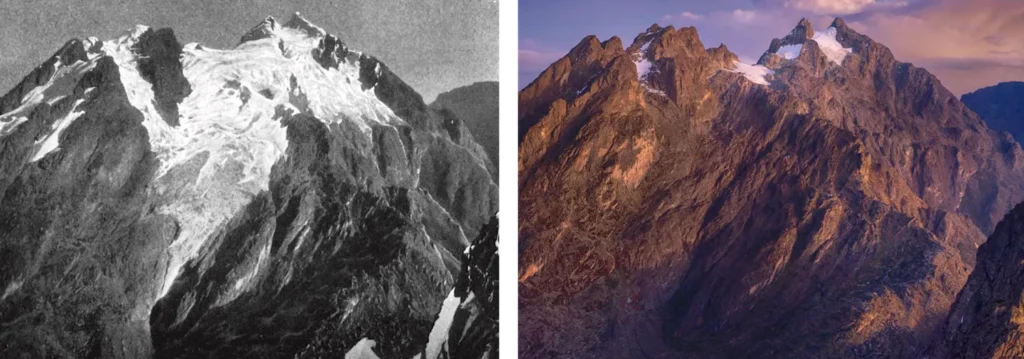
Among the things the Rwenzori Mountains are most urgently famous for in the twenty-first century is something that is disappearing in real time: the last significant equatorial glaciers in Africa. The Stanley Glacier on Mount Stanley is one of the very few remaining ice masses within the tropics on the entire African continent, and the comparison between Vittorio Sella’s meticulous 1906 photographs of the glacier and current satellite imagery tells a story of loss that is both scientifically documented and visually unmistakable.
The glaciers of the Rwenzori have lost approximately 80% of their surface area since the Duke of Abruzzi’s 1906 expedition, which produced the first systematic photographic and cartographic record of the ice. The rate of recession has accelerated in the twenty-first century, driven by rising temperatures associated with climate change, and research institutions monitoring the remaining ice have suggested that the Rwenzori’s last glaciers may disappear entirely within decades. This is not a prediction made to provoke alarm; it is a scientific assessment based on measured recession rates, temperature trends, and the simple mathematics of what remains.
For trekkers, the glacier’s significance is multiple. It is a visual phenomenon of extraordinary beauty: the Stanley Glacier seen from below, from Margherita Camp at 4,485 meters in the pre-dawn dark of summit day, with headlamps lighting the ice ahead, is one of the most powerful visual experiences available on any African mountain. It is a physical challenge: the glacier section requires genuine technique, and the satisfaction of the summit is directly proportional to the technical seriousness of what was required to reach it. Moreover, the opportunity to stand on ice at the equator in Africa is diminishing, as every guide who has worked the Rwenzori for over a decade has witnessed the margin retreat.
The glacier that exists today on Mount Stanley is a fraction of what the Duke of Abruzzi photographed in 1906. The trekker who comes to the Rwenzori in the next decade will see something that their grandchildren may not. This is not a reason for despair it is a reason to come now.
4. A UNESCO World Heritage Site And the Biodiversity That Earned It
The Rwenzori Mountains were designated a UNESCO World Heritage Site in 1994, one of only two natural World Heritage Sites in Uganda. The designation is not just a title; it shows that the Rwenzori Mountains were carefully evaluated against UNESCO’s standards for exceptional global importance, and they met several criteria at the same time, which is quite rare for natural heritage sites. The main reason for the designation was the area’s beautiful plants. The Rwenzori has five different types of plant life, ranging from Afro-Montane forest at 1,450 meters to glacial summit at 5,109 meters, which show the most complete and untouched
What earned the designation, at its core, was the vegetation. The Rwenzori has five well-preserved plant zones, from Afro-Montane forest at 1,450 meters to glacial summit at 5,109 meters, showcasing the most complete and untouched mountain ecosystems in Africa. The giant lobelias and giant groundsels in the Afroalpine zone, the amazing giant heather forests with their thick moss, the unique bird species found only in the Albertine Rift, and the rich variety of life in the montane forest zones all made it clear to the UNESCO World Heritage Committee that this area is truly special. The Rwenzori is genuinely exceptional among the world’s mountain ranges for the quality and completeness of its ecological communities.
In 2008, the Rwenzori received a second international conservation designation: recognition as a Ramsar Wetland of International Importance, acknowledging the mountain’s critical role as a water source for the surrounding region. The rivers that come from the Rwenzori’s glaciers and snowfields supply water to both the Nile system to the east and the Congo system to the west, making the mountain’s water system crucial for millions of people living in those areas.
5. Giant Plants That Exist Nowhere Else on Earth
If you asked a thousand trekkers who have walked the Rwenzori’s high zones to identify the single most memorable visual experience of their trek, a significant majority would say: the giant lobelias. This is not hyperbole; it is a consistent response that reflects the genuine power of encountering plants whose scale, form, and ecological context have no parallel anywhere in the temperate-zone botanical experience that most international trekkers bring to the mountain.
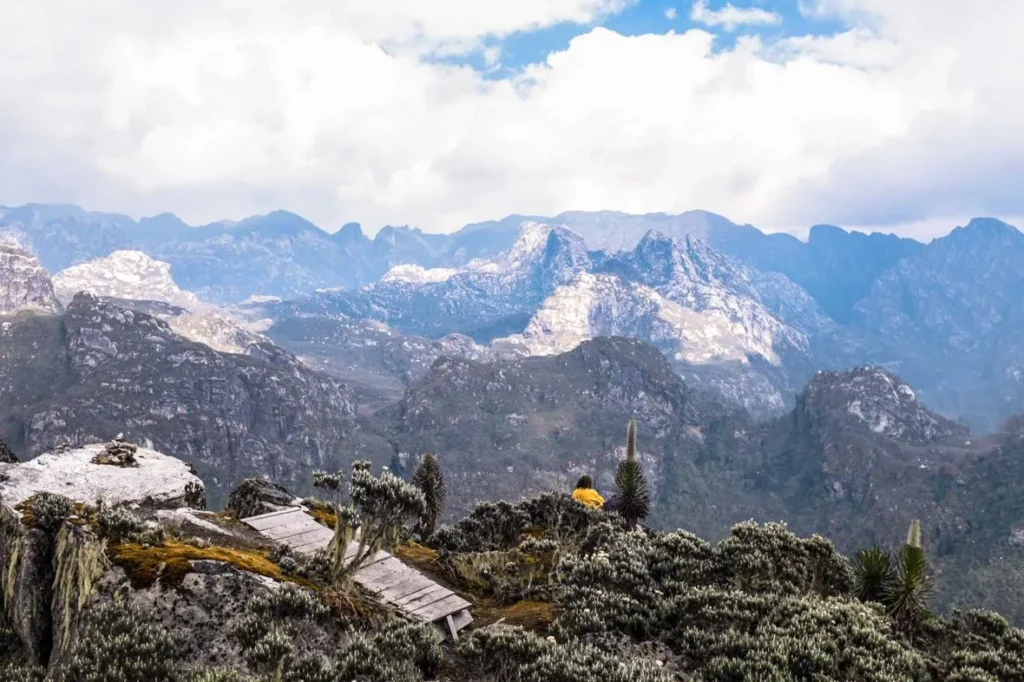
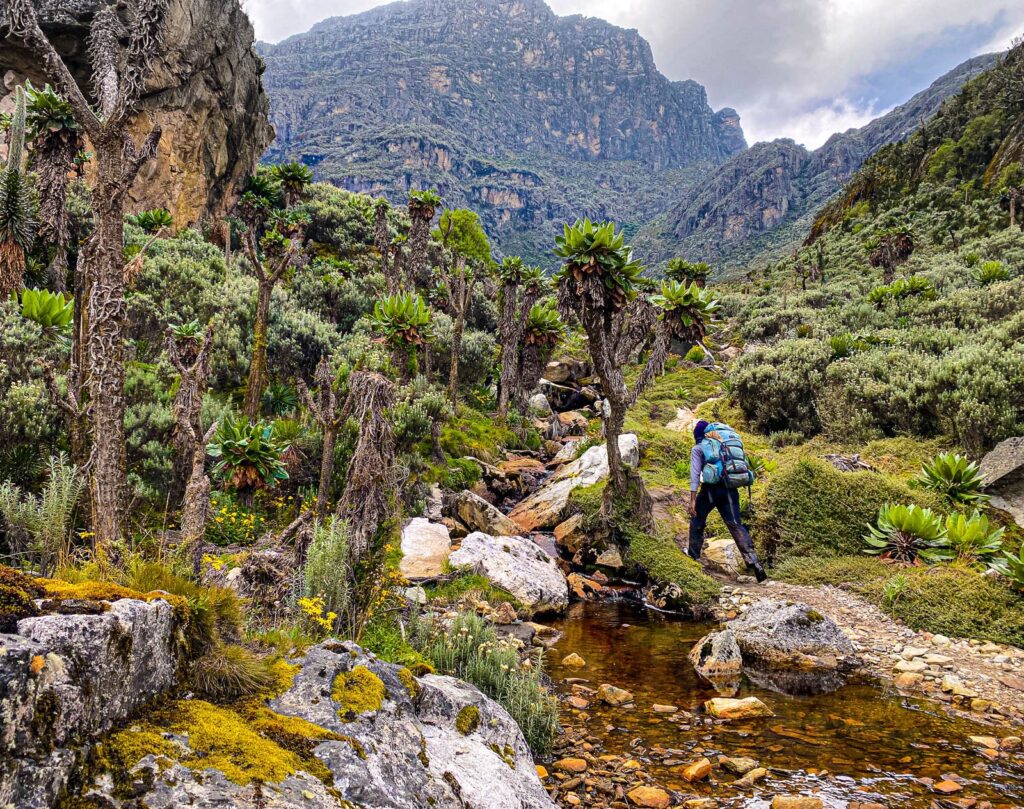
Lobelia wollastonii, the giant lobelia of the Rwenzori, grows in the Afroalpine Moorland Zone between approximately 3,500 and 4,500 meters, producing individual plants that reach four to five meters in height. The plant spends years as a ground-level rosette before sending up a single massive flowering spike, which is packed with hundreds of small tubular blue flowers, using a monocarpic strategy at a scale that challenges comprehension. The spike, when fully developed, towers above a standing adult’s head height, and the density of its flowering is extraordinary. After flowering, the plant dies. This growth strategy’s scale, combined with its altitude, creates a landscape of surpassing strangeness.
The giant groundsel Senecio adnivalis and related Dendrosenecio species are the giant lobelia’s counterparts: tree-like plants with branching trunks topped by cabbage-headed rosettes, reaching three meters or more, whose dead leaves hang in a skirt around the trunk rather than being shed, providing insulation against the nightly frost that regularly drives temperatures below zero at these altitudes. Both plants demonstrate the phenomenon of Afroalpine gigantism, the convergent evolution of oversized plant forms on the isolated high mountains of equatorial Africa, and both are among the most evolutionarily distinctive organisms in Africa’s entire botanical heritage.
The giant tree heathers of the Heather-Rapanea Zone (3,000–3,500 meters) are the third pillar of the Rwenzori’s botanical fame. Erica arborea grows to fifteen to twenty meters in the Rwenzori’s heather zone heights, which would be extraordinary for heather in any temperate-zone context, and every surface of every tree is covered in deep communities of mosses and old man’s beard lichen (Usnea) that provide the zone its characteristic surreal, submerged quality. Walking through a mature Rwenzori heather forest is one of the most visually distinctive mountain experiences available anywhere in the world.
6. The Rainmaker: The Wettest Mountain Range in Africa
The Rwenzori Mountains are famous among experienced trekkers, with a mixture of respect, resignation, and dark affection for being extraordinarily, consistently, and comprehensively wet. The range’s Bakonjo name, which Stanley rendered phonetically as “Ruwenzori,” means approximately “rainmaker” or “cloud king,” and the name reflects a relationship between the mountain and moisture that is fundamental to its character. Annual rainfall at mid-altitude stations within the park exceeds 2,500 millimeters. The summit is covered in cloud for most of the year. Clear views of the high peaks from the valley below are a gift of specific conditions, not a routine expectation.
The wetness is not merely a climatic fact; it is the engine of everything that makes the Rwenzori remarkable. The extraordinary moss communities of the heather zone, the permanent cloud that keeps the forest zones in a state of perpetual humidity, the waterfalls that thread every valley on both the Kilembe Trail and the Central Circuit, the deep, saturated peat of the Bigo Bogs, and the clarity and depth of the glacial lakes all of these defining features of the Rwenzori landscape exist because the mountain receives and retains moisture at a rate that few other ranges in Africa can match. The wetness is not incidental to the Rwenzori’s ecology. It is the Rwenzori’s ecology.
For trekkers, the wetness demands respect and preparation. The single most important piece of kit for any Rwenzori expedition is properly broken-in waterproof boots. Quality rain gear with taped seams is not an optional addition; it is a requirement on every day of every itinerary in every season. The dry seasons of June-August and December-February reduce but do not eliminate the likelihood of rain, and the experienced Rwenzori trekker plans for wet conditions on all days rather than hoping for dry ones. The mountain rewards preparation over optimism, and guides who know the range well will tell you that the wet-season Rwenzori has its own extraordinary beauty, with the mosses at their most luminescent, the waterfalls at maximum volume, and the forest air at its most alive.
7. Africa’s Only Major Non-Volcanic High Mountain and Why That Makes It Different
The Rwenzori Mountains are famous among geologists and mountain ecologists for a distinction that most general audiences overlook: they are not a volcano. This seems like a small thing until you understand what it means for the character of the mountain. Kilimanjaro, Mount Kenya, Mount Elgon, the Virunga chain, and virtually every major high mountain in East Africa is a volcano or an eroded volcanic remnant. The Rwenzori is neither. It is a horst: a block of ancient Precambrian rock, among the oldest on the African continent, thrust upward by tectonic forces along the western edge of the East African Rift Valley.
This non-volcanic origin produces a mountain with fundamentally different characteristics from its East African counterparts. The Rwenzori has no crater, no lava fields, no volcanic soils, and no symmetrical cone profile. Instead, it is a complex massif of interconnected ridges and deep valleys, shaped over millions of years by glaciation, erosion, and the slow grinding of tectonic movement. The rock is ancient gneiss and schist metamorphic rock of extraordinary age, and the soils that have developed on it over millions of years support a different botanical community from the young volcanic soils of Kilimanjaro or the Virungas.
The tectonic origin also means that the Rwenzori has been high for much longer than its volcanic neighbors, which has had profound implications for its biodiversity. Volcanic mountains in East Africa have reached their current heights within the past few million years, relatively recently in geological terms. The Rwenzori block has been elevated for far longer, giving its endemic species more evolutionary time to diverge from their lowland ancestors and develop the highly specialized adaptations that characterize the mountain’s unique flora and fauna. The Afroalpine giants, including giant lobelias, groundsels, and tree heathers, are partly products of this deep evolutionary time, and they are richer and more diverse on the Rwenzori than on younger volcanic mountains for this reason.
8. Africa’s Most Demanding Trek and Its Most Rewarding
Among the mountain trekking community, the Rwenzori Mountains are famous for a reputation that both attracts and intimidates: this is Africa’s hardest major trek. The Rwenzori Mountains are known for being Africa’s toughest major trek because of several challenging factors: the high altitude (5,109 meters at the top), the need for technical skills (like walking on glaciers at the summit), the long duration (seven to eight days of hiking at high altitudes), the variety of plant life (five different vegetation zones, each with unique ground conditions), and the constant wetness that can make even easy trails dangerous.
The standard comparison is with Kilimanjaro. The Rwenzori’s reputation in the trekking community is that it is significantly harder than Kilimanjaro, for reasons that go beyond altitude. Kilimanjaro’s Lemosho or Machame routes involve continuous uphill walking with no technical sections; the terrain is demanding but never complex. The Rwenzori’s terrain, which includes root-strewn forest, bamboo steps, boggy moorland tussocks, heather zone mud, and the glacier approach, is consistently technical across all altitude bands, not just at the summit. A Kilimanjaro summiter who assumes the Rwenzori will be comparable is in for a significant recalibration. The 8-day Kilembe Trail and the 7-day Central Circuit Trail are serious mountain expeditions, not extended hikes, and treating them as such is the first step toward enjoying them.
The reward for the difficulty is proportional to it. The Rwenzori consistently produces the most profound mountain experiences reported by trekkers who have walked multiple East African routes. The uniqueness of the vegetation, the quality of the wilderness, the relative absence of other groups on the trail, and the sense of genuine expedition in a landscape that has been shaped by forces operating on geological timescales all of these qualities accumulate over seven or eight days to produce an experience that defies easy summarization. Trekkers who have done the Kilimanjaro and the Rwenzori consistently describe them as incomparable: different not in degree but in kind. The Rwenzori is its own thing.
9. World-Class Trekking Routes Through Africa’s Most Extraordinary Ecosystem
The Rwenzori Mountains are renowned for their trekking routes, specifically for having two world-class, fully managed circuits that approach the high peaks from entirely different directions and deliver completely different mountain experiences. The Central Circuit Trail, the classic northern loop beginning and ending at Nyakalengija, is the historically established route, its infrastructure managed by the community-owned Rwenzori Mountaineering Services (RMS), its fame built over seven decades of guided expeditions. The Kilembe Trail, which started in 2011 by Rwenzori Trekking Services (RTS) and begins and ends at Kilembe town, is considered the more visually stunning and nature-rich option of the two, featuring newer huts, a tougher climb, and a route that goes through the Bamwanjara Pass before reaching Margherita Camp via Scott Elliott’s Pass.
Beyond these two flagship routes, the Bukulungu Wilderness Camping Trail, established in 2018 through a partnership between the Uganda Wildlife Authority and WWF, offers a third, wilder option through the western approaches to the range, traversing four alpine lakes in terrain that few trekkers ever experience. The Mahoma Loop provides a three-day forest and lower alpine circuit for trekkers who want a shorter but still deeply immersive Rwenzori experience. The range as a whole offers itineraries from 2 days to 18 days, from beginner forest walks to full eight-peak summit expeditions, a spectrum that no other single mountain destination in Africa can match.
10. The Bakonjo: The People Who Made the Rwenzori’s Trekking Heritage
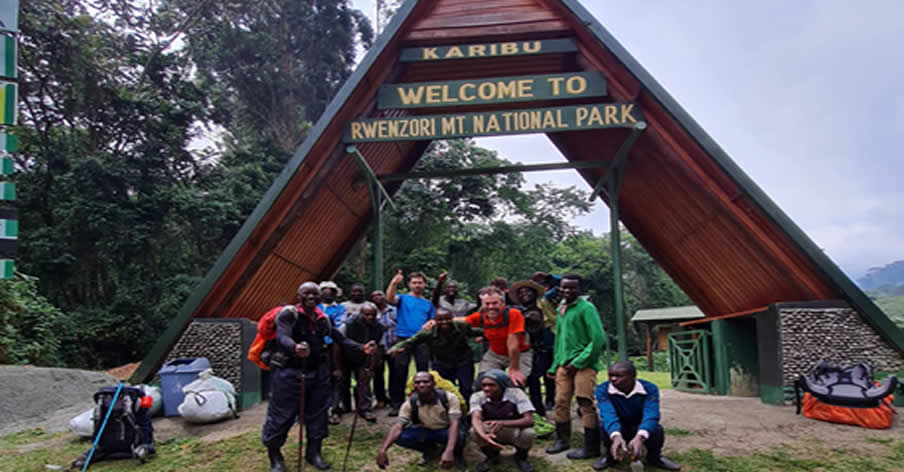
The Rwenzori Mountains are famous for a human story that most visitor accounts fail to give adequate prominence: the Bakonjo people, the indigenous Bantu-speaking community whose relationship with the mountain spans centuries and whose knowledge, labor, and cultural guardianship made every European exploration, every first ascent, and every guided trekking expedition since the 1950s possible. The Bakonjo name for the mountain, “Rwenzururu,” meaning “rainmaker,” is the linguistic origin of the range’s modern name, and their cosmological relationship with the mountain as a source of water, a home of spirits, and a physical anchor of cultural identity provides the Rwenzori a depth of human meaning that cannot be accessed through the peaks and vegetation alone.
The Bakonjo porter and guide teams that have operated on the Rwenzori since the Duke of Abruzzi’s 1906 expedition are the direct professional ancestors of the guide and porter teams that lead expeditions on the mountain today. Their knowledge of the mountain’s trails, weather patterns, water sources, and ecological communities is transmitted through generations of oral knowledge that does not appear in any guidebook but is continuously updated and refined through the lived experience of daily engagement with an environment that changes season to season and year to year. A Bakonjo guide who has spent twenty years on the Rwenzori knows things about the mountain that no trekker, however experienced, and no researcher, however thorough, can replicate without that lived continuity.
Both Rwenzori Mountaineering Services and Rwenzori Trekking Services are Bakonjo community enterprises at their core, employing local guides and porters whose families have been part of the mountain’s human story for generations. Rwenzori Trekking Safaris directs ten percent of all trek proceeds to support local Bakonjo communities in the Kilembe area, including orphans, schools, and households. This initiative continues the relationship between the mountain economy and the mountain people, which is as important to the Rwenzori’s future as any conservation policy or UNESCO designation.
11. Albertine Rift Endemics: The Rwenzori’s Extraordinary Wildlife
The Rwenzori Mountains are famous for harboring one of the highest concentrations of Albertine Rift endemic species of any mountain range in Africa. The Albertine Rift, the western branch of the East African Rift Valley, running from Lake Albert in the north to Lake Tanganyika in the south, is one of the world’s most important biodiversity hotspots, supporting the highest densities of endemic vertebrate species on the African continent. The Rwenzori’s position at the northern end of this system, combined with its altitudinal range from 1,450 to 5,109 meters and its Ice Age refugium history, makes it one of the most species-rich mountain ranges in Africa per unit area.
The bird life is the most celebrated dimension of the Rwenzori’s wildlife fame. The Rwenzori turaco (Gallirex johnstoni), with its brilliant crimson wing patches, visible only in flight, flashing through the upper canopy of the lower montane forest, is the range’s most iconic bird and one of the most sought-after sightings in the entire Albertine Rift region. The Rwenzori batis, the Rwenzori double-collared sunbird, Archer’s robin-chat, the strange weaver, and the handsome francolin are among the other endemic and near-endemic species that have given the Rwenzori a reputation as one of Africa’s premier birding destinations. More than fifty Albertine Rift endemic bird species have been recorded within the national park boundary, and serious birders routinely rate the Rwenzori among the top five avian destinations in Africa.
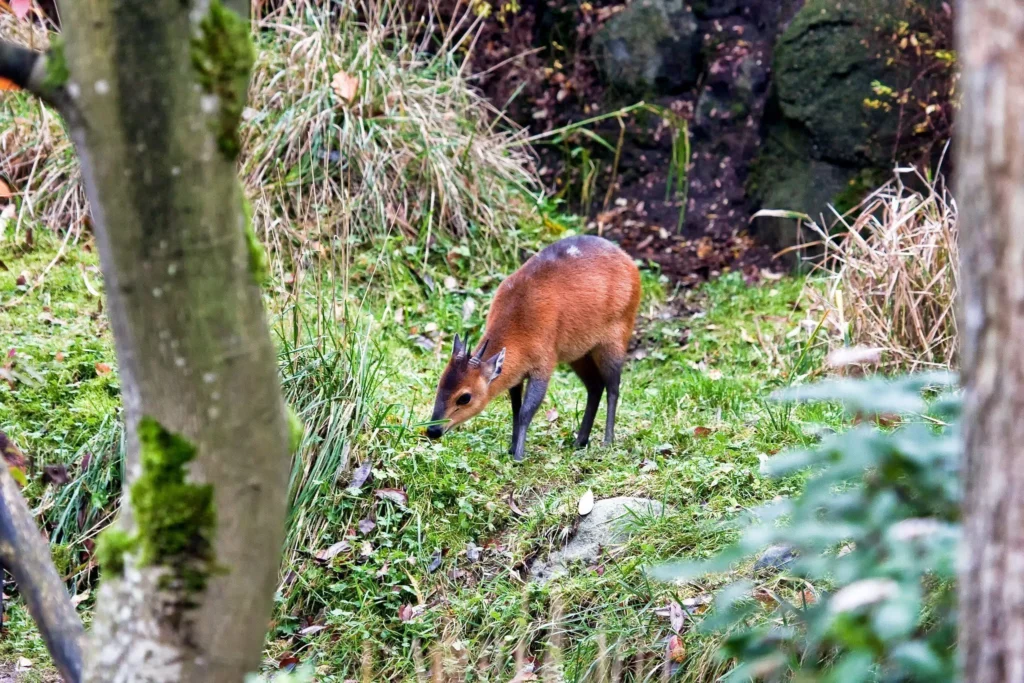
The mammal community includes L’Hoest’s monkey (Cercopithecus lhoesti), a culturally significant species for the Bakonjo; the Albertine Rift endemic black-and-white colobus monkey; the blue monkey; the forest elephant in the lower zones; the Rwenzori red duiker; the leopard (present but rarely seen above the forest zones); and the rock hyrax in the heather and lower Afroalpine zones. The three-horned chameleon (Trioceros johnstoni), unmistakably Rwenzori in character with its triple-horn structure and deliberate movement, is encountered regularly on the lower trail sections and is one of the mountain’s most photographed animals.
12. Nearly Two Thousand Years of Recorded Human Fascination
The Rwenzori Mountains are famous for having one of the longest documented histories of any mountain range in Africa. The first recorded reference to the Mountains of the Moon in Ptolemy’s Geographia of approximately 150 AD means that this range has been a subject of human geographical imagination for nearly two millennia longer than most of the world’s famous mountains have been known to literate cultures at all. The medieval Arab cartographers who preserved and elaborated Ptolemy’s account in works like al-Idrisi’s 1154 Tabula Rogeriana added further layers to a tradition that eventually culminated in Stanley’s 1888 confirmation and the Duke of Abruzzi’s 1906 first ascent of Margherita Peak.
This historical depth gives the Rwenzori a resonance that younger mountain destinations cannot manufacture. Standing on the Scott Elliott Pass, named for the botanist who first crossed it in 1895, and knowing that it appears on maps made by Arab scholars in the twelfth century as a feature of the mountains at the source of the Nile connects the contemporary trekking experience to a continuum of human geographical curiosity that stretches back further than the founding of most modern nations. The Rwenzori is not simply a mountain. It is a place that has been part of the human story for so long that the trail you are walking through its heather zone is, in a meaningful sense, a path that began in the libraries of Alexandria nearly two thousand years ago.
How the Rwenzori Compares to Africa’s Other Famous Mountains
The Rwenzori Mountains are frequently assessed in comparison with Kilimanjaro, Mount Kenya, and the Virunga volcanoes, and the comparisons are illuminating precisely because the Rwenzori is different from all of them in ways that are relevant for the trekker’s experience. Understanding these differences is part of what Rwenzori is famous for.
Kilimanjaro is the world’s most popular high-altitude trek, receiving over 50,000 summit attempts annually. It is renowned for its accessibility; all routes use well-worn paths, well-staffed huts or camps, and a non-technical approach that requires no mountaineering equipment on most routes. Its fame is in some sense the fame of mass tourism applied to a high summit, and the experience reflects that: extraordinary in its own right, but surrounded by the infrastructure and crowd density of a major tourist destination. The Rwenzori receives a tiny fraction of Kilimanjaro’s visitor numbers, produces a much more remote and expedition-like experience, demands significantly more physical and technical preparation, and delivers a botanical and ecological encounter that Kilimanjaro cannot match.
Mount Kenya is the more technically demanding of the two East African volcanic systems and shares with the Rwenzori a reputation for genuine mountaineering on the harder routes. But Mount Kenya’s high zones lack the botanical richness of the Rwenzori’s Afroalpine community, and its lower forest zones impacted by adjacent agricultural development do not have the same quality and integrity as the Rwenzori’s montane forest. The Virunga volcanoes offer gorilla trekking and dramatic volcanic landscapes but do not approach the altitude, the botanical uniqueness, or the trekking depth of the Rwenzori. Each of these mountains is famous for what it offers. The Rwenzori is famous for offering more of everything that makes an African mountain experience extraordinary, in greater depth, and in a context that is harder to reach and correspondingly harder to forget.
Why the Rwenzori’s Fame Makes Now the Right Time to Come
Many of the things the Rwenzori Mountains are most famous for are, in important ways, time-sensitive. The glaciers that give the mountain its snow-capped profile and its status as one of the world’s last equatorial ice systems are retreating on a measured, documented timeline. The window for climbing on ice at the equator to experience the summit of Margherita Peak as a genuine glacier climb, rather than as a technical scramble on exposed rock, is narrowing. Every guide on the mountain with over a decade of experience has watched the ice margin retreat, and the comparison of photographs taken at Elena Hut in 2000 to those taken today shows an unmistakable change.
This urgency does not attach only to the glacier. The broader context of climate change on equatorial African mountains reduced precipitation, increased temperature variability, and altered species distributions means that the vegetation communities that make the Rwenzori famous are also under long-term pressure. The giant lobelia and groundsel communities, while currently intact and extraordinary, are dependent on the moisture regime and temperature range that climate change is altering. A changing climate will eventually affect the extraordinary completeness of the Rwenzori’s five vegetation zones, the quality that earned the UNESCO designation.
None of this is cause for paralysis. It is a cause for purpose. The Rwenzori that exists today, with the glacier still present on Mount Stanley, the giant lobelia standing at 4,000 meters as dense as it has ever been, and the heather forest as moss-saturated and otherworldly as it was when Sella photographed it in 1906, is extraordinary. The person who comes to the mountain now is able to experience it in this condition. This is the most compelling answer to why the Rwenzori’s fame should influence your decision to go.
Frequently Asked Questions: What Are the Rwenzori Mountains Famous For?
What are the Rwenzori Mountains famous for?
The Rwenzori Mountains of western Uganda are famous for multiple things simultaneously: their ancient name “Mountains of the Moon,” referenced by Ptolemy in approximately 150 AD; their status as Africa’s third-highest mountain range, with Margherita Peak reaching 5,109 meters; their last equatorial glaciers in Africa, which have lost approximately 80% of their area since 1906; their unique Afroalpine plants, including the giant lobelia (Lobelia wollastonii, reaching 5 meters) and giant groundsel (Senecio adnivalis); their five intact vegetation zones that earned them UNESCO World Heritage Site designation in 1994; their Albertine Rift endemic species, including over 50 endemic bird species; their exceptional wetness, the “Rainmaker” of the Bakonjo people; their non-volcanic, tectonic geological origin, unique among East African high mountains; and their reputation as Africa’s most demanding and most rewarding major trekking destination.
Why are the Rwenzori Mountains called the Mountains of the Moon?
The Rwenzori Mountains are called the Mountains of the Moon from the Greek “Lunae Montes” used by Ptolemy of Alexandria in approximately 150 AD, where he described equatorial snow mountains as the source of the Nile. The name passed through Arab cartography as “Jabal al-Qamar” before entering European geographical literature. The Bakonjo people, who have inhabited the mountain’s foothills for centuries, call the range “Rwenzururu,” meaning “rainmaker” or “cloud king,” and Henry Morton Stanley adopted a phonetic version of this name when he confirmed the mountains in 1888. The “Mountains of the Moon” designation has persisted in parallel because it communicates the range’s most striking quality, permanent snow and ice at the equator, more powerfully than any purely descriptive name could.
How high are the Rwenzori Mountains?
The Rwenzori Mountains contain Africa’s third-highest peak: Margherita Peak on Mount Stanley reaches 5,109 meters above sea level, making it the highest point in Uganda and the highest in the Democratic Republic of Congo. The range holds four of Africa’s seven highest peaks. Alexandra Peak on Mount Stanley reaches 5,091 meters (fourth in Africa); Mount Speke reaches 4,890 meters (fifth); Mount Baker reaches 4,843 meters (sixth); and Mount Emin reaches 4,798 meters (seventh). The range’s lowest trekking entry point is at the Kilembe trailhead at approximately 1,450 meters, giving a total elevation gain from trailhead to summit of approximately 3,659 meters on the Kilembe Trail. This is the third-highest summit on the African continent after Kilimanjaro (5,895 m) and Mount Kenya (5,199 m).
Are the Rwenzori Mountains harder than Kilimanjaro?
Yes, the Rwenzori Mountains trek is generally considered significantly more demanding than Kilimanjaro. While Kilimanjaro’s standard non-technical routes (Lemosho, Machame) involve sustained uphill walking without technical sections, the Rwenzori demands seven to eight consecutive days of trekking across five different terrain types: root-strewn montane forest, steep bamboo zones, boggy heather moorland, tussock-field Afroalpine terrain, and a glacier summit section requiring crampons and ice axes. The Rwenzori’s persistent wetness makes every underfoot surface more challenging than comparable dry-mountain terrain. The technical glacier section on summit day adds genuine mountaineering demands that Kilimanjaro’s non-technical routes do not require. Experienced East African guides consistently describe the Rwenzori as harder in character, more technically varied, and physically more demanding than Kilimanjaro, though the two mountains are different in kind rather than simply different in degree.
What makes the Rwenzori Mountains unique compared to other African mountains?
The Rwenzori Mountains are unique among major African mountains in several important ways. They are the only major high mountain range in East Africa that is non-volcanic, a tectonic horst of ancient Precambrian rock rather than a volcano, which provides them an ecological history and plant community different from all volcanic neighbors. They present the most complete and intact vertical sequence of vegetation zones of any African mountain, from tropical rainforest to equatorial glacier in a single unbroken transect. They contain Africa’s last significant equatorial glaciers, making them the only place on the continent where glacier travel is part of a guided summit expedition. Their Afroalpine giant plants, particularly Lobelia wollastonii and Dendrosenecio species, are found only in this specific mountain system and represent a level of botanical uniqueness unmatched elsewhere. The Rwenzori Mountains, the wettest major mountain range in Africa, produce the extraordinary moss communities of the heather zone. And they have a recorded human history stretching back to Ptolemy’s second century AD, making them one of the oldest named geographical features in African cartography.
What UNESCO designation do the Rwenzori Mountains have?
The Rwenzori Mountains were designated a UNESCO World Heritage Site in 1994, one of only two natural World Heritage Sites in Uganda (the other being Bwindi Impenetrable Forest, designated the same year). The UNESCO designation recognized the Rwenzori’s outstanding universal value for its natural beauty, its significance as a geological formation, and above all, its extraordinary biodiversity, specifically the intact sequence of five vegetation zones and the concentration of Albertine Rift endemic species that the range contains. In 2008, the Rwenzori received a second international conservation designation as a Ramsar Wetland of International Importance, recognizing the mountain’s critical role as a water source for the Nile and Congo river systems. Rwenzori Mountains National Park, which encompasses approximately 1,000 square kilometers of the range within Uganda, was gazetted in 1991 and is managed by the Uganda Wildlife Authority.
What wildlife can I see in the Rwenzori Mountains?
The Rwenzori Mountains support a rich and distinctive wildlife community of Albertine Rift endemic species. The most celebrated bird is the Rwenzori turaco (Gallirex johnstoni), with its brilliant crimson wing patches visible in flight. Other notable birds include the Rwenzori batis, the handsome francolin, Archer’s robin-chat, the strange weaver, the cinnamon-chested bee-eater, the Rwenzori double-collared sunbird, the Malachite Sunbird (closely associated with giant lobelia flower spikes), and over 50 Albertine Rift endemic species in total. Mammals include L’Hoest’s monkey (a Bakonjo cultural totem and Albertine Rift endemic), the black-and-white colobus monkey, the blue monkey, the forest elephant (lower zones), the three-horned chameleon (Trioceros johnstoni), the Rwenzori red duiker, the leopard (present but rarely seen), and the rock hyrax. The range has no lions, no buffalo, and no large herbivores above the forest boundary; its wildlife is the wildlife of the forest, heather moorland, and Afroalpine ecosystem.
When did the Rwenzori Mountains first become famous?
The Rwenzori Mountains first entered the written historical record in approximately 150 AD, when the Greek geographer Ptolemy of Alexandria described equatorial snow mountains he called “Lunae Montes” (Mountains of the Moon) as the source of the Nile. They became famous in the Western world through Henry Morton Stanley’s 1888 confirmation of their existence during his Emin Pasha Relief Expedition, which established the range as a real geographical feature rather than a classical legend. Their mountaineering fame began with the Duke of Abruzzi’s 1906 expedition, which made the first ascents of all six major Rwenzori massifs, including Margherita Peak (5,109 m), and produced the first systematic scientific mapping of the range. Their contemporary conservation fame began with the UNESCO World Heritage designation in 1994. Their trekking fame has grown steadily since the formal establishment of the Central Circuit Trail in the 1950s and the Kilembe Trail in 2011.
ANY QUESTIONS?
If you need any clarification about a Rwenzori trek, contact one of our trekking experts to start planning your journey today.
A 10% percentage of your safari proceeds goes to supporting the local Bakonjo Communities (orphans, schools & homes)
Hi there, welcome. Need help planning a trek, safari, or adventure? Chat directly with a real expert and mountain guide for honest advice, clear answers, and practical recommendations. No guesswork, no pressure.