
Things to Do in the Rwenzori Mountains: The Complete Expert Guide
Discover everything you can do in the Rwenzori Mountains, from summiting Margherita Peak to chimpanzee tracking, alpine lake visits, birdwatching, glacier exploration, and cultural experiences. Rwenzori Trekking Safaris provides an expert guide for your journey.
There is a particular kind of traveler who lands in Uganda and asks almost immediately, “What can I do in the Rwenzori Mountains?” I have met thousands of them over the years: mountaineers from Europe and North America with glacier-ready boots, families piecing together an East Africa itinerary, birders with binoculars already round their necks, and adventurers looking for something more meaningful than a packaged tour. And in every case, the answer I give them surprises them in the same way.
The Rwenzori Mountains are not a single activity. The Rwenzori Mountains are not merely a destination to visit. They are a layered, living, endlessly complex mountain ecosystem, a UNESCO World Heritage Site straddling the Uganda-DRC border, home to Africa’s third-highest peak, to glaciers that have been retreating since the last ice age, to botanical phenomena found nowhere else on earth, and to the Bakonzo people whose relationship with these mountains stretches back centuries. What you can do here depends entirely on who you are and how deeply you are prepared to engage.
This guide covers the full range from multi-day mountaineering expeditions to single-morning forest walks, from glacier crossings to chimpanzee tracking, and from high-altitude lake camping to cultural village visits. It is written for the traveler who wants a real answer, not a promotional list, by someone who has done all of it, many times over, in every season.
High-Altitude Mountaineering and Summit Climbing.
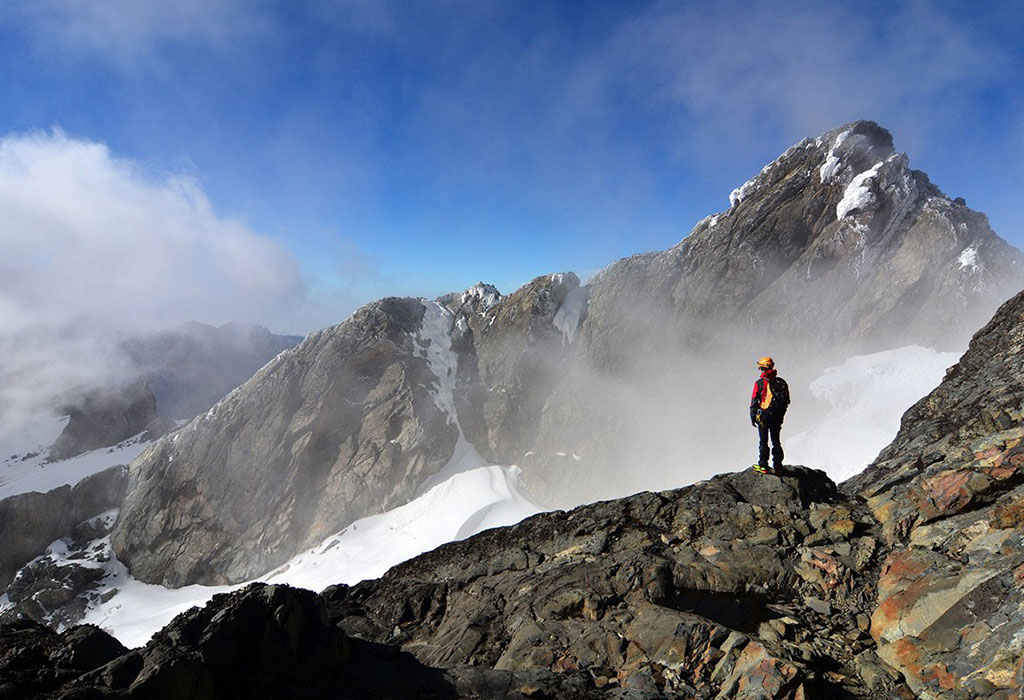
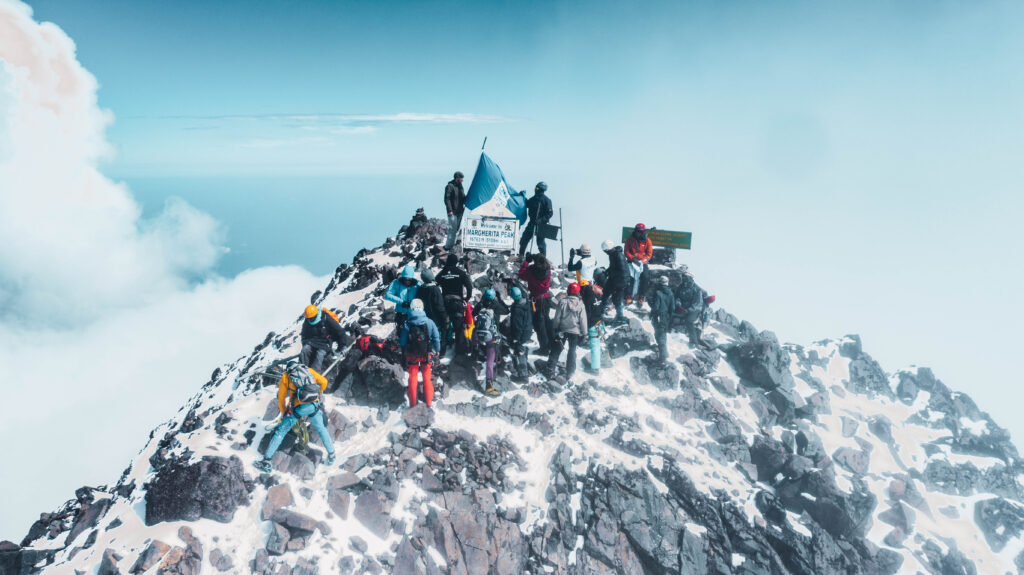
The activity that defines the Rwenzori Mountains for serious adventure travelers is mountaineering. the sustained, multi-day climb toward the high peaks of the range. At 5,109 meters, Margherita Peak on Mount Stanley is the third-highest point in Africa, after Kilimanjaro and Mount Kenya. Reaching it demands a minimum of seven days on the mountain, solid physical fitness, proper acclimatization, and the technical equipment required for glacier travel: crampons, ice axes, and harnesses for the final exposed ridge. It is a genuine mountain climb, and for those who complete it, one of the defining physical achievements of their lives.
But Margherita is far from the only summit available. The Rwenzori range contains six major massifs: Stanley, Speke, Baker, Luigi di Savoia, Gessi, and Emin, each with multiple named peaks. Mount Speke (4,890 m) and Mount Baker (4,843 m) are the most commonly paired with Stanley on multi-peak expeditions, and our 13-day six-peak expedition takes in Mount Gessi, Mount Emin, Speke, Stanley, Mount Luigi di Savoia, and Baker in a single continuous traverse, the most comprehensive Rwenzori mountaineering experience available anywhere.
Choosing Your Route to the Summit
There are three primary ascent routes to the high peaks. The Central Circuit Trail from Nyakalengija is the most established, with hut infrastructure and a well-documented path to Margherita. The Kilembe Trail from Kasese is more technically demanding and better suited to experienced mountaineers, as it involves steep ascents and challenging rock scrambles and requires advanced navigation skills in rugged terrain. The Bukurungu Wilderness Trail is a ground-camping route through the most remote terrain in the park, passing four high alpine lakes and ideal for those who want the Rwenzoris in their most undisturbed, explorer-grade form.
The Portal Peaks: A Shorter Summit Experience
Not every visitor has time for a full Margherita expedition. The Portal Peaks, the trio of dramatic rocky summits that guard the northern entrance to the range at approximately 4,600 meters, offer outstanding mountaineering achievement within a four-to-six-day itinerary.
Visible from the valley below as the iconic triangular silhouettes that greet arrivals to the Kasese region, their summits provide views across the central Rwenzori massif that are among the finest in the entire range. Our 6-day Portal Peaks trek is ideal for confident hikers wanting genuine high-altitude achievement within a shorter timeframe.
Multi-Day Trekking Through the Vegetation Zones
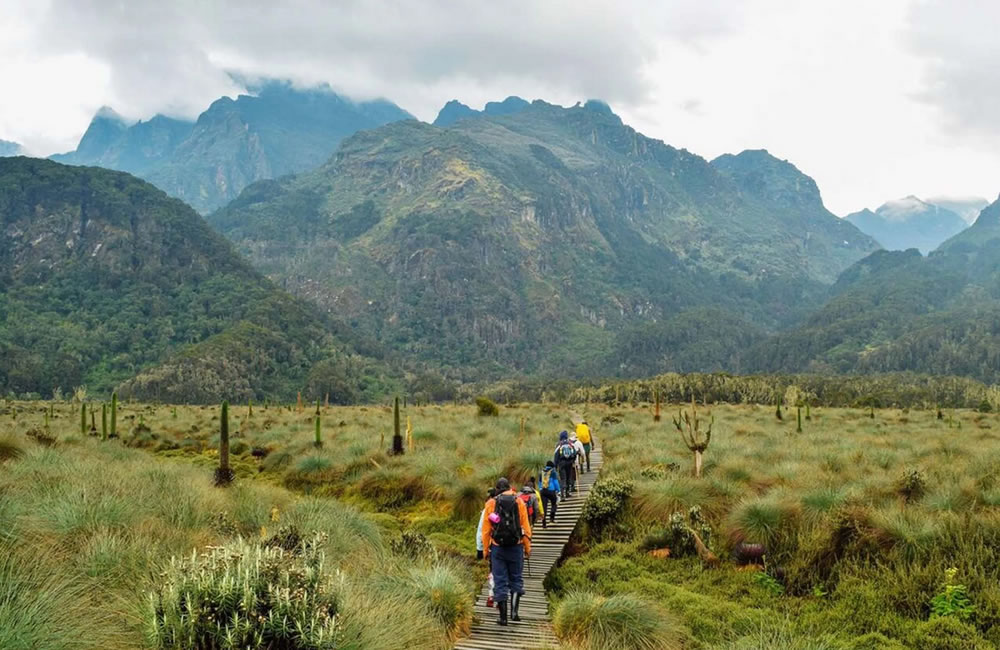
Even for visitors with no interest in standing on a summit, multi-day trekking in the Rwenzori Mountains is extraordinary in its own right. What makes the Rwenzoris unlike any other trekking destination in Africa is the vegetation, a vertical sequence of botanical zones so dramatic in their succession that walking from the base to the high alpine plateau feels like a journey through five entirely different worlds.
The sequence begins in the montane rainforest of the lower slopes: dense, humid, and canopied in ancient Podocarpus and fig trees draped in ferns and mosses. Above the forest comes the bamboo zone, a corridor of African mountain bamboo growing to seven meters or more, creating a disorienting tunnel of green before the path breaks open into the heather zone. Here, massive tree heathers draped in thick old-man’s-beard lichens stand in dense groves over paths that are soft and boggy underfoot, their trunks twisted by decades of wind and cloud into forms of extraordinary sculptural beauty.
Higher still comes the Afro-alpine zone, the visual signature of the Rwenzoris, where giant lobelias (Lobelia wollastonii) raise their towering flower spikes above basal rosettes the size of armchairs, and giant groundsels (Senecio trees) cluster in the valley floors. This vegetation, unique to the high mountains of the Albertine Rift, is what most trekkers describe as the memory that stays with them longest.
Our 7-day Central Circuit trek is the definitive multi-day experience, passing through all five zones to the glaciated upper mountain. For those with less time, the 6-day Weismann Peak hike and the 5-day Bujuku hike deliver the alpine lakes and Afro-alpine zone without requiring glacier equipment.
Wildlife Watching and Birdwatching in the Albertine Rift
The Rwenzori Mountains sit within the Albertine Rift, one of the most important biodiversity hotspots on the African continent and one of the richest centers of endemism in the world. For wildlife and birding enthusiasts, this geographic positioning is reason enough to visit.
Chimpanzee Tracking on the Diamond Trail
One of the most distinctive wildlife experiences in the Rwenzori Mountains is chimpanzee tracking on the Diamond Trail, a lower-altitude route through the montane forest following the habitat range of the range’s resident chimpanzee community.
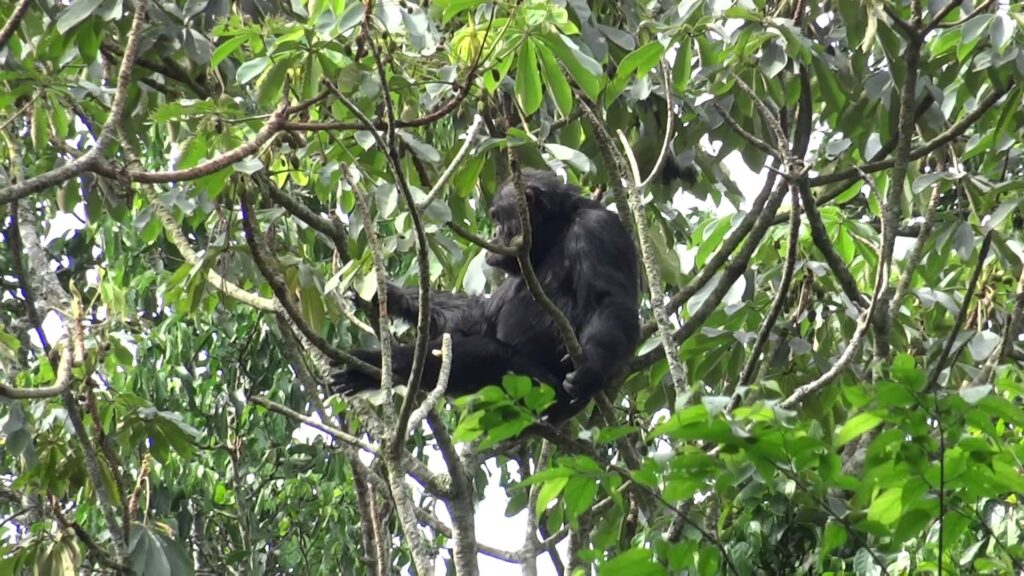
Unlike the more famous chimp tracking experiences at Kibale Forest, the Rwenzori chimps inhabit a forest that serves as the gateway to serious mountain trekking, allowing for a Diamond Trail morning to be followed that same afternoon by the start of a multi-day ascent. The combination of chimpanzee encounters and high mountain ambitions within a single itinerary is something unique to this corner of the Albertine Rift.
Rwenzori Birding: A World-Class Avian Destination
The Rwenzori Mountains are home to an exceptional avifauna, with over 200 species recorded within the national park. The Rwenzori turaco, one of Uganda’s most sought-after birds, with its vivid green plumage and crimson primary feathers, is a resident of the mid-altitude forest and regularly encountered on the approach trails.
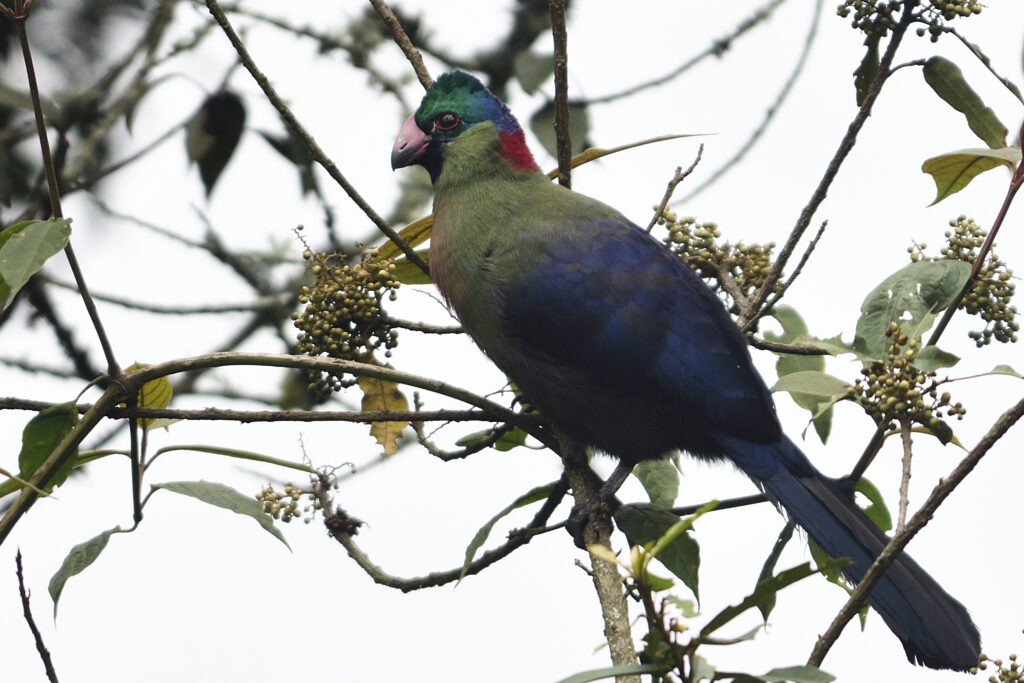
The Rwenzori double-collared sunbird, the African green broadbill, the handsome francolin, and the Grauer’s warbler are among the species that draw dedicated birders from across the world. A guided birding morning in the lower forest, led by an expert with thorough knowledge of the park’s endemic avifauna, is one of the most rewarding experiences available on the mountain’s lower slopes.
Primates, Mammals, and Reptiles
Beyond chimpanzees and birds, the Rwenzori forest zone supports a rich mammal community. On the lower trails, one frequently encounters black-and-white colobus monkeys and the endemic L’Hoest’s monkey. The three-horned chameleon, one of Uganda’s most photogenic reptiles, is a reliable sighting on the Kilembe Trail approach in the early morning hours.
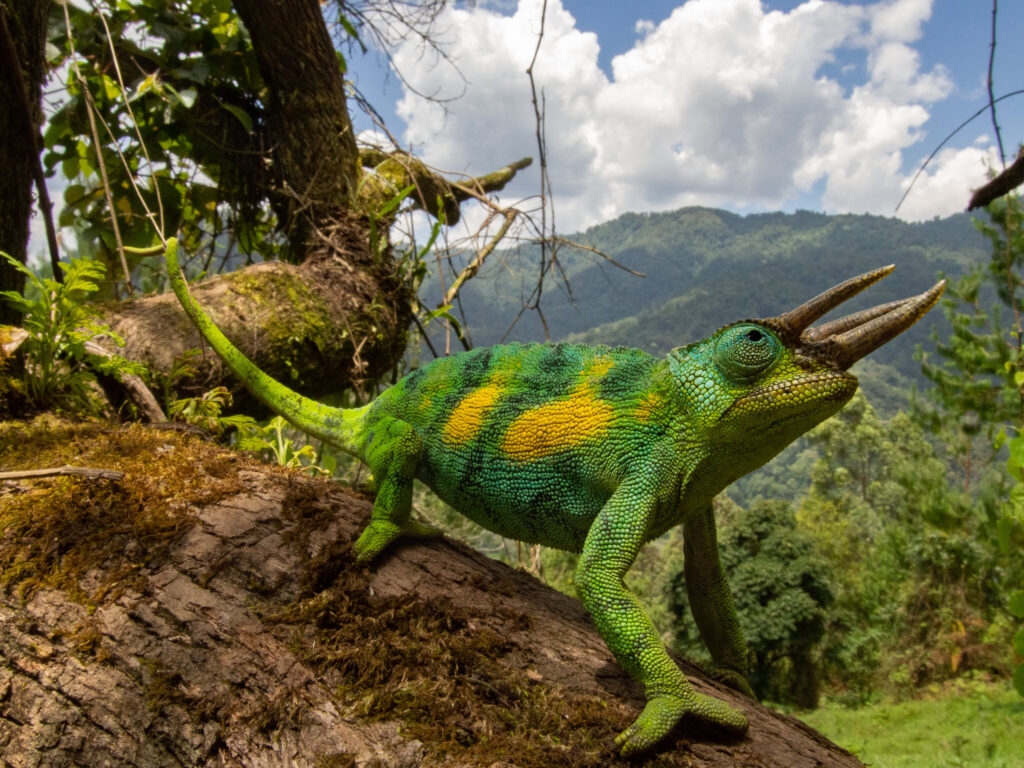
African forest elephants and leopards inhabit the mountain’s more remote sections, though encounters remain rare and unpredictable, adding to the sense of genuine wilderness on the deeper trails.
Glacier Exploration and Alpine Lake Visits
The Rwenzori Mountains are one of only three locations in Africa where glaciers still exist alongside Kilimanjaro and Mount Kenya, and the Rwenzori glaciers are among the most accessible on the continent for visitors with appropriate mountaineering preparation. The Elena Glacier on Mount Stanley, approached from the Elena Camp at 4,541 m, is the final obstacle before the Margherita summit. A Rwenzori experience that defies adequate description is walking the glacier in the pre-dawn darkness, with crampons biting into ancient ice and the sky above the DRC beginning to pale.
The glaciers are shrinking at an accelerating rate. Research indicates the Rwenzori’s remaining ice fields may be largely gone within two to three decades if current warming trends continue. A Rwenzori glacier visit today carries a particular urgency: an encounter with a vanishing phenomenon. Those who experience it now will be among the last to witness it.
The Alpine Lakes: Bujuku, Kitandara, and the Bukurungu Chain
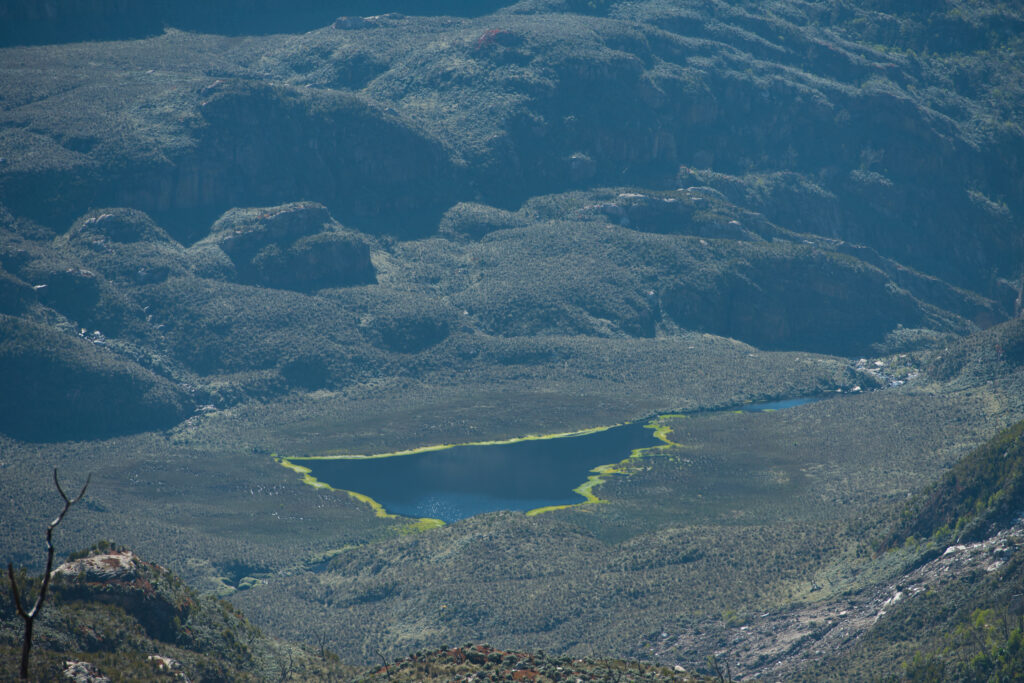
The high country is also home to a series of extraordinary alpine lakes. Lake Bujuku sits at 3,962 m in the shadow of the Stanley, Speke, and Baker massifs, its still, dark surface reflecting the peaks above on calm mornings in one of the most photographed scenes in all of East African mountain travel. Lake Kitandara, a twin-lake system on the Central Circuit, sits at 4,023 m and provides a breathtaking overnight stop on the westward traverse. On the Bukurungu Trail, lakes Irene, Mughuli, and the Bukurungu lake itself form a sequence of increasingly dramatic high-altitude water bodies that give the route much of its distinctive character.
Short Hikes and Day Walks for All Fitness Levels
Not every visitor arrives with the intention or preparation for a multi-day expedition. The range offers meaningful experiences at every level of commitment, and some of the most emotionally resonant Rwenzori encounters happen within a single day’s walking of the park gates.
The Mahoma Loop Trail
The 3-day Mahoma Loop hike is the Rwenzoris’ most popular short trek and an ideal introduction to the mountains. Starting from the Mihunga gate, the route winds through heather woodland, bamboo zones, and rich montane rainforest before arriving at Lake Mahoma, a beautiful crater lake at approximately 2,500 meters, surrounded by ancient forest. The views of the Rwenzori peaks from the lake’s shore are spectacular, and the forest is exceptional for Albertine Rift endemic birding. This is the ideal trek for families, first-time Rwenzori visitors, and travelers combining the mountains with a broader Uganda safari.
The Sine Camp Hike via the Kilembe Trail
For visitors wanting a taste of the Kilembe Trail without a full ascent, the 2-day trek to Sine Camp covers 9.5 kilometers each way through lower mountain forest. The route is reliably productive for three-horned chameleons, blue monkeys, and a rich selection of forest birds. Sine Camp itself is located in a beautiful forest clearing with views back down toward the Kasese valley, the overnight experience gives visitors a genuine feel for multi-day Rwenzori mountain life without the altitude demands of the upper circuits.
The Mutinda Loop and Waterfall Hike.
The 4-day Mutinda Loop via the Kilembe Trail takes trekkers to the Mutinda Lookout at approximately 4,000 meters, a high vantage point with panoramic views across the Rwenzori high country and down to the Kasese plains.

For those whose primary draw is the mountain’s dramatic waterfall systems, the 4-day Rwenzori Waterfalls Hike follows a route specifically designed around the range’s most spectacular falls, which are most powerful and visually dramatic during and immediately after the wet season.
Cultural Immersion with the Bakonzo People
Any honest account of things to do in the Rwenzori Mountains must include what is perhaps the most undervalued of all the experiences here: time spent with the Bakonzo communities whose ancestral lands these mountains are. The Bakonzo, the indigenous people of the Rwenzori foothills, have lived alongside the range for centuries, developing a relationship with the mountain that encompasses spiritual beliefs, agricultural practices, and detailed ecological knowledge of the forest zones that no visiting scientist can fully replicate.
Our guides are almost exclusively from Bakonzo communities, consisting of people who were born within sight of these mountains, learned the forest as children, and whose families still farm and live in the villages at the mountain’s base. Pre-trek village visits, evening conversations at base camp about Bakonzo mountain mythology, and the opportunity to support local community projects through our trekking operations all form part of a cultural dimension that enriches the physical experience of the mountains profoundly. Ten percent of all our safari proceeds go directly to supporting local Bakonzo communities by funding orphan care, schools, and homes in the villages around the park.
Mountain Photography in a Visually Extraordinary Landscape.
The Rwenzori Mountains offer photographers, from casual smartphone users to professional wildlife and landscape specialists, an environment of almost inexhaustible visual richness. The Afro-alpine vegetation creates compositions that have no parallel anywhere in the temperate mountain world. The retreating glaciers, the reflective alpine lakes, the swirling afternoon mist on the high ridgelines, and the extraordinary equatorial light of early morning all reward patience and return visits.
Wildlife photography opportunities include the endemic birds of the forest zones, the three-horned chameleon, and the colobus and L’Hoest’s monkeys of the lower trails. At altitude, the glaciers of the Elena and Stanley ice fields provide images that convey an implicit urgency regarding the documentation of a landscape in irreversible transition. Custom photography-focused itineraries can be built around specific shooting conditions and subjects, and our guides are experienced in supporting photographers of all levels across all altitude zones, ensuring that each photographer can capture the unique wildlife and stunning landscapes that the region offers.
Combining a Rwenzori Trek with a Wider Uganda Safari
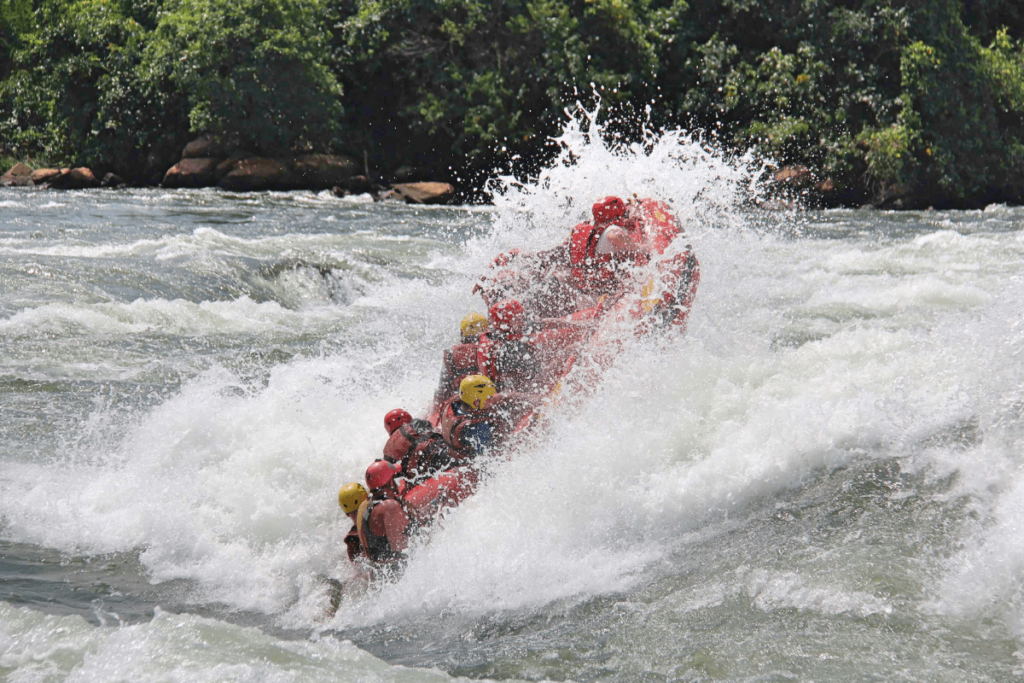
The Rwenzori Mountains sit within the broader context of western Uganda, one of the most wildlife-rich and scenically varied regions in East Africa. Combining a Rwenzori trek with other Uganda safari activities is one of the most rewarding ways to structure a longer visit. Our Uganda safari itineraries allow travelers to build programs pairing Rwenzori trekking with gorilla tracking in Bwindi Impenetrable Forest, wildlife drives in Queen Elizabeth National Park (30 minutes from the Rwenzori base), chimpanzee habituation in Kibale Forest, and Nile experiences in Jinja.
Our 16-day Uganda gorillas and Rwenzori climbing itinerary is one of our most popular combined programs, pairing mountain gorilla encounters in Bwindi with a full Rwenzori circuit. The 18-day Rwenzori, primates, and Big Five safari offers a comprehensive Uganda adventure for those who want to extend their trip, covering the Rwenzoris, gorillas, chimpanzees, the Big Five in Queen Elizabeth, and the Nile source.
Frequently Asked Questions: Things to Do in the Rwenzori Mountains.
What are the top things to do in the Rwenzori Mountains?
The Rwenzori Mountains offer a broad spectrum of activities across all experience levels. The headline experience is multi-day mountaineering to the summit of Margherita Peak (5,109 m), Africa’s third-highest point. Beyond summit climbing, major activities include multi-day trekking through Afro-alpine vegetation zones, chimpanzee tracking on the Diamond Trail, world-class birdwatching for Albertine Rift endemics, glacier exploration on the Elena ice field, high-alpine lake visits at Bujuku and Kitandara, short forest hikes including the 3-day Mahoma Loop and 2-day Sine Camp trek, waterfall hikes, cultural visits with the Bakonzo community, and landscape and wildlife photography. Every activity can be customized into a bespoke itinerary spanning two days to three weeks.
Do you need mountaineering experience for activities in the Rwenzori Mountains?
No. While the Margherita Peak summit requires basic glacier travel skills, crampons, an ice axe, and a harness, the vast majority of activities in the Rwenzori Mountains do not require technical climbing experience. Multi-day trekking on the Central Circuit to the alpine lake zones, short hikes on the Kilembe Trail, the Mahoma Loop nature walk, birdwatching, and chimpanzee tracking are all accessible to fit, motivated hikers with no prior mountaineering background. Our guides provide full safety briefings, equipment, and in-field support for every activity and every experience level.
Can I see wildlife in the Rwenzori Mountains?
Yes, and exceptionally so. The Rwenzori Mountains National Park is rich in Albertine Rift endemics, which are species that are found nowhere else in the world except the Albertine Rift region. Chimpanzees can be tracked on the Diamond Trail. On the approach trails, one can regularly spot the black-and-white colobus and the endemic L’Hoest’s monkey. The three-horned chameleon is a frequent encounter on the lower Kilembe Trail. Over 200 bird species have been recorded in the park, including the Rwenzori turaco, African green broadbill, and Grauer’s warbler, all Albertine Rift endemics of global ornithological significance. At higher elevations, the Afro-alpine zone supports its own specialized bird community, including the Rwenzori double-collared sunbird.
What short activities are available for visitors with limited time?
Several excellent activities require only one to three days. The two-day trek to Sine Camp via the Kilembe Trail provides a full forest trekking experience in under 48 hours. The 3-day Mahoma Loop hike takes visitors through forest and bamboo zones to Lake Mahoma. The 2-day Lake Mahoma hike is our most popular short itinerary for visitors on a combined Uganda safari. You can also arrange a half-day guided birdwatching walk in the lower forest from the park gate. Contact our team to match the right short activity to your available time.
Is it possible to combine gorilla trekking and other Uganda safari activities with the Rwenzori Mountains?
Absolutely. The Rwenzori Mountains are located in western Uganda, within 30 minutes of Queen Elizabeth National Park and approximately four hours by road from Bwindi Impenetrable Forest, the primary destination for mountain gorilla trekking. Our combined Uganda safari itineraries include options combining Rwenzori trekking with mountain gorilla tracking, chimpanzee habituation in Kibale Forest, game drives in Queen Elizabeth, and visits to the Nile source near Jinja. Uganda offers one of the continent’s most diverse and compact safari experiences, and the Rwenzori Mountains are its most underrated anchor point.
Is photography a good reason to visit the Rwenzori Mountains?
Yes, unequivocally. The Rwenzori Mountains are one of Africa’s most stunning and least photographed places. The Afro-alpine vegetation creates botanical subjects with no equivalent on the continent. The retreating glaciers of Mount Stanley, the reflective alpine lakes, the mist-wrapped forest zones, the endemic birds of the Albertine Rift, and the dramatic equatorial light of the high plateau all provide photographic opportunities of exceptional quality. Custom photography-focused itineraries can be built around specific subjects and lighting conditions, and our guides are experienced in positioning clients for wildlife and landscape shots across all altitude zones.
Are you ready to experience the Rwenzori Mountains for yourself?
The Rwenzori Mountains offer more activities, more ecosystems, and more genuinely extraordinary experiences than almost any other destination in East Africa. What they do not offer is a one-size-fits-all itinerary, and that is precisely why the right guide makes all the difference.
At Rwenzori Trekking Safaris, we do not sell packaged tours. We build bespoke mountain experiences around the specific interests, abilities, and travel windows of each person who contacts us. Whether you want to stand on Margherita Peak, spend three days at Lake Mahoma in the cloud forest, track chimpanzees at dawn on the Diamond Trail, or combine all of the above within a comprehensive Uganda safari, we will build you an itinerary that fits and then guide you through it with the on-the-ground knowledge that only comes from spending years on these mountains.
Explore our full range of Rwenzori trekking itineraries and Uganda safari options, then reach out via our contact page or connect directly on WhatsApp. Tell us why you like these mountains, and we’ll show you how to enjoy them. The Mountains of the Moon are waiting.