
Bukurungu Trail: The Ultimate Guide to Rwenzori’s Most Untamed Trek
This is the definitive expert guide to the Bukurungu Trail in the Rwenzori Mountains, Uganda. Discover the third main Rwenzori trekking route: four alpine lakes, wilderness camping, the Mount Gessi traverse, and Margherita Peak access. Plan your custom trek with Rwenzori Trekking Safaris.
There is a moment, somewhere between the Kasanzi park entrance and the first high alpine lake, when the Rwenzori Mountains reveal themselves in a way that no photograph, no blog post, and no polished itinerary can prepare you for. The trail narrows. The forest deepens. The sound of the world you left behind—the roads, the chatter, the crowds— disappears entirely. This is the Bukurungu Trail: a route so raw, so deliberately wild, and so rarely trodden that hiking it feels less like tourism and more like genuine exploration.
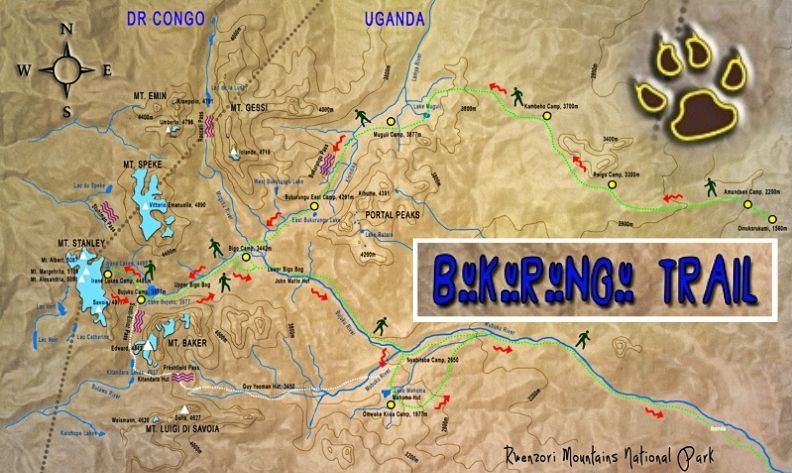
This trail is for you if you want a unique experience beyond the usual Kilimanjaro circuits and Himalayan highways. The Bukurungu Wilderness Camping Trail is the third major trekking route through the Rwenzori Mountains of western Uganda, and it stands apart from its two more famous siblings in every way that matters to the serious adventurer.
Where the Central Circuit offers hut-to-hut comfort and the Kilembe Trail delivers technical challenge, the Bukurungu offers something rarer still: an honest, immersive, unmediated encounter with one of Africa’s last outstanding wilderness mountain systems.
At Rwenzori Trekking Safaris, we guide trekkers on all three routes, but I will tell you plainly: the Bukurungu Trail holds a special place among those of us who spend our lives on these mountains. It demands capability, patience, and a genuine love for wild places. In return, it gives you four magnificent alpine lakes, a traverse through some of the most otherworldly Afro-alpine vegetation on the planet, and the profound satisfaction of knowing that the vast majority of people who ever set foot in the Rwenzoris will never see what you have seen.
What Is the Bukurungu Trail? An Overview of the Route
The Bukurungu Wilderness Camping Trail is the youngest of the three primary ascent routes through Rwenzori Mountains National Park. Initiated in 2018 through a formal partnership between the Uganda Wildlife Authority (UWA) and the World Wildlife Fund for Nature (WWF), it was designed with a specific philosophy in mind: to open a third corridor into the high Rwenzoris while preserving the raw, undeveloped character of one of Uganda’s most biodiverse landscapes. That philosophy is still visible in every aspect of the trail today.
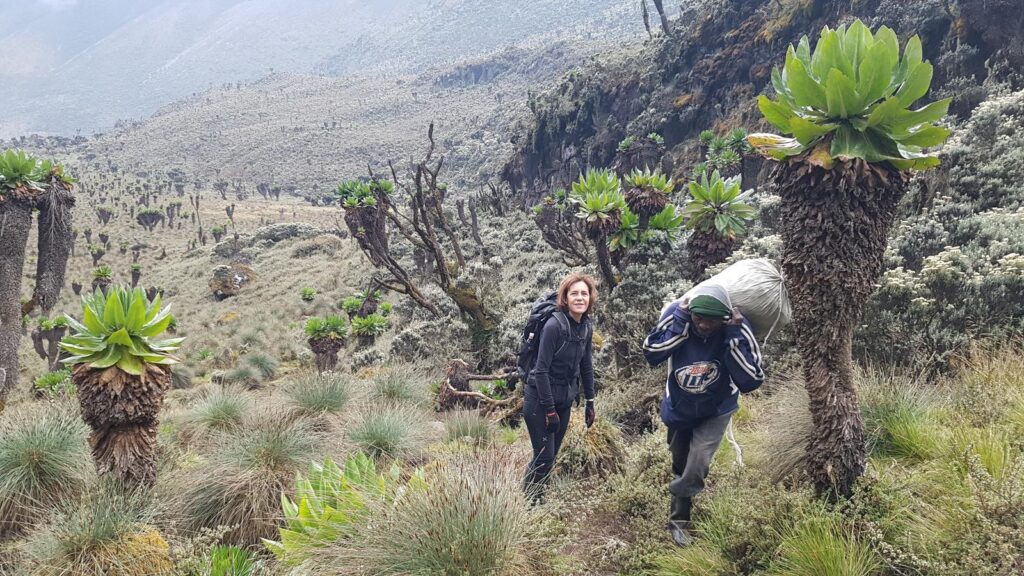
Unlike the Central Circuit Trail, which begins at Nyakalengija and loops through a series of established mountain huts, or the Kilembe Trail, which launched in 2011 with fixed camps and solar-powered facilities, the Bukurungu Trail is a pure wilderness camping experience. There are no huts. No bunk rooms. No solar charging stations. What you find instead are well-maintained, secure ground camping spots designated and managed by Rwenzori Mountains National Park, positioned at intervals that allow for safe, gradual altitude gain through genuinely remote terrain.
The Trail Entry and Exit Points
The Bukurungu Trail begins at the Kasanzi park entrance in the Omukorukumi area, which sits on the northern approaches to the Rwenzori range, away from the more tourist-trafficked southern entry points near Kasese. From there, the route winds its way southward and upward through the mountain interior, eventually intersecting with the Central Circuit Trail at the Bigo swamp, a surreal, high-altitude wetland that feels like the surface of another planet, before exiting at the Mihunga park gate. Along the way, the trail passes between two of the Rwenzori range’s most dramatic landmarks: the Portal Peaks and Mount Gessi (4,798 m).
This northern-to-southern traverse means that trekkers on the Bukurungu Trail experience the Rwenzori in a profoundly different way than those entering from Nyakalengija or Kilembe. You approach the high peaks from a direction that sees very little foot traffic. You cross river systems and highland ridges that most visitors to the park will never encounter. And you arrive at the magnificent central plateau of the range with its glacial lakes and giant groundsels from an angle that makes the landscape feel truly discovered for the first time.
Combining the Bukurungu Trail with Margherita Peak.
One of the most compelling aspects of the Bukurungu Trail is its connectivity with the upper mountain. Because the route intersects with the Central Circuit at the Bigo swamp, it is entirely possible and, for many of our guests, deeply rewarding to use the Bukurungu Trail as your ascent route and then push on via the Central Circuit to summit Margherita Peak (5,109 m), the third-highest point in Africa, before descending through the Mihunga gate. This combined itinerary offers the most comprehensive possible experience of the Rwenzori Mountains, threading together the wilderness character of the Bukurungu approach with the high-alpine drama of the Mount Stanley massif.
The Four Alpine Lakes: The Soul of the Bukurungu Trail
If you ask any guide who has walked the Bukurungu Trail what defines it, the answer will almost always come back to the lakes. The route takes you past four magnificent alpine lakes: Irene, Mughuli, Bukurungu, and Bujuku, each distinct in character and a reminder of the glacial history that shaped this extraordinary landscape.
Lake Irene
Lake Irene is typically the first of the high lakes that trekkers on the Bukurungu Trail encounter, and the effect it has on people who have never seen it before is difficult to overstate. Sitting in a glacially carved hollow at elevation, surrounded by the giant heathers and lobelias that are the Rwenzoris’ botanical signature, Irene is the kind of lake that stops you mid-stride. The water holds that particular quality of alpine stillness, mirror-flat on calm mornings, reflecting the peaks above as perfectly as if the sky had simply continued into the earth. Experienced guides often find peace in this place, allowing the landscape to captivate their attention.
Lake Mughuli
Lake Mughuli occupies a slightly more sheltered position within the high valley system, and it is often the location of one of the trail’s overnight camps. Mornings here, in my experience, are among the finest in the entire Rwenzori range: the mist rolls across the water surface in slow, deliberate waves; the calls of birds echo across the amphitheater of rock and vegetation that surrounds the lake; and the light, as it builds through the cloud cover that is perpetually present on these mountains, shifts through a palette of greys and silvers and pale greens that no painter has yet done justice to. Camping at Mughuli is to understand, viscerally, why the Rwenzoris were called the Mountains of the Moon.
Lake Bukurungu
The lake that gives the trail its name is perhaps the most dramatic of the four. Lake Bukurungu sits at altitude beneath some of the most arresting rocky terrain on the route, and the approach to it, a sustained climb through increasingly sparse vegetation, is one of those trekking passages that tests the legs and rewards the spirit. When the lake finally comes into view, framed by the high ridgelines above, it feels like a destination in its own right. Many trekkers find themselves stopping here for longer than planned, simply to absorb the extraordinary quality of the silence and the light.
Lake Bujuku
Lake Bujuku lies at the junction between the Bukurungu Trail’s upper reaches and the Central Circuit, and it is the largest and most iconic of the four lakes on this route. Encircled by the peaks of Mount Stanley, Mount Speke, and Mount Baker, and with the Elena Glacier visible on clear days overhead, Lake Bujuku serves as the central hub of the Rwenzori high country.
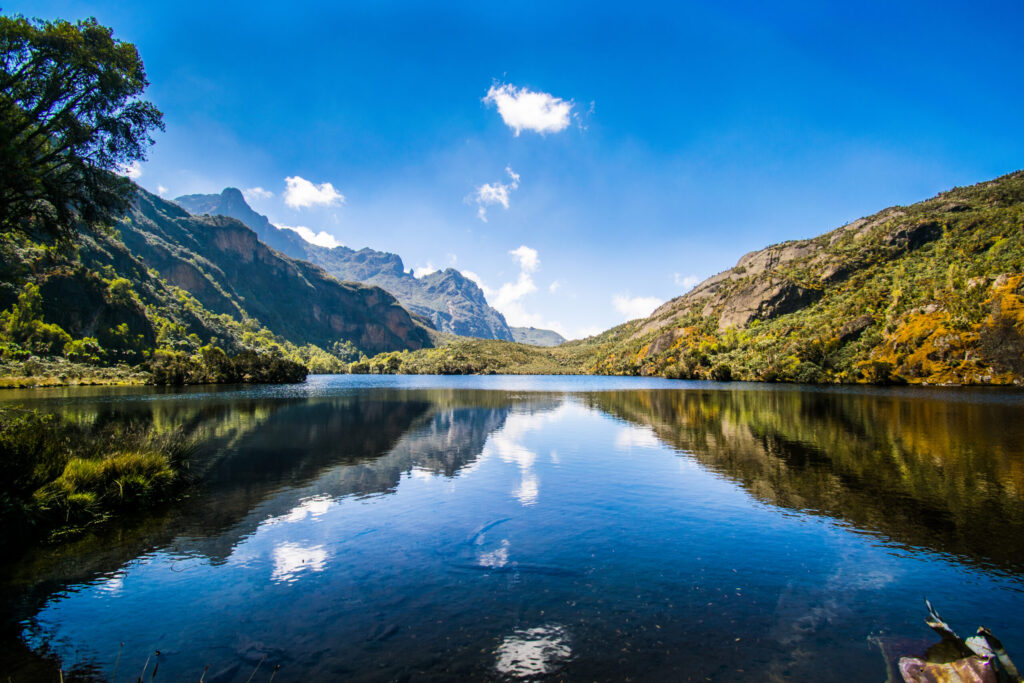
Arriving at Bujuku via the Bukurungu Trail, approaching it from the northern wilderness rather than the conventional Central Circuit direction, gives the place an added dimension of achievement and solitude. You feel, rightly, that you have earned this view.
The Vegetation Zones of the Bukurungu Trail
One of the best parts of hiking the Rwenzori Mountains is passing through Africa’s most dramatic succession of vegetation zones. The Bukurungu Trail runs through all of them, and the transitions are abrupt, as if you have passed through an invisible threshold from one world into another.
The lower reaches of the trail wind through the montane rainforest of the Albertine Rift, one of Africa’s most important biodiversity hotspots, where the canopy closes overhead and the light filters down in long green shafts through massive Podocarpus trees draped in mosses and ferns. This is where the forest’s inhabitants make themselves known: the black-and-white colobus monkeys that crash through the upper canopy; the Rwenzori turaco, with its improbable crimson wings; and the three-horned chameleon picking its deliberate way across the path.
Above the forest, the trail enters the bamboo zone, a dense, rustling corridor of African mountain bamboo that can feel almost disorienting in its uniformity before breaking through into the heather zone, where the familiar forms of vegetation begin to transform into something stranger and more otherworldly. The tree heathers here grow to heights of ten meters and more, their trunks and branches cloaked in thick moss, their forms twisted by decades of wind and cloud into shapes of extraordinary sculptural beauty.

Higher still, the trail enters the Afro-alpine zone that is the Rwenzoris’ most famous visual signature. Giant lobelias stand sentinel on the ridge lines, their towering flower spikes rising two meters and more above basal rosettes the size of armchairs. Giant groundsels, or Senecio trees, enormous and ancient-looking, cluster in the valley bottoms and on the sheltered slopes. The result is vegetation that exists nowhere else on earth in quite this form, and walking through it on a misty Rwenzori afternoon, with the cloud pressing close and the silence absolute, is one of those experiences that stays with a person for the rest of their life.
Who Is the Bukurungu Trail For?
Let me be honest with you, because I think you deserve honesty when you are planning a serious mountain trek. The Bukurungu Trail is not for beginners. It is not the right choice for someone who has never slept in a mountain tent, has never carried a loaded pack for multiple consecutive days, or needs the security of a fixed hut and a guaranteed mattress at the end of each walking day. For those hikers, and there is absolutely no shame in being one of them, the Central Circuit Trail is the better starting point for a Rwenzori experience.
The Bukurungu Trail is for capable hikers who understand and accept the conditions of wilderness camping. It is for people who have trekked at altitude before, who are comfortable with the physical and mental demands of multi-day mountain travel, and who genuinely want an experience that prioritizes wildness and solitude over comfort and convenience. It is, in the best possible sense, a trail for those who want to see the Rwenzoris as the early explorers saw them raw, unmarked, and entirely on the mountains’ own terms.
It is also the perfect trail for experienced mountaineers who wish to approach Margherita Peak from an unusual direction, combining the Bukurungu approach with a Central Circuit summit push to create a traverse that takes in more of the Rwenzori range than any other single itinerary. If that is your ambition, contact our team, and we will build you an itinerary that does it justice.
Practical Information: Planning Your Bukurungu Trail Trek
Duration and Distance
The Bukurungu Trail, completed as a standalone wilderness camping route from the Kasanzi entrance to the Mihunga gate, typically takes between seven and ten days for most trekkers. Those combining it with a Margherita Peak summit via the Central Circuit, which is a route that connects various trails around the mountain, should plan for ten to fourteen days, depending on acclimatization pace and weather conditions. Attempting to rush the Bukurungu Trail is a mistake; the wilderness character of the route means that conditions can change rapidly, and conservative day stages with proper altitude gain management are essential for both safety and enjoyment.
Camping and Accommodation on the Trail
The Bukurungu Trail is a pure ground-camping route. Rwenzori Mountains National Park has established and maintains a series of designated camping spots along the trail, all of which are well-positioned for safety and altitude acclimatization. Our expeditions provide high-quality mountain tents, sleeping mats, and all necessary camping equipment as part of our standard Bukurungu packages; trekkers do not need to source or carry their shelter. The camps are remote enough that the sense of sleeping genuinely in the wilderness is never compromised, yet they are marked and managed well enough that experienced guides can navigate between them safely in variable weather.
Best Time to Hike the Bukurungu Trail
The Rwenzori Mountains can be hiked year-round, but the most reliable conditions on the Bukurungu Trail are during the two dry seasons: December to March and June to September. The mountain paths are most stable, river crossings are safer, and the views from the high alpine lakes are most expansive during these windows. That said, the Rwenzoris are famously one of the wettest mountain ranges in Africa; some degree of rain is possible at any time, and thorough waterproofing of clothing, gear, and camp is always required. Our guides are experienced in managing the conditions that make the Rwenzoris unique, and we brief every trekking party comprehensively on what to expect before departure.
Fitness and Physical Preparation
For the Bukurungu Trail, we strongly recommend that trekkers arrive in genuine mountain fitness. This means regular hiking with a loaded pack in the months before your trip, experience sleeping at altitude, and a sound cardiovascular base. The trail involves sustained elevation gain across multiple days, river crossings, and terrain that is more technically demanding than the Central Circuit in places. The rewards are commensurate with the effort, but the effort must be brought to the mountain; it cannot be manufactured on the day, meaning that proper preparation and training are essential to fully enjoy the experience of the Bukurungu Trail.
What to Pack for the Bukurungu Trail
Given the wilderness camping nature of this route, packing correctly is more critical on the Bukurungu Trail than on any other Rwenzori itinerary.

In addition to the standard Rwenzori packing essentials, which include waterproof mountain boots, a warm sleeping bag (rated to at least -5°C for the high camps), thermal base layers, a rain jacket and trousers, trekking poles, and a headlamp, Bukurungu trekkers should ensure they have robust waterproofing for all camp gear and a dry bag system for electronics and documents. This trail fully embraces the legendary wetness of the mountains.
Permits and Park Fees
Access to the Bukurungu Trail requires a valid permit for Rwenzori Mountains National Park, administered by the Uganda Wildlife Authority. Rwenzori Trekking Safaris’ package prices include all park fees, camping fees, and guide charges. Trekkers entering Uganda will require a valid visa; the permit can be obtained online in advance or on arrival at Entebbe International Airport. Our team provides comprehensive pre-departure logistics support to ensure all documentation is in order before you travel.
The Bukurungu Trail vs. the Central Circuit and Kilembe Trail
Choosing between the Rwenzori’s three main routes is one of the most important decisions a trekker will make, and it deserves an honest, experienced answer. Here is how the Bukurungu Trail compares to its two counterparts, from someone who has guided on all three.

The Central Circuit Trail is the most accessible and most popular route. Its hut-to-hut infrastructure means no tents, and its well-established path through the full range of Rwenzori vegetation zones makes it an excellent introduction to the mountains. It is the right choice for first-time Rwenzori trekkers and for those who want to summit Margherita Peak with the highest possible support network around them.
The Kilembe Trail enters from the south, starting near Kasese town, and is the most technically demanding of the three main routes. It features more sustained steep climbing than the Central Circuit and takes trekkers through some strikingly different terrain and vegetation on the southern flanks of the range. It has fixed camps with some facilities, and it is the preferred route for technically minded mountaineers aiming for Margherita Peak via a more challenging approach.
The Bukurungu Trail occupies a unique position. It is more demanding than the Central Circuit in terms of the wilderness camping requirement and the northern approach terrain, but it is distinguished above all by its solitude, its four alpine lakes, and its status as the route that most closely approximates the experience of the Rwenzoris’ early explorers. The Bukurungu Trail is an unmatched choice for trekkers who have already completed one of the other routes and want to experience the range from a completely different perspective, as well as for experienced mountain campers approaching the Rwenzoris for the first time with serious wilderness credentials.
Wildlife and Conservation along the Bukurungu Corridor.
The Bukurungu Trail’s 2018 partnership between UWA and WWF was not only about creating a new trekking route. It was also a deliberate conservation intervention, designed to extend the protective footprint of guided, managed tourism into a corridor of the Rwenzori Mountains National Park that had previously received very little formal management attention. The Bukurungu corridor is home to a range of Albertine Rift endemic species found nowhere else on earth, and the trail’s management framework is designed to ensure that trekking activity supports rather than undermines their conservation.
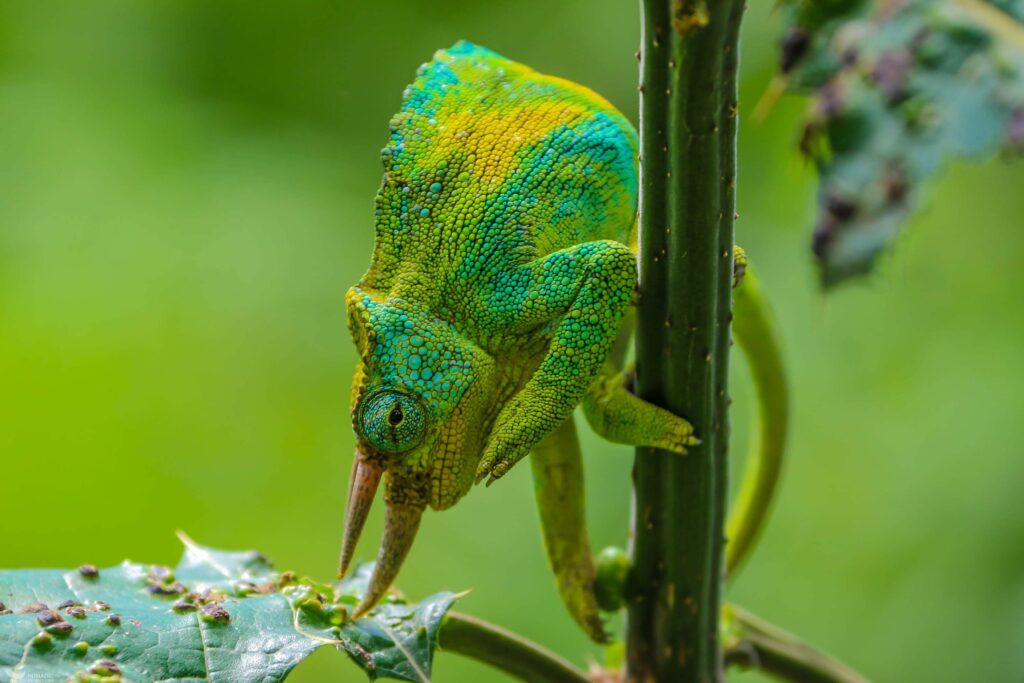
Trekkers on the Bukurungu Trail may encounter chimpanzees in the lower forest zones. The Rwenzoris are home to one of Uganda’s less-visited chimpanzee populations, and the northern approaches of the range see considerably less human disturbance than the more trafficked southern corridors. The Rwenzori turaco, the Rwenzori double-collared sunbird, and the handsome francolin are among the bird species that regularly appear along the trail, and the high alpine zones hold their own remarkable assemblage of life adapted to the extreme conditions of the upper mountain.
At Rwenzori Trekking Safaris, 10% of all safari proceeds are directed to supporting local Bakonzo communities by funding orphan care, schools, and homes in the villages around the mountain. Trekking the Bukurungu Trail is not only an adventure; it is a direct contribution to the human communities whose lives are inseparable from the health of the Rwenzori Mountains.
Frequently Asked Questions About the Bukurungu Trail.
What is the Bukurungu Trail, and where is it located?
The Bukurungu Trail is the third primary trekking route through Rwenzori Mountains National Park in western Uganda, East Africa. Established in 2018 through a partnership between the Uganda Wildlife Authority and WWF, it is a wilderness camping trail that enters the park from the Kasanzi entrance in the Omukorukumi area and exits at the Mihunga park gate. The trail passes between the Portal Peaks and Mount Gessi, traverses some of the most remote terrain in the Rwenzori range, and takes trekkers past four high alpine lakes: Irene, Mughuli, Bukurungu, and Bujuku. It intersects with the Central Circuit Trail at the Bigo swamp, making it possible to combine the Bukurungu approach with a Margherita Peak summit climb.
How difficult is the Bukurungu Trail, and who should attempt it?
The Bukurungu Trail is classified as a challenging wilderness route suitable for capable, experienced hikers with prior multi-day mountain trekking experience. It is not recommended for beginners. The trail involves sustained elevation gain across multiple days, remote terrain with no hut infrastructure, river crossings, and the physical and mental demands of multi-night wilderness camping at altitude. Trekkers should arrive with a strong cardiovascular base, previous experience trekking with a loaded pack at altitude, and a genuine comfort with wilderness camping conditions. The trail is particularly well-suited to experienced mountaineers seeking to approach the Rwenzori high peaks from an unusual and less-travelled direction.
How long does it take to hike the Bukurungu Trail?
Most trekkers take between seven and ten days to hike the Bukurungu Trail as a standalone route from the Kasanzi entrance to the Mihunga gate, depending on their pace and acclimatization. Trekkers who wish to combine the Bukurungu approach with a summit of Margherita Peak (5,109 m) via the Central Circuit should plan for ten to fourteen days. We do not recommend attempting to compress the itinerary significantly; the wilderness character of the route and the importance of proper altitude acclimatization make conservative day stages essential for both safety and enjoyment.
Is there accommodation on the Bukurungu Trail, or do trekkers need to camp?
The Bukurungu Trail is a pure wilderness camping route. Unlike the Central Circuit Trail (which has mountain huts with bunk beds) or the Kilembe Trail (which has fixed camp facilities including solar panels), the Bukurungu Trail has no permanent built accommodation. Rwenzori Mountains National Park has established and maintains a series of well-positioned ground camping spots along the route. Rwenzori Trekking Safaris provides all required mountain camping equipment, including high-quality tents, sleeping mats, and kitchen equipment, as part of our standard Bukurungu trekking packages. Trekkers do not need to source their shelter for trips booked with us.
What is the best time of year to hike the Bukurungu Trail?
The most reliable conditions for hiking the Bukurungu Trail are during Uganda’s two dry seasons: December to March and June to September. During these periods, the mountain paths are most stable, river crossings are at safer levels, and clear weather windows offer the best views of the alpine lakes and surrounding peaks. However, the Rwenzori Mountains are among the wettest mountain ranges in Africa, and some degree of rain, mist, and mud is possible on the Bukurungu Trail at any time of year. Full waterproofing for clothing, gear, and camping equipment is always required. Our guides have extensive experience managing these conditions and will brief your party fully before departure.
Can the Bukurungu Trail be used to summit Margherita Peak?
Yes. One of the most compelling uses of the Bukurungu Trail is as an approach route to the Rwenzori high peaks. Because the trail intersects with the Central Circuit at the Bigo swamp, trekkers can continue from the Bukurungu route onto the Central Circuit, ascend to Margherita Peak (5,109 m), the third-highest point in Africa, and descend via the Central Circuit to the Mihunga park gate. This combined itinerary creates the most comprehensive possible Rwenzori traverse, passing through more of the range’s diverse terrain and vegetation zones than any other single route. Contact our team to plan a bespoke Bukurungu-to-Margherita expedition.
Ready to Walk Where Few Have Gone? Start Planning Your Bukurungu Trail Expedition
The Bukurungu Trail is not for everyone. But if you have read this far, the chances are it is for you.
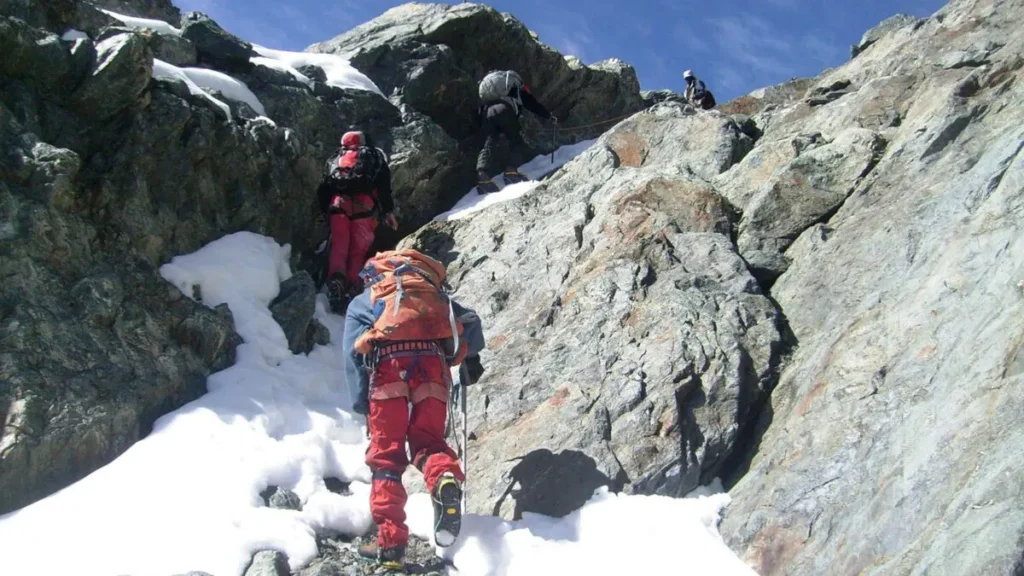
At Rwenzori Trekking Safaris, we are the specialist guides for all three Rwenzori trekking routes, with over a decade of experience leading expeditions on these mountains. We tailor our Bukurungu Trail packages to each trekker’s specific capabilities, ambitions, and schedule, rather than using a generic template. Whether you want a standalone Bukurungu wilderness experience or a combined trek that culminates on the Margherita glacier, our team will plan it with you in detail, ensuring that every logistical question is answered before you set foot on the mountain.
We include all park fees, camping equipment, professional mountain guides, porters, and meals in our packages. We provide comprehensive pre-departure briefings and gear lists. You will be in touch with people who know the Bukurungu Trail well, as they walk it often, throughout the planning process, from your first question to your last descent.
Get in touch with the Rwenzori Trekking Safaris team today via our Contact Page, or explore our full range of Rwenzori trekking itineraries to see how the Bukurungu Trail can fit into your wider Uganda adventure. The Mountains of the Moon are waiting. Let us take you there.