Explore Bwindi Impenetrable National Park in Uganda, home to half of the world’s mountain gorillas. Trek with gorilla families and learn about the park’s history, wildlife, different sectors, and the best times to visit. Located in southwestern Uganda, Bwindi Impenetrable National Park is one of the world’s most cherished destinations.
Famous for its well-known dense jungles, breathtaking landscapes, and, most notably, its population of endangered mountain gorillas, Bwindi offers the most unforgettable gorilla trekking experience on earth. With more than half the population of the world’s remaining gorillas, Bwindi is home to several gorilla families, offering both gorilla trekking and habituation experiences to trekkers.
Bwindi Impenetrable National Park sits on an area of 331 kilometres and is part of Bwindi Impenetrable Forest, which has existed for over 25,000 years. Bwindi Impenetrable was declared a UNESCO World Heritage Site in 1994 because of its outstanding biodiversity and its crucial importance in protecting the mountain gorillas. Located at the edge of the Albertine rift valley, Bwindi is made up of rugged landscapes with steep hills, deep valleys, and dense forests that create the impenetrable thick canopy. Bwindi Impenetrable National Park is also home to over 120 mammal species, 350 bird species, 220 butterfly species, and numerous plant species, making it a preferred destination for all kinds of travellers.
History of Bwindi Impenetrable National Park.
The history of Bwindi Impenetrable National Park starts in the early 1990s, when the forest was established as a forest reserve and managed by the British colonial government. It was primarily set apart for the production of timber and wildlife conservation. In 1932, two blocks were designated as crown forest reserves, with the northern block known as the Kayonza Crown Forest and the southern block known as the Kasatora Crown Forest Reserve.
In 1942, the reserves were combined, expanded, and renamed the impenetrable Central Crown Forest. The forest was later gazetted as a national park in 1992 to protect the endangered mountain gorillas as well as support the ecotourism initiatives. This decision shifted its focus to conservation, ecotourism, and supporting the livelihoods of the local communities who had previously depended on the forest for resources like timber.
How can one access Bwindi Impenetrable National Park?
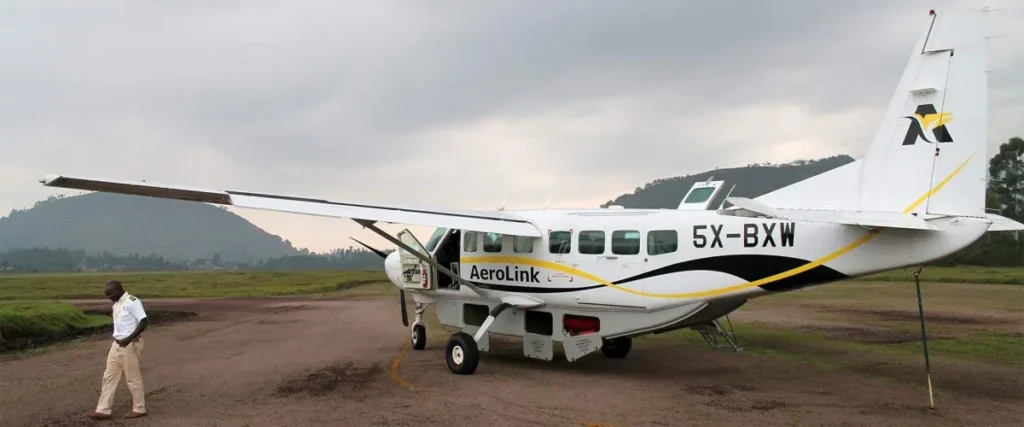
Bwindi Impenetrable National Park is located in the southern part of Uganda in a district known as Kanungu near the borders of the Democratic Republic of Congo and Rwanda. The park is about an 8- to 10-hour drive on the road from Kampala, the capital city of Uganda. By air, trekkers can access Bwindi on a local flight to Kihihi Airstrip, located in Kanungu District.
Bwindi Impenetrable National Park is divided into four sectors, including the Buhoma, Ruhija, Rushaga, and Nkuringo sectors, each being a home to specific gorilla families and offers unique trekking experience. The park can easily be accessed from Entebbe either by road or air and from Kigali by road, which is a much shorter distance of only 4-5 hours.
Gorilla Trekking in Bwindi Impenetrable National Park.
Bwindi Impenetrable National Park is home to half the remaining gorilla population in the world, with an estimated 460 individuals calling Bwindi their home. These gorillas are organized within families and groups and exhibit complex social structure, communication, and behavior that captivate visitors. Mountain gorillas (Gorilla beringei beringei) are herbivorous primates that feed basically on leaves, stems, fruits, and sometimes insects. They have thick fur that enables them to adapt to the high altitude and cold climate of Bwindi’s forested nature.
Gorillas are classified as endangered species, with their main threats being habitat loss, disease, and poaching. Conservation efforts within Bwindi Impenetrable National Park have played a crucial role in increasing the gorilla population, and the revenue generated from ecotourism, particularly gorilla trekking, contributes to the sustainability efforts that have been established.
The Process of Gorilla Trekking in Bwindi Impenetrable National Park.
The gorilla trekking experience is a well-organized activity, facilitated by trained UWA rangers who guide visitors through the forest. Before embarking on a gorilla trekking adventure, you are briefed at the park headquarters by the authorities from the Uganda Wildlife Authority, who introduce the rules and regulations of gorilla trekking and the safety protocols, as well as the gorilla family you will be trekking.
Groups are kept in small numbers of 8 people for every gorilla family to reduce the impact of stress on the gorillas and ensure a manageable group size for a comfortable trekking experience. The journey of gorilla trekking involves walking through the forest with a ranger or guide leading you to your particular gorilla family. The trek involves walking through steep ascents and muddy paths in the dense forest of Bwindi.
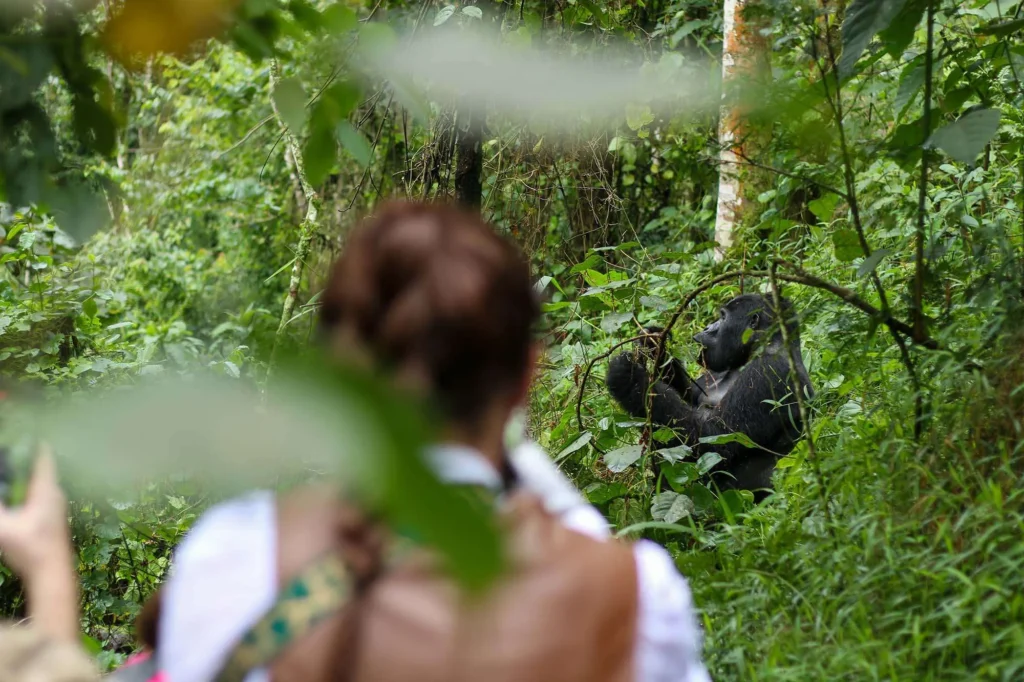
However, the guides will ensure you are walking at a steady pace and offering any necessary help to trekkers. After finding the gorillas, you are allowed 1 hour with the gorillas, observing them in their natural habitat. Be sure to maintain the 7-meter distance while spending your time with the gorillas and incase of anything, be sure to seek advice from your guide. It’s very crucial to remember the gorilla trekking rules and regulations while you are in the forest. After the time with the gorillas, capturing every moment with them, you will then head back to the park headquarters to receive your gorilla trekking certificate, evidence that you have trekked.
Best time to go Gorilla trekking in Bwindi Impenetrable National Park.
Bwindi Impenetrable National Park offers gorilla trekking opportunities throughout the year. Trekkers can embark on a remarkable gorilla trekking trip anytime with prior preparation and planning. However, the best time for gorilla trekking is during the dry season, and these seasons run from June to September and December to March.
This is also regarded as the peak season in Uganda, offering optimal weather conditions. The trails during this season are dry with less mud, making it easier for trekkers to traverse through the dense forest and improving visibility. However, visitors embarking on gorilla trekking should also consider that this is peak season, and permits and accommodation facilities are booked in advance.
The wet season is associated with heavy rains, making the trails muddy and slippery, making gorilla trekking very difficult. The months of April to May and October to November have fewer tourists, making gorilla trekking a more personalized experience with less competition for permits and accommodation. The season is also ideal for gorilla trekking, offering beautiful opportunities for photographers.
The cost of gorilla trekking in Uganda varies based on residency status.
A gorilla permit is the major requirement for gorilla trekking in Bwindi Impenetrable and costs $800 for foreign non-residents, $700 for foreign residents, and 300,000 UGX for East African citizens.
The gorilla trekking is the entry pass to gorilla trekking in Bwindi Impenetrable National Park, and the permit fees support the conservation efforts and community development initiatives.
Other costs for gorilla trekking range from accommodation and transportation to meals, with most tour operators offering packages that cover all these costs.
Here is a packing list for gorilla trekking in Bwindi Impenetrable National Park.

The weather in Bwindi can be unpredictable; packing wisely is very essential, and ensuring you have the appropriate gear for gorilla trekking is key. With this unpredictable weather, the forest can receive rains even in the dry season; therefore, you are advised to double-check your packing list before embarking on gorilla trekking. The packing list items may include hiking boots, a rain jacket, waterproof pants, sunscreen, a hat, snacks, and water, among many others.
Conservation efforts are ongoing in Bwindi Impenetrable National Park.
Bwindi’s gorilla population is a confirmation of successful conservation efforts. Gorilla trekking fees support conservation efforts. A percentage of gorilla trekking fees is directly injected into anti-poaching patrols, community outreach, and the preservation of the habitat for gorillas. The Uganda Wildlife Authority and international conservation organizations work together to closely monitor the health of gorillas and other conservation efforts, including poaching. Other conservation efforts are empowering the local communities that stay around Bwindi to ensure the protection of the habitat for the gorillas.
Bwindi Impenetrable National Park is a truly remarkable destination that offers one of the most unique gorilla trekking experiences in the world. Bwindi Forest is dense with a wide biodiversity, making it a premier destination for nature lovers and adventure seekers alike. Bwindi Impenetrable National Park offers a once-in-a-lifetime chance to encounter the majestic creatures in their natural habitat. Whether you visit for the unforgettable gorilla trekking, the stunning landscapes, or the diverse flora and fauna. Bwindi Impenetrable National Park promises to be a UNESCO World Heritage Site and stands as a testament to the conservation efforts that help protect the gorillas as well as the local community, improving the livelihoods of the locals. A visit to Bwindi is not only a remarkable experience but also a step into Africa’s best destination for gorilla trekking.