Why Choose the Rwenzori Mountains?
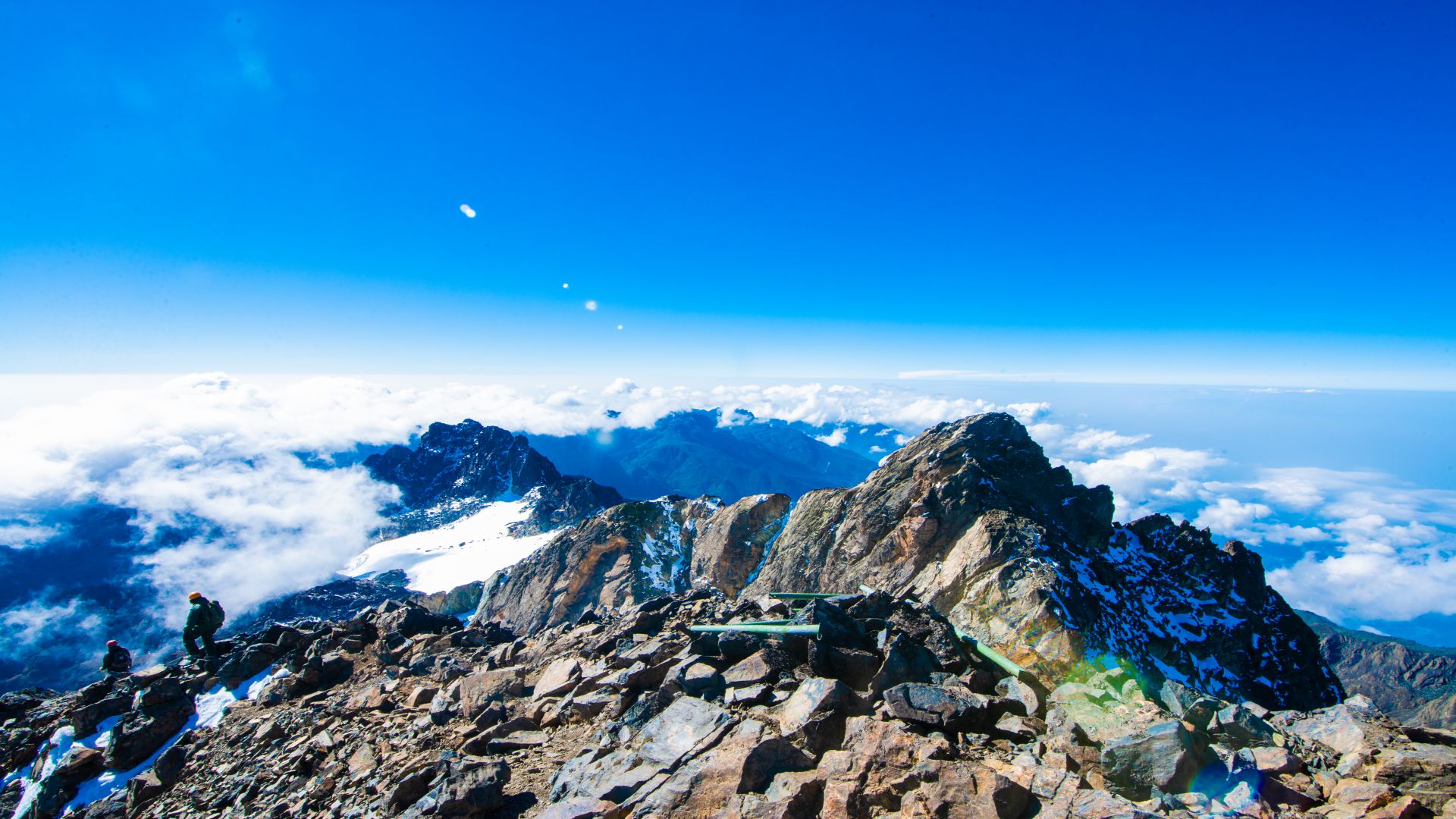
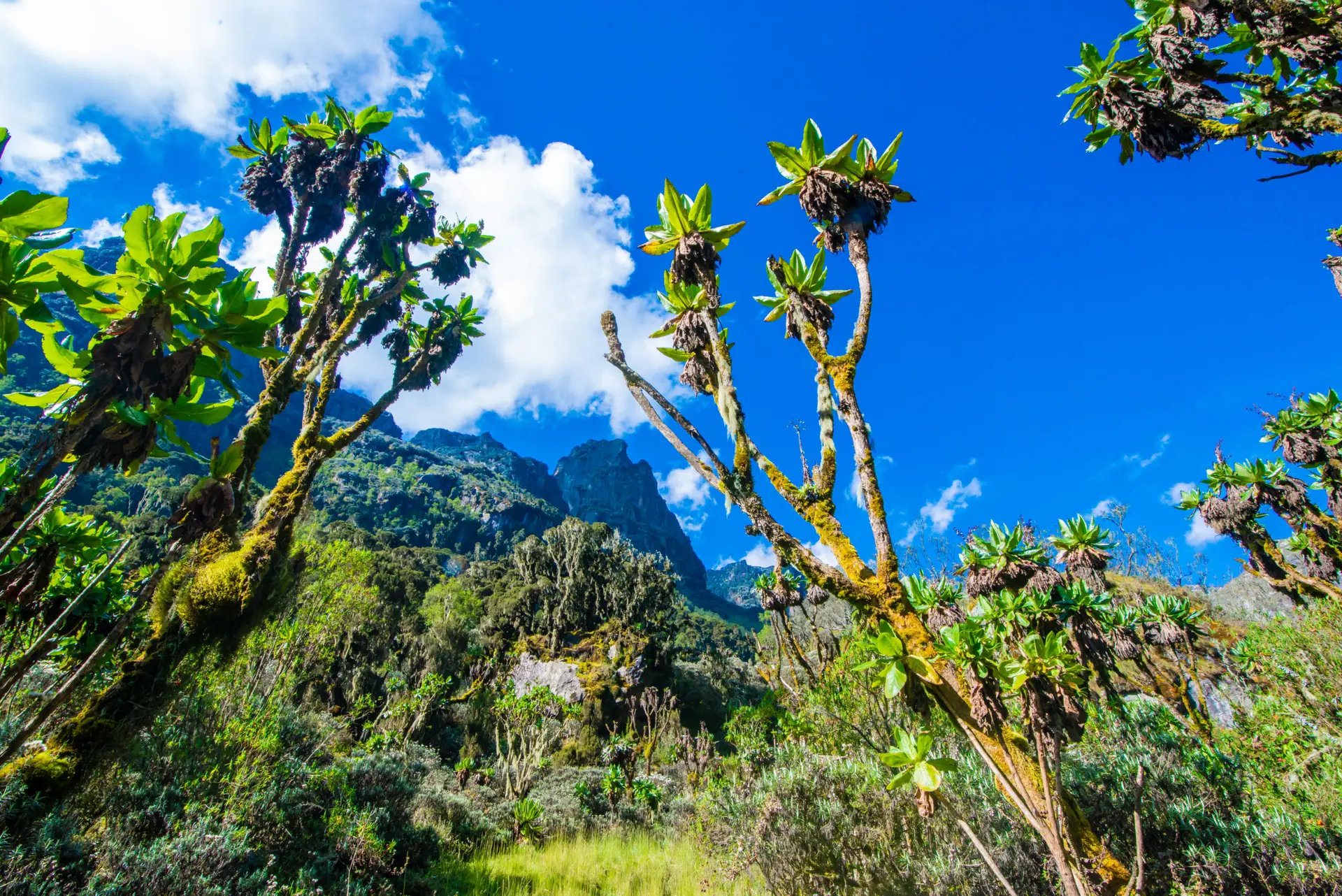
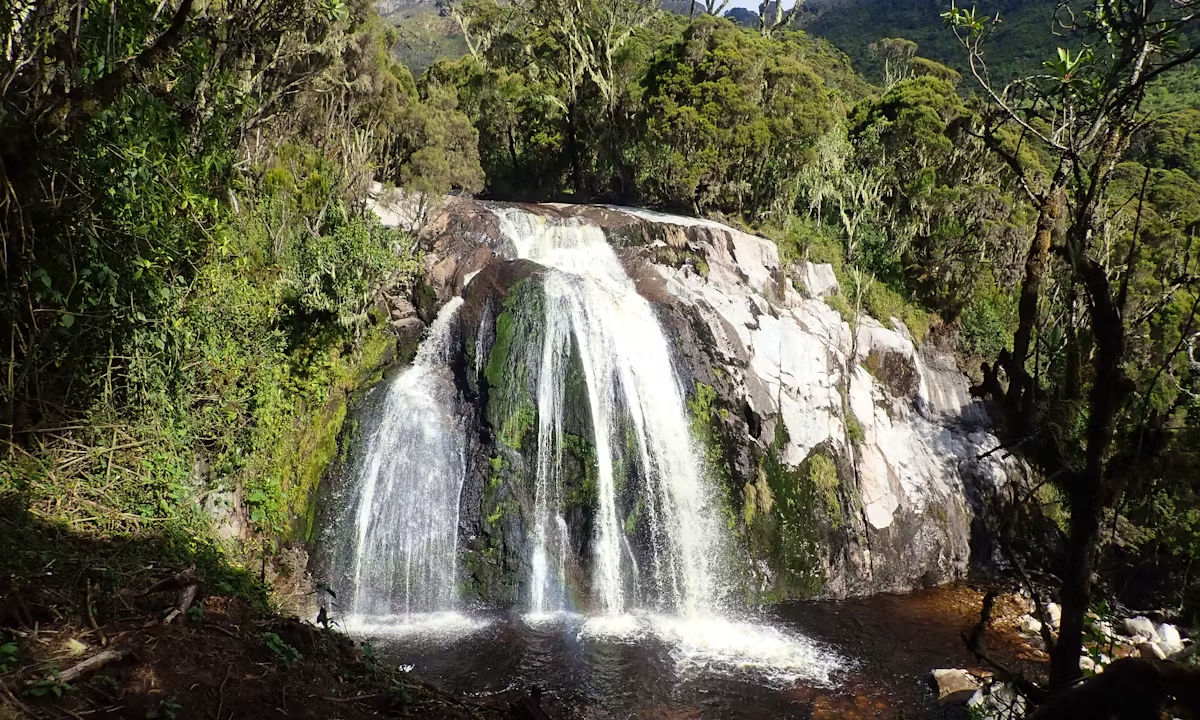
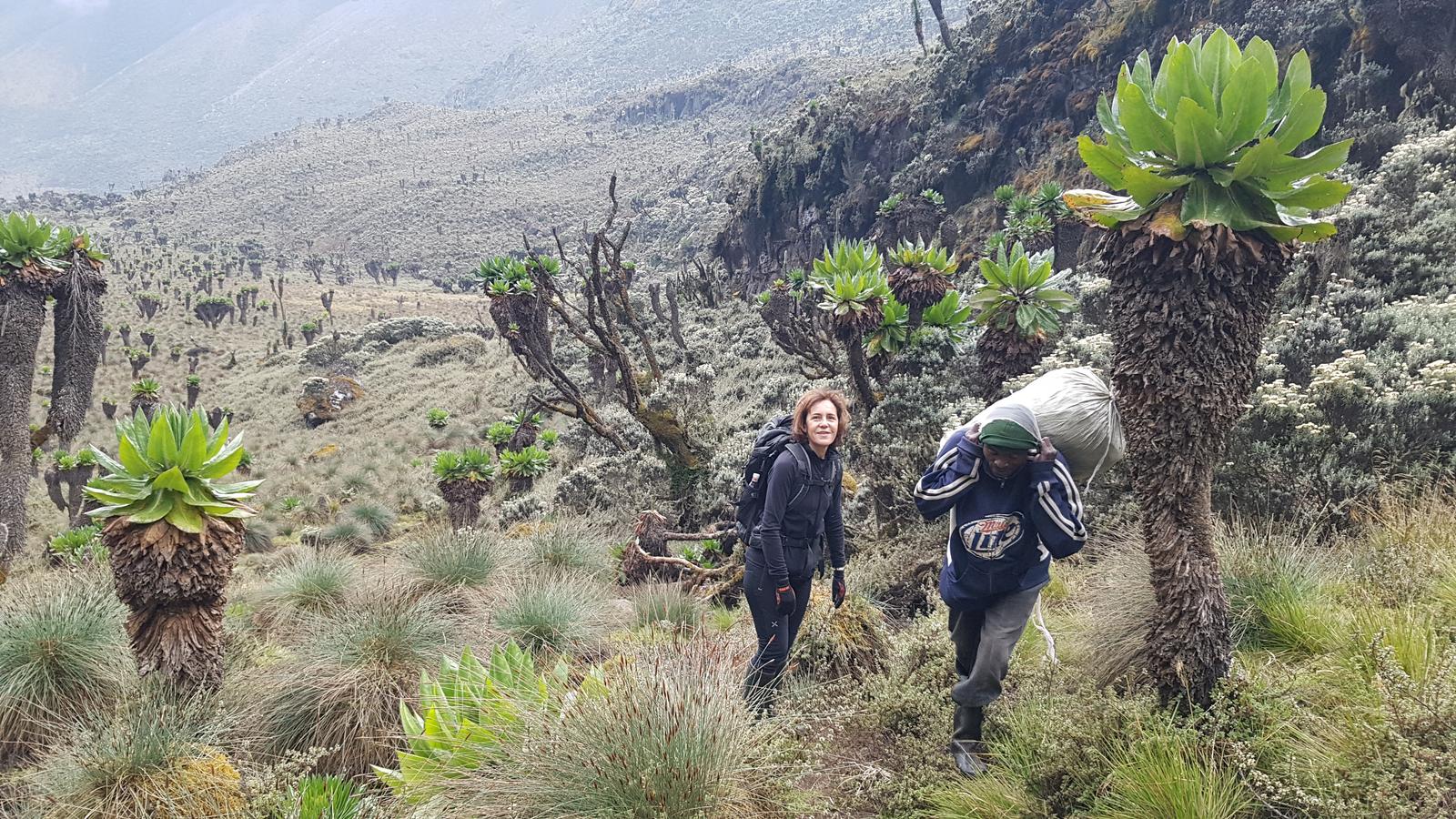
You should visit the Rwenzori Mountains because they have beautiful and unique alpine scenery, such as the highest glaciers in Africa, V-shaped valleys, and waterfalls. The rich mountain vegetation includes unique plants found only in the Rwenzori Mountains, such as giant heathers, groundsels, and lobelias. The mountains are home to a diverse array of animals, including monkeys, birds, and unusual snakes. The “Mountains of the Moon” may be linked to the Nile’s source.
Day 1: Nyakalengija (1650m) – Nyabitaba Camp (2650m)
Begin your trek from the Rwenzori Mountains National Park gate. After registration and briefing, hike through tropical rainforest, encountering steep climbs and forest bird calls, before reaching Nyabitaba Camp with views of the Portal Peaks.
After meeting your guides and the entire team who will assist you, you will begin your journey carrying a backpack that contains rain gear and all the essential items needed for the hike. Make sure to leave the heavy items and gear in the main bag, which the porters will carry. You will then head into the lush tropical forest, hiking through the base of the mountain. Further up, you will encounter steep and gentle slopes on Mt. Rwenzori. After ascending steeply, you will encounter a rock shelter and eventually reach the forest camp, Nyabitaba camp. Enjoy the incredible views of the portal peaks and chirping birds.
Day 2: Nyabitaba – John Matte Camp (3505m)
Cross the Mubuku and Bujuku rivers, ascend into bamboo forest, and trek through moss-covered trees before arriving at John Matte Camp
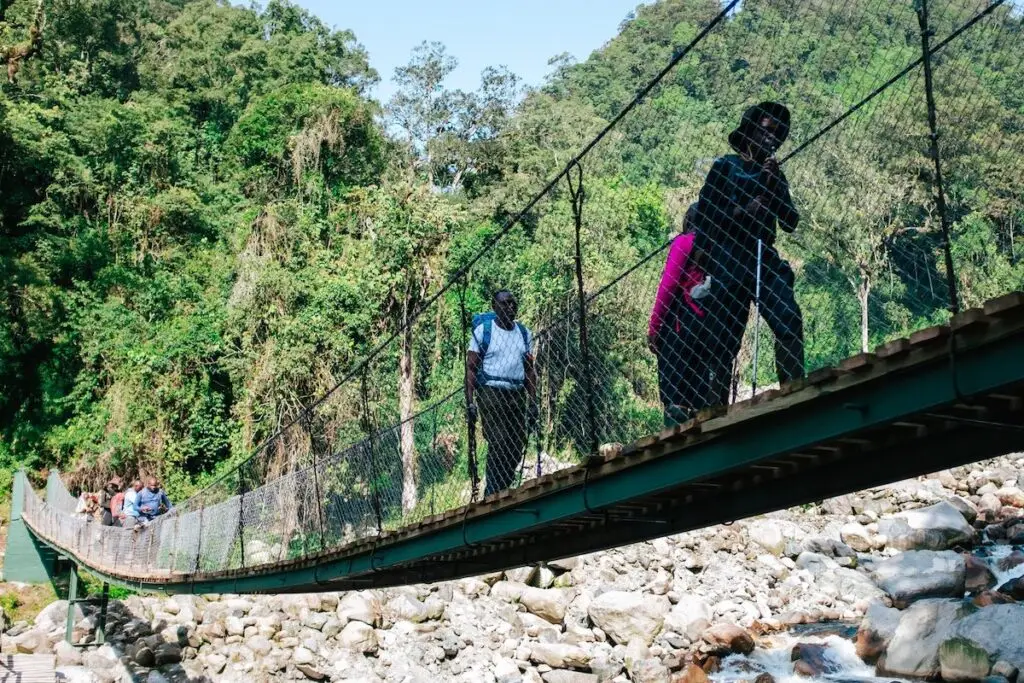
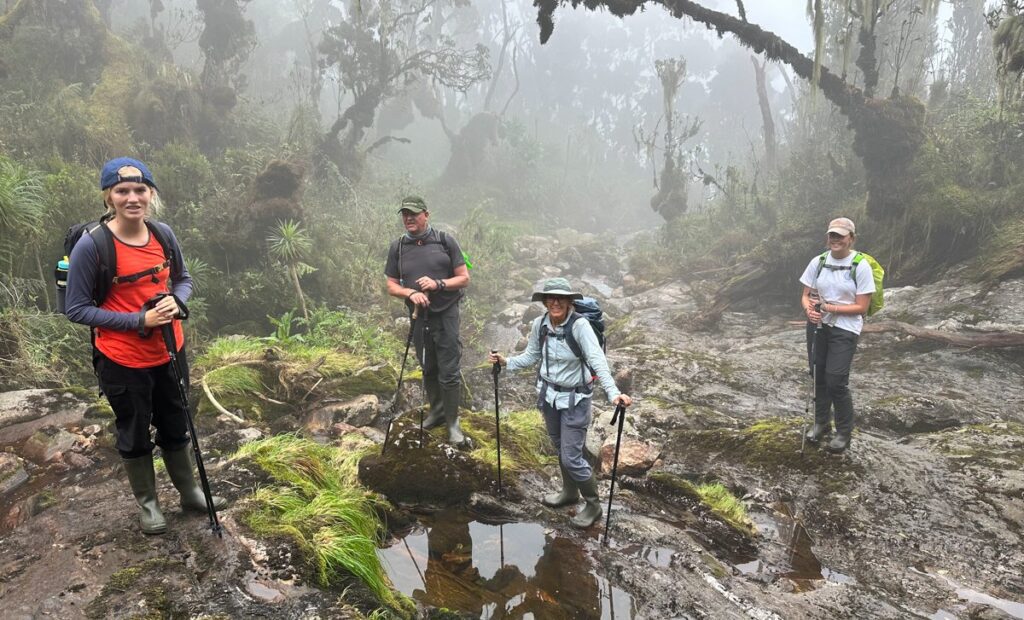
On this day you will be heading to John Matte Camp; the long and rather tiring day’s walk takes you through the crossing of the confluence of Rivers Mubbuku and Bujjuku. Thereafter, you ascend to the bamboo zone, which is dominated by bamboo trees. Walking further you will cross the Bujjuku River, and finally you will reach John Matte crossing mossy forested trees
Day 3: John Matte – Bujuku Camp (3962m)
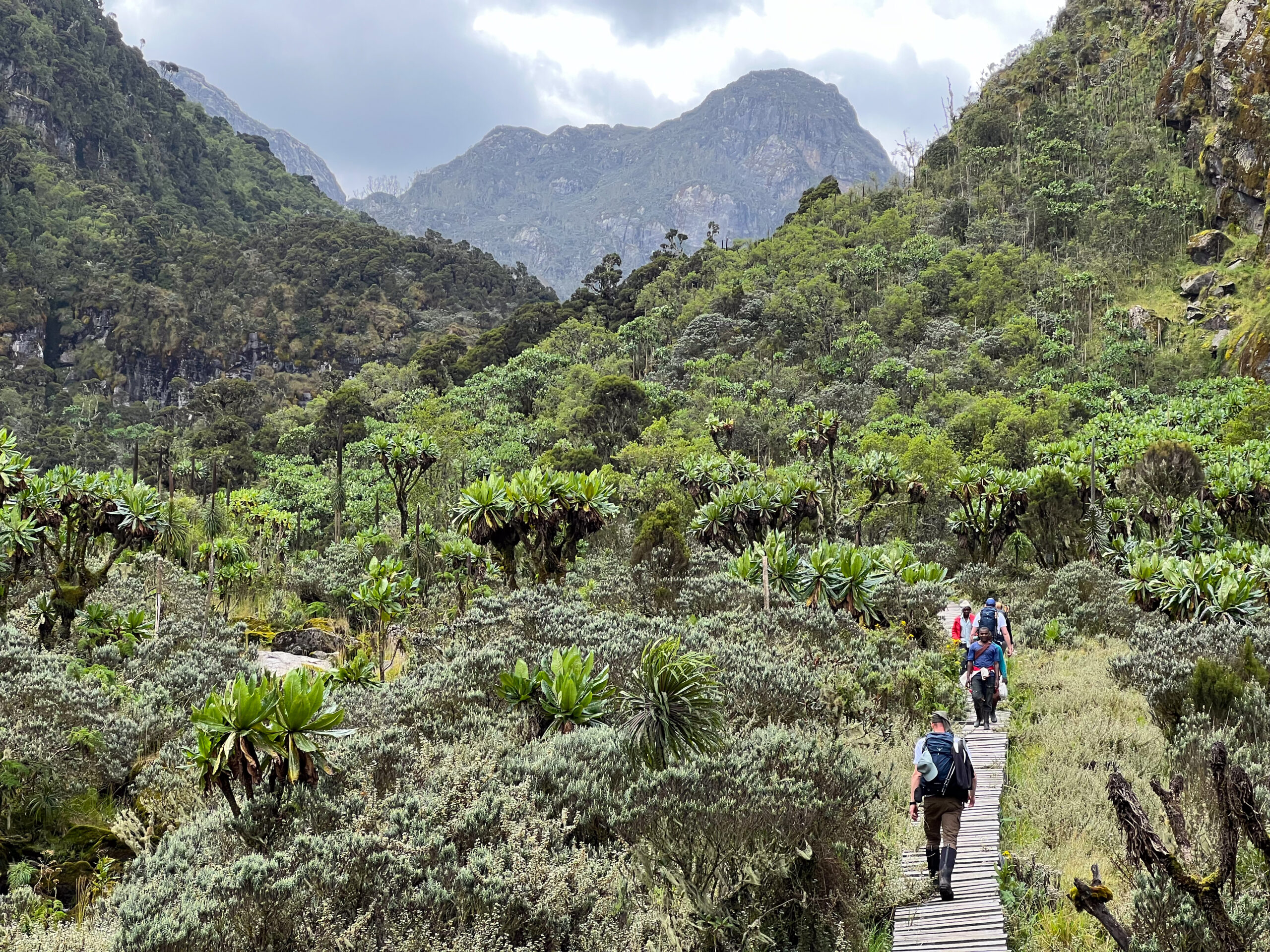
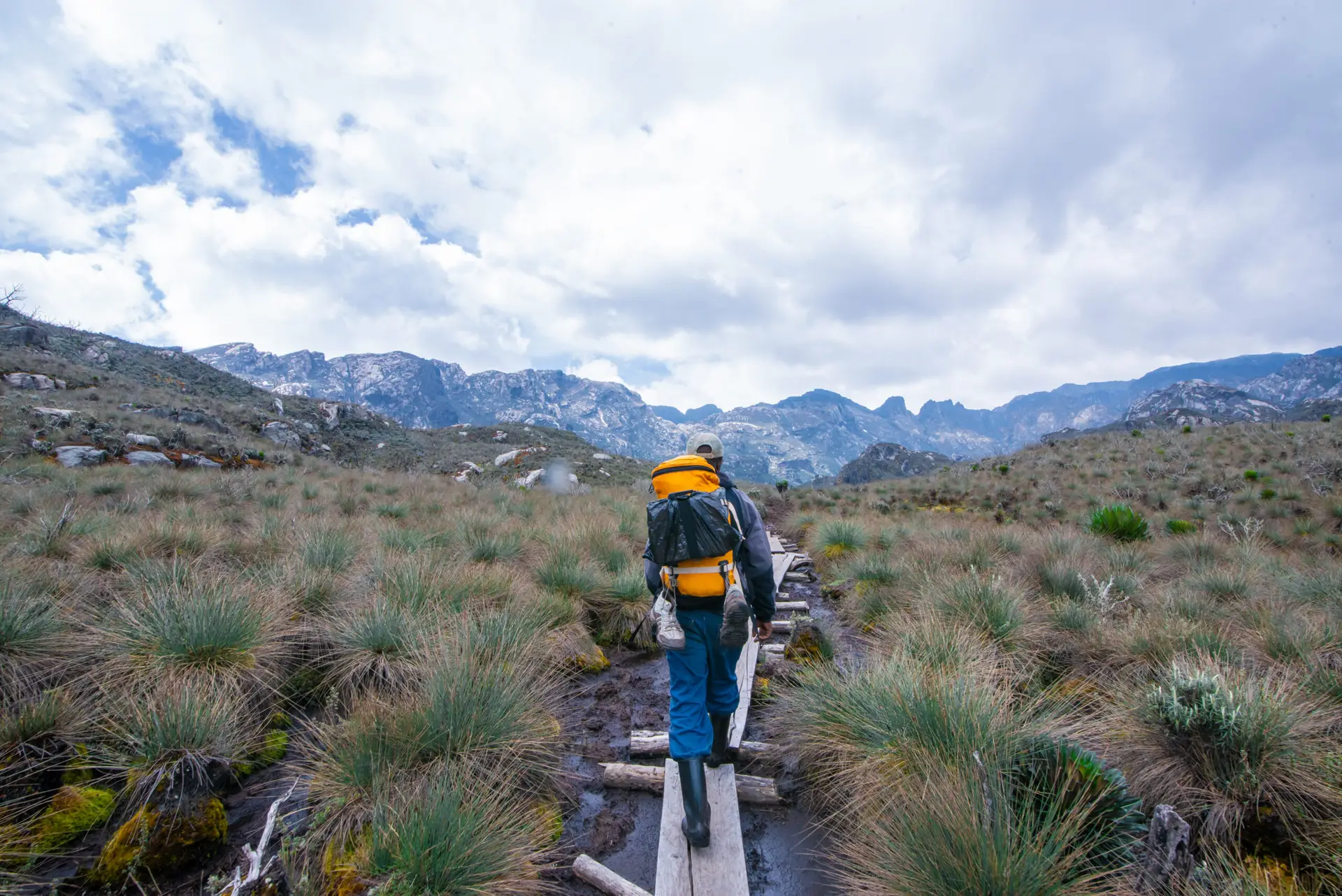
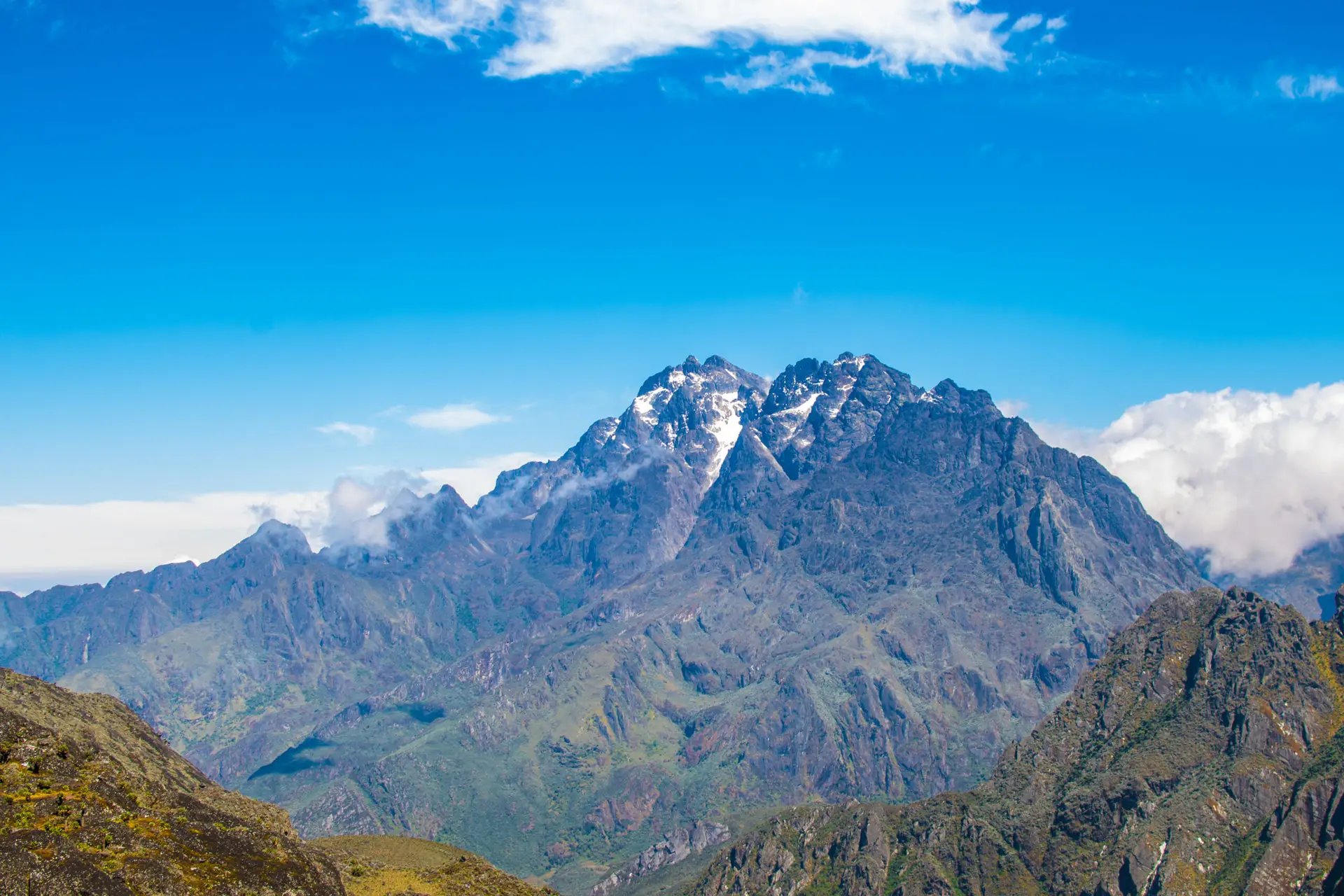
Traverse the Lower and Upper Bigo Bogs via boardwalks surrounded by giant lobelias, passing Lake Bujuku with stunning views of Mount Speke, Mount Stanley, and Mount Baker.
This will then lead to a vast landscape of tussocks and a slippery area near Lake Bujuku, where there is a boardwalk to assist with the very slippery trail. After navigating the tussocks, you will walk through to Bujuku Camp, where dinner and an overnight stay will be enjoyed in an incredible location where the three peaks of Stanley, Baker, and Speke form a triangle, creating the Bujuku Valley.
Day 4: Summit Mount Speke–Victoria Emmanuel Peak (4520 m).
Climb via Stuhlmann’s Pass to cross the snowline and reach the highest point of Mount Speke. Before heading back to Bujuku Camp, savor the panoramic views.
You will ascend the Stuhlmann’s Pass, named after a very intelligent explorer who recognized that the Rwenzori is not just a single mountain but a range of mountains, and who also accurately described the vegetation zones from the foothills to the snowline.
Day 5: Bujuku – Elena Camp (4541 m).
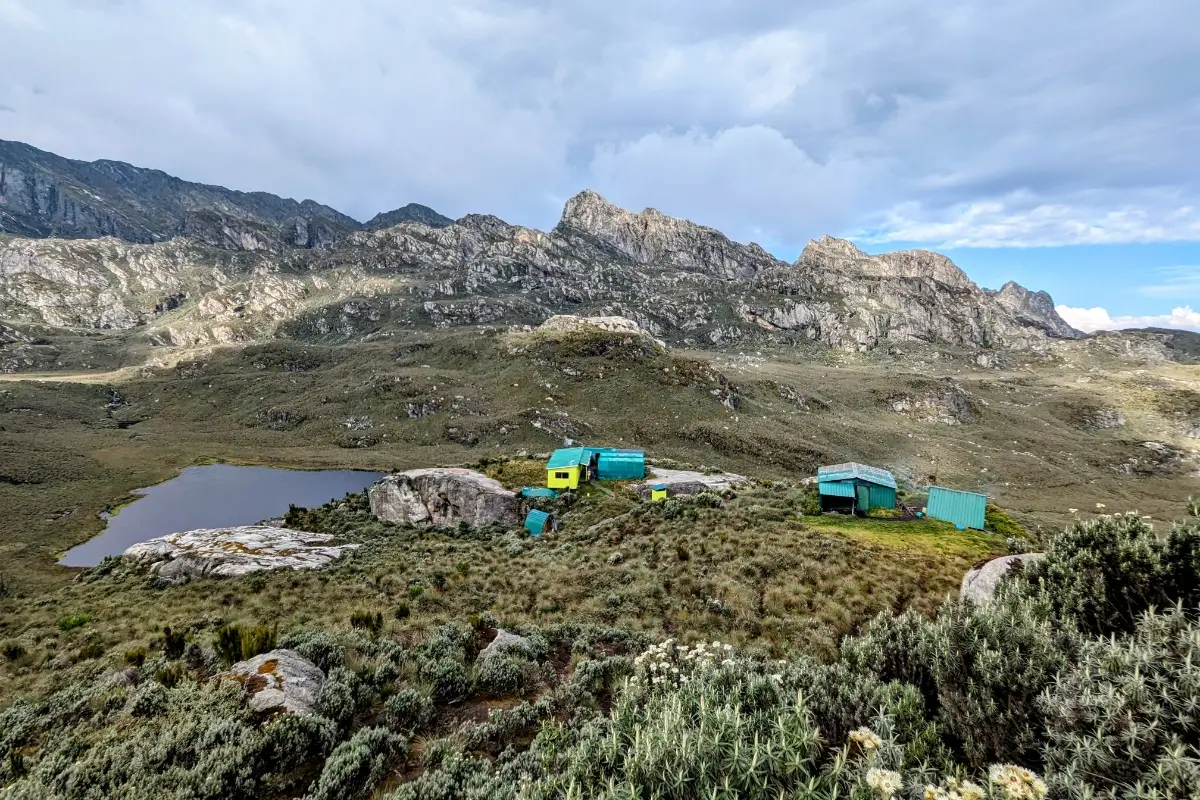
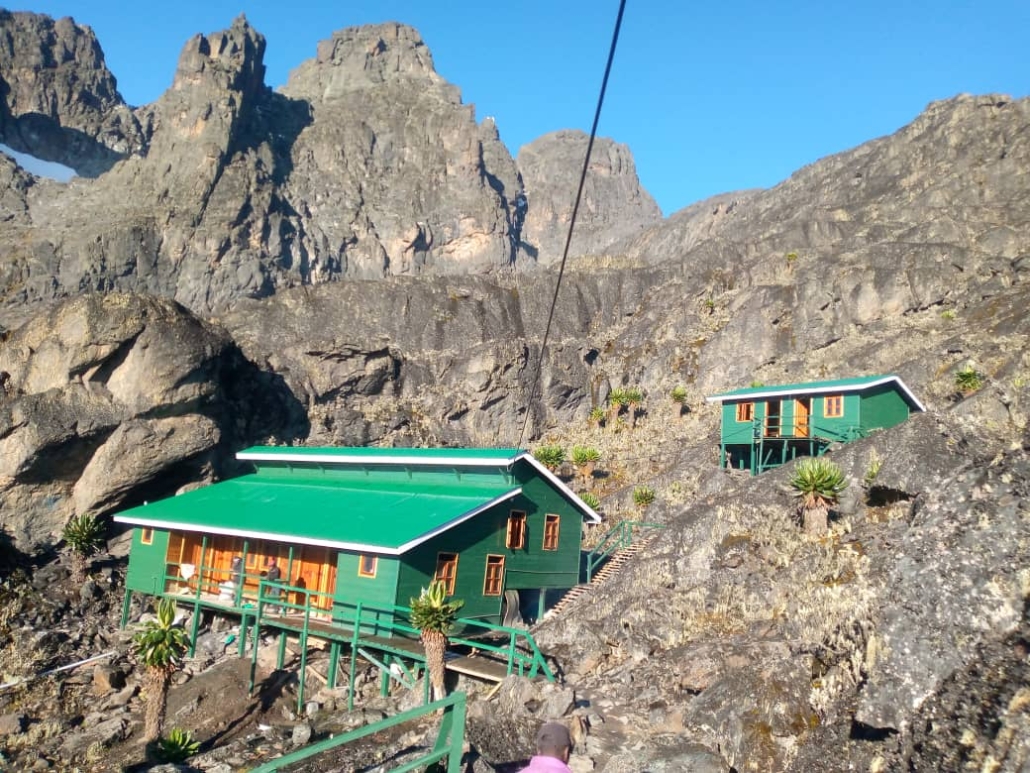
The high-altitude Elena Camp, nestled amidst glaciers and freezing conditions, awaits you after a steep, rocky ascent.
From Bujjuku, walk through the slippery ascent to the gully and hike the steep area before being welcomed by the huge mossy rocks towards Scott Elliot Pass. Ascend further until you arrive at the camp. The freezing temperatures will welcome you into the camp today, so stay warm to ensure a successful summit. Rest for a few hours after enjoying a hot meal.
Day 6: Summit Margherita Peak (5109 m)—Descend to Kitandara Lakes Camp
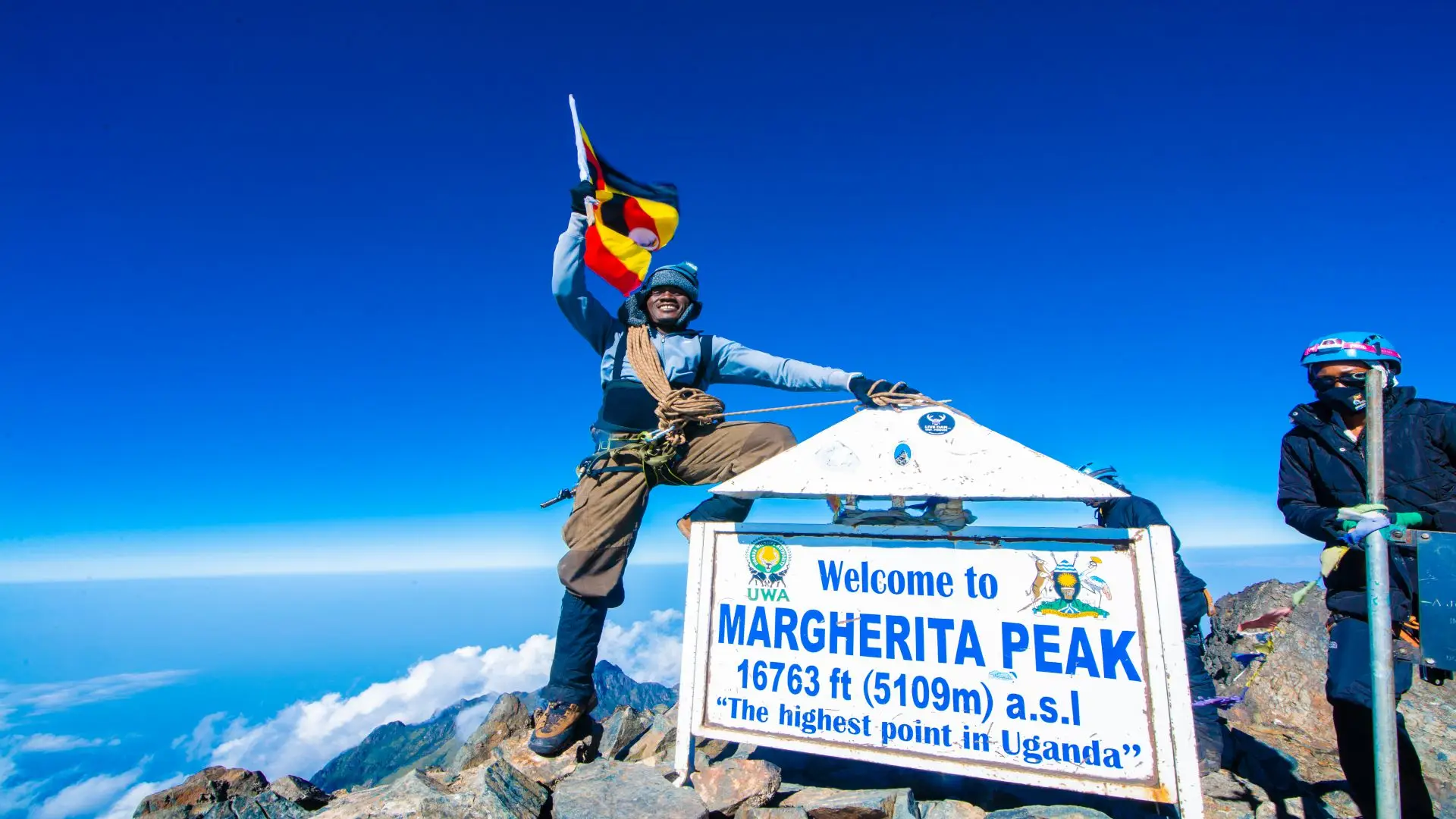
Start before dawn to climb Mount Stanley’s Margherita Peak. Reach Africa’s third-highest point by traversing glaciers and rock scrambles. Ascend to Kitandara Lakes Camp to spend the night.
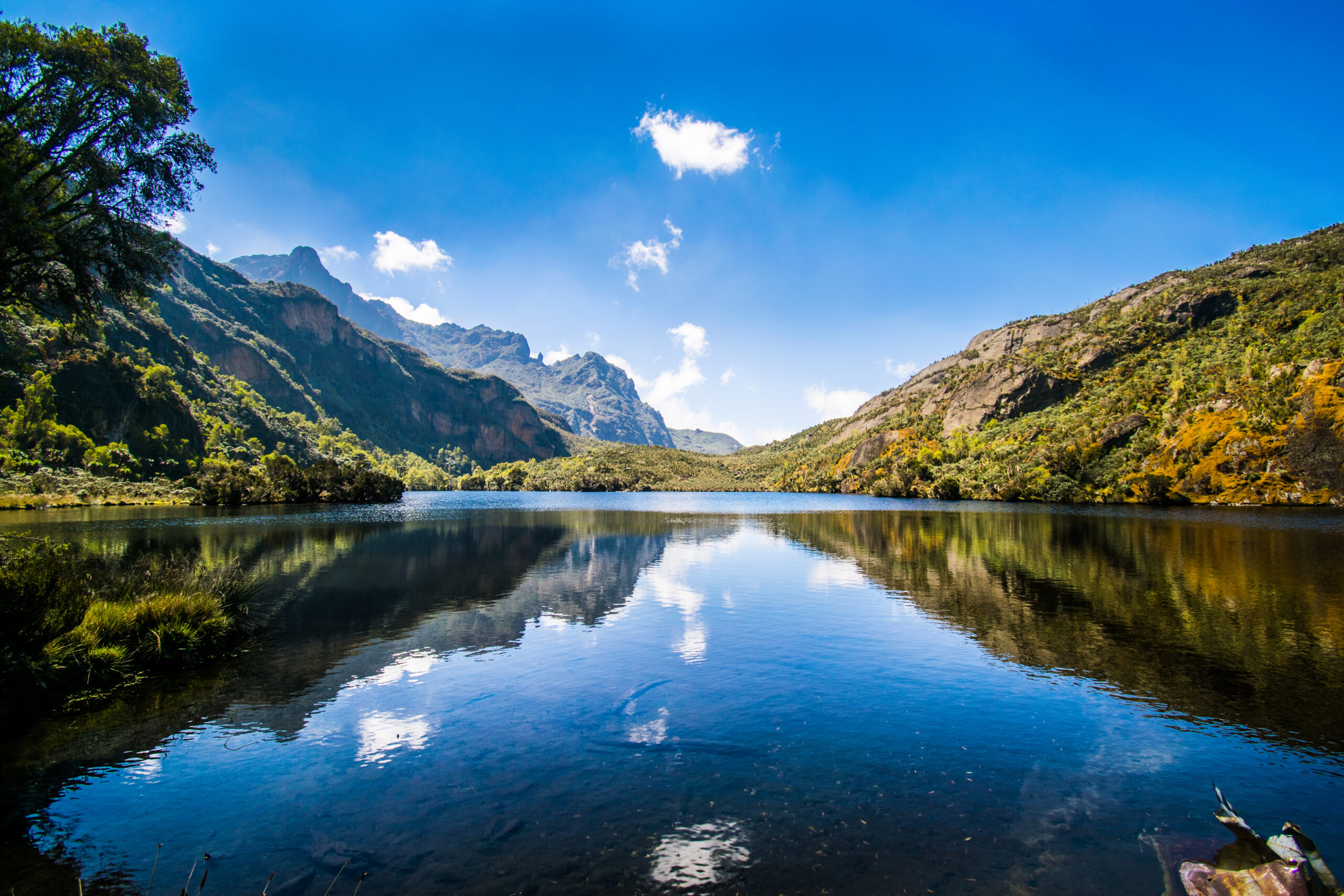
Traverse the steep, occasionally slippery bouldering rocks, followed by an easier ascent that remains a challenging trek through the cramboons along the Stanley Plateau, leading you to the final ascent to the summit of Margherita Peak. Take photos as you are among the few who have overcome the challenging yet rewarding adventure. After the memorable shots, descend back to Ellena for a hot lunch, then walk to Kitandara Camp, the second-to-last camp on this central circuit trail.
Day 7: Kitandara–Freshfield Pass–Guy Yeoman Camp (3450 m).
Climb to Freshfield Pass, offering optional side hikes to other peaks, and then descend past Bujongolo’s historic rock shelter to Guy Yeoman Camp.
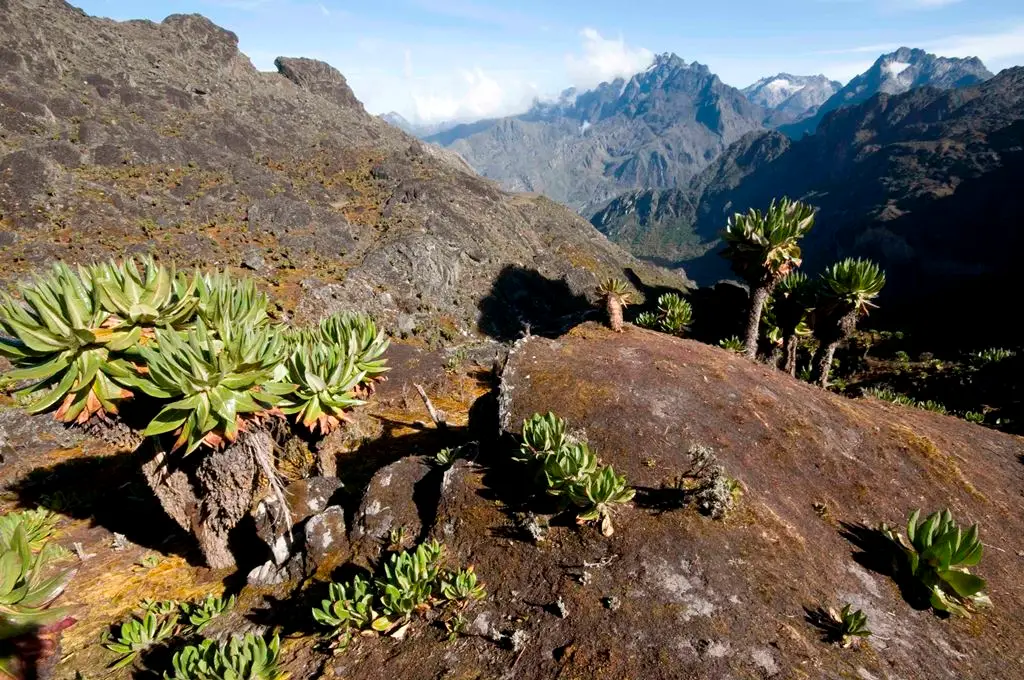
Fresh Field Pass
Start the day with a delicious breakfast, and led by your guide, you will head to a steep hike above Kitandara Camp. From here, you will continue to Fresh Field Pass, taking on the high alpine mossy trail. Fresh Field is also the launchpad for hiking Mount Baker and Weisman Peak on Mount Luigi di Savoia. Continue walking, and you will encounter a tedious descent through huge rocks at the rock shelter at Bujongolo, which was also the base camp for the Duke of Abruzzi on his historic Rwenzori expedition in 1906. Thereafter, embark on the walk through the tussocks once again.
Day 8: Guy Yeoman – Nyakalengija.
Descend through bamboo forests and the Kichuchu cliffs, crossing metal ladders and bridges before exiting the park and concluding your trek.