
Climb Margherita Peak via the 7-day Rwenzori Central Circuit. Experience Africa’s most challenging trek with expert guides, glacier crossings, full logistics, and high summit success rates. Plan your expedition today.
This 7-day expedition is the fastest fully guided route to Margherita Peak, the highest point of the Rwenzori Mountains and the third-highest summit in Africa. Unlike traditional high-altitude hikes, the Rwenzori is a true mountaineering environment defined by dense rainforest, high bogs, steep valleys, and equatorial glaciers. This trek is designed for physically fit adventurers who want more than a walk to a summit. It is an immersive climb through one of the most unique alpine landscapes on Earth.
This mountain is not like Kilimanjaro. The Rwenzori demands patience, balance, and endurance rather than speed. The reward is a far more remote, technical, and dramatic ascent with significantly fewer climbers and a genuine expedition atmosphere.
Trekking in the Rwenzori Mountains: A 7-Day Rwenzori Hike from Nyakalengija to the Highest Peak (Margherita Peak) in the Rwenzori Mountains. This Rwenzori Trekking Expedition follows the Central Circuit Trail.
With an elevation range of 2,800 to 5,109 meters above sea level, this 7-day Rwenzori trekking of the central circuit trail starts in Nyakalengija and continues through Nyabitaba, John Matte, Bujuku, Elena, Mount Stanley (Margherita Peak), Kitandara, and Guy Yeoman. Along the way, you’ll pass through five different vegetation zones, including mountain forest, bamboo zone, alpine zone, and mountain valley.
The trek to Margherita Peak passes through five distinct vegetation zones before reaching the top of the main circuit route trail at Margherita. From Kasese, you will embark on a 7-day Rwenzori mountaineering expedition.
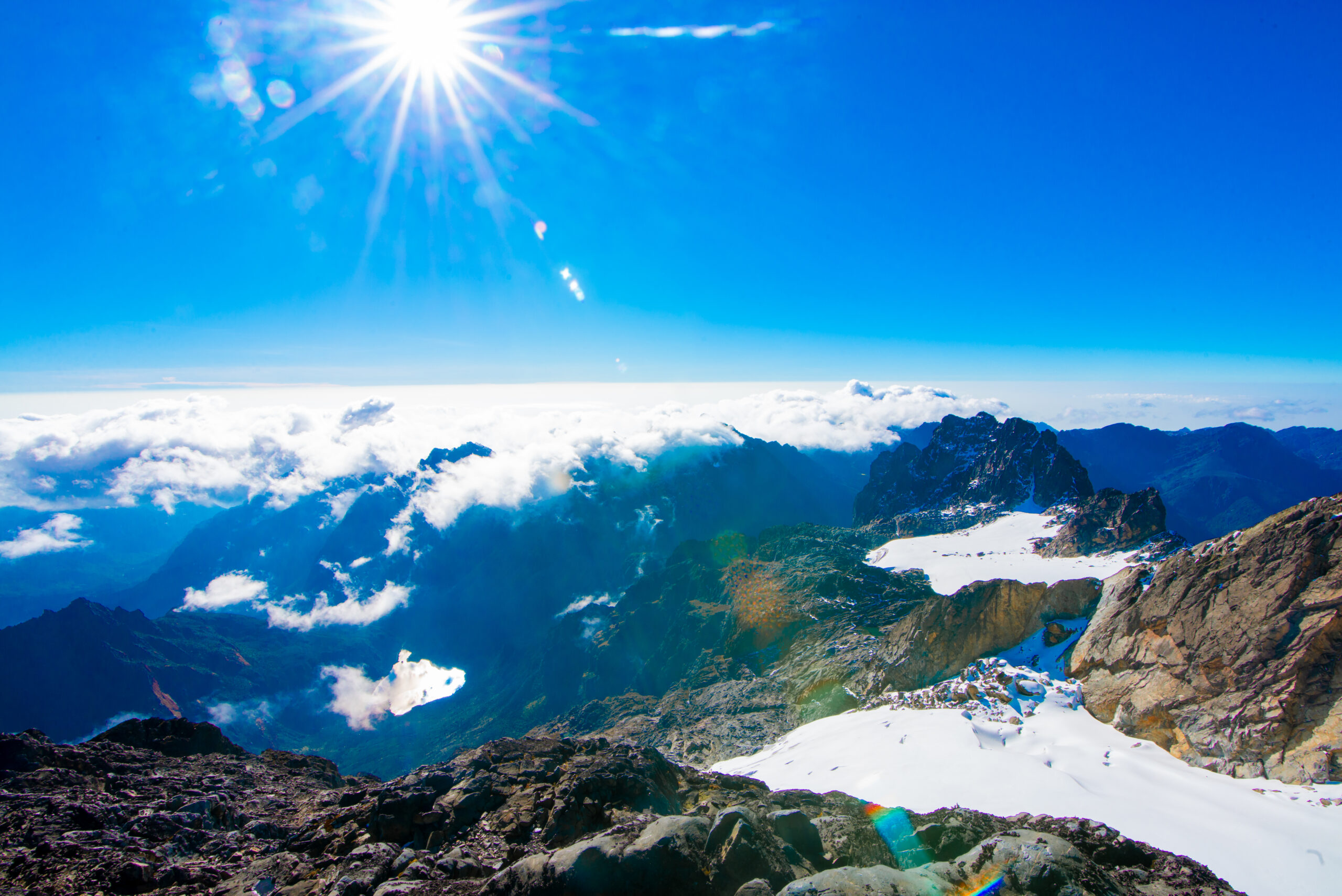
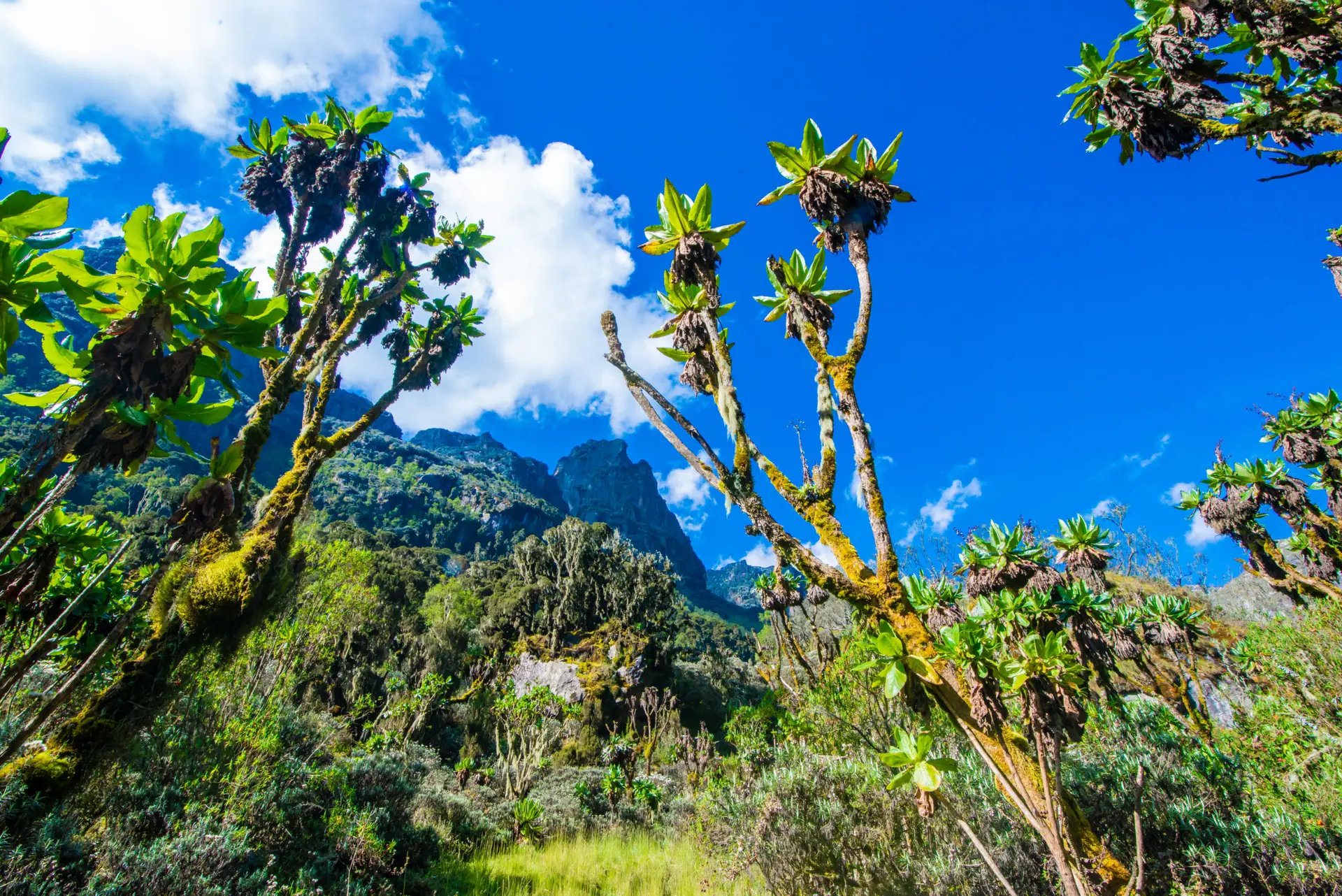
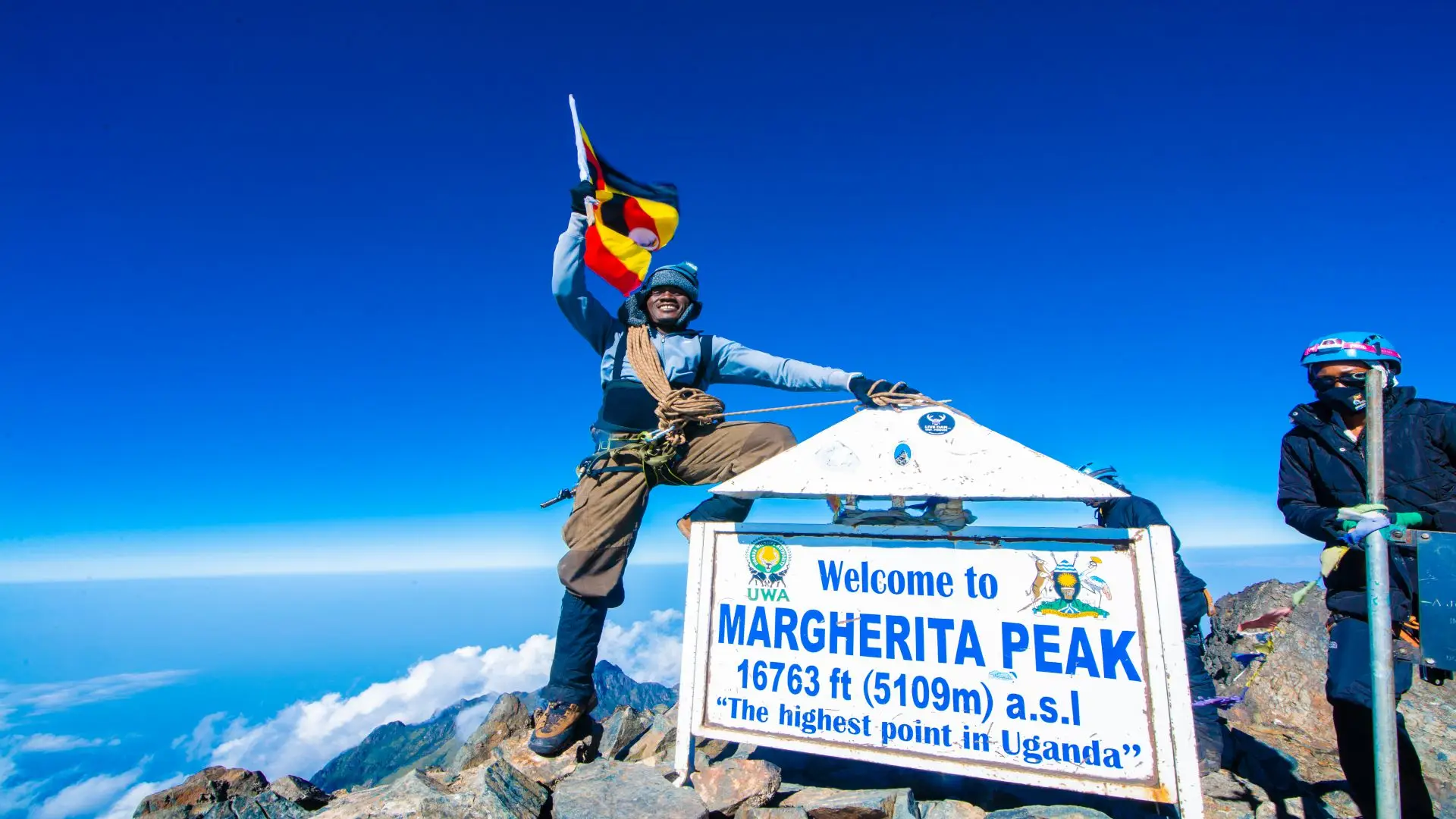
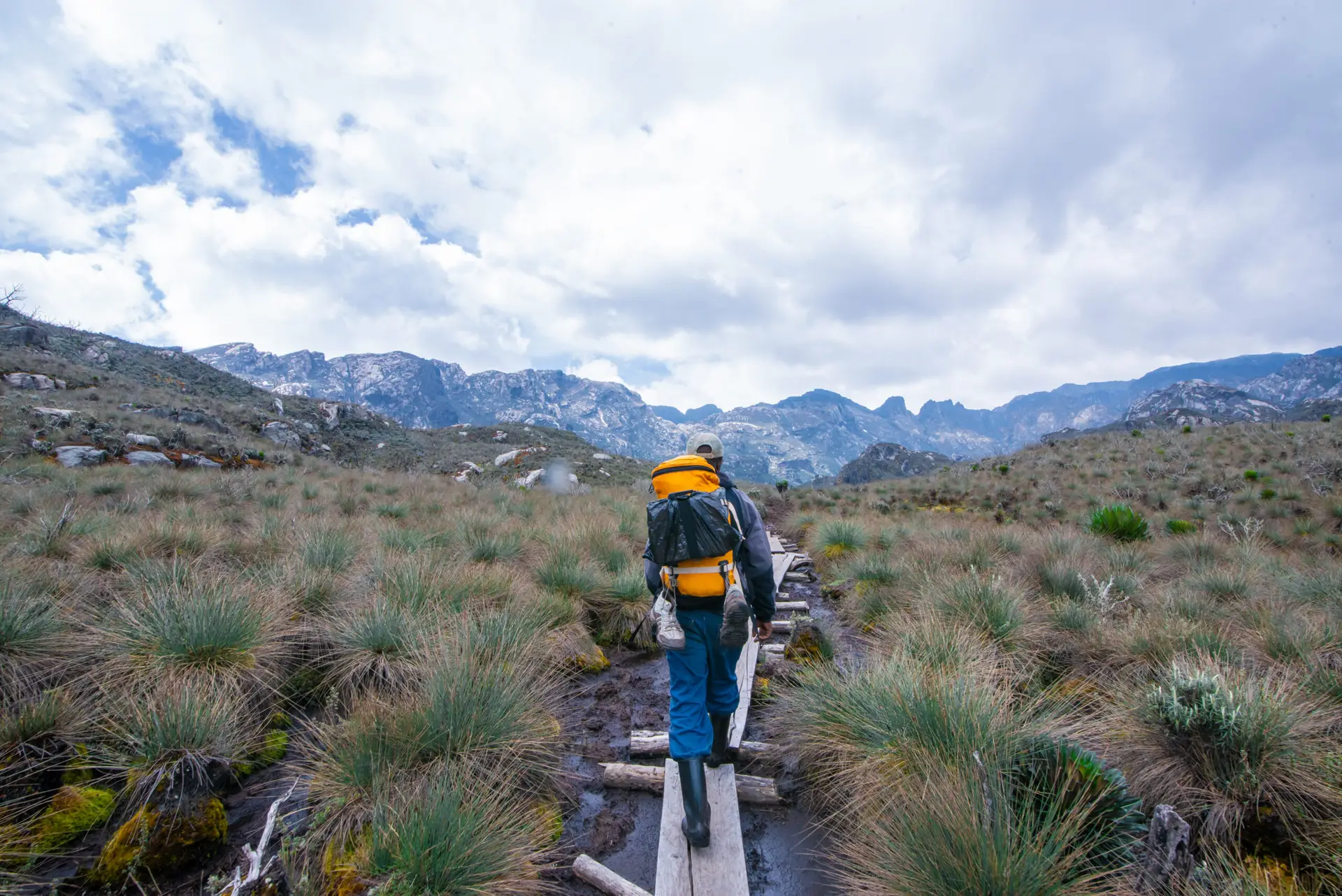
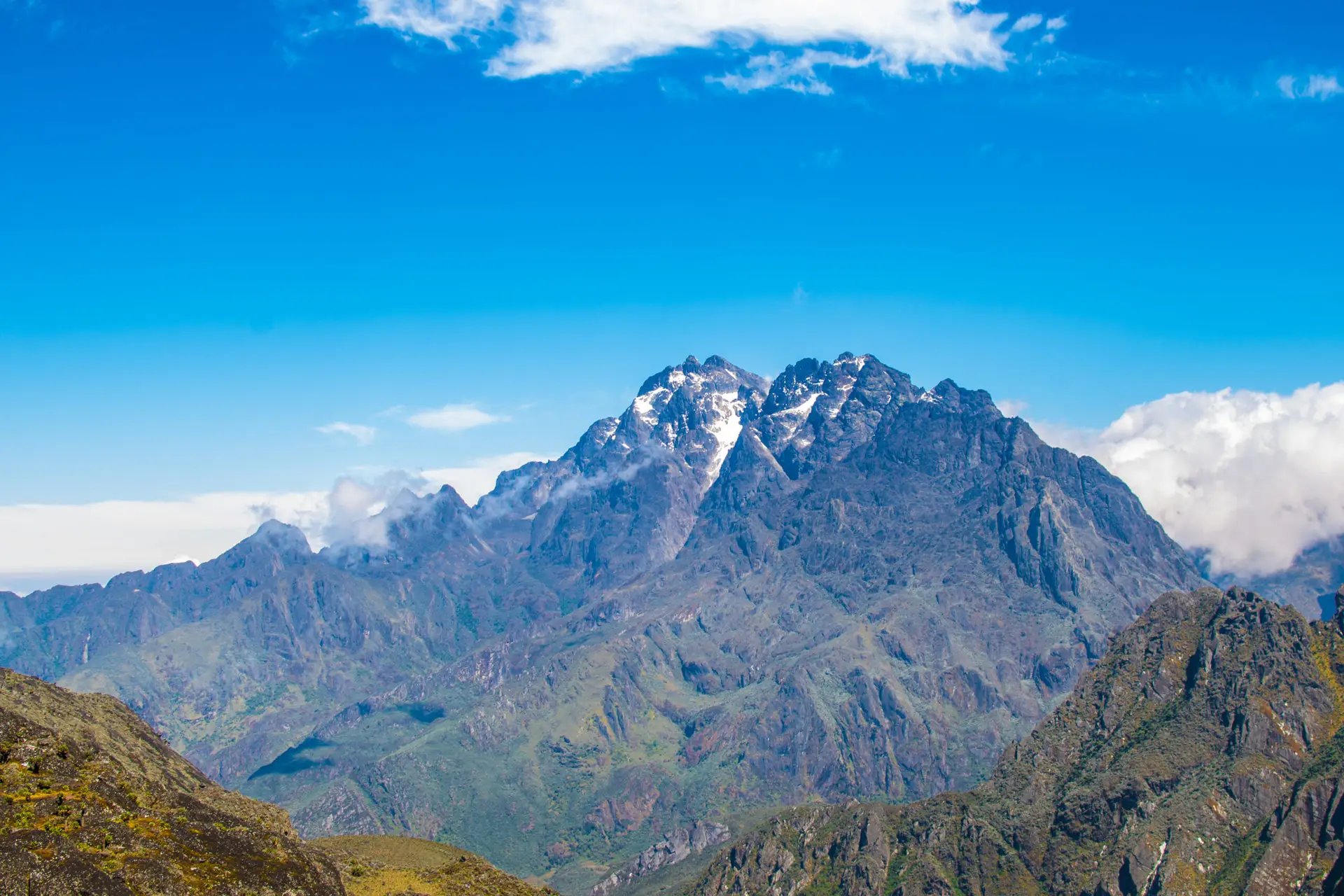
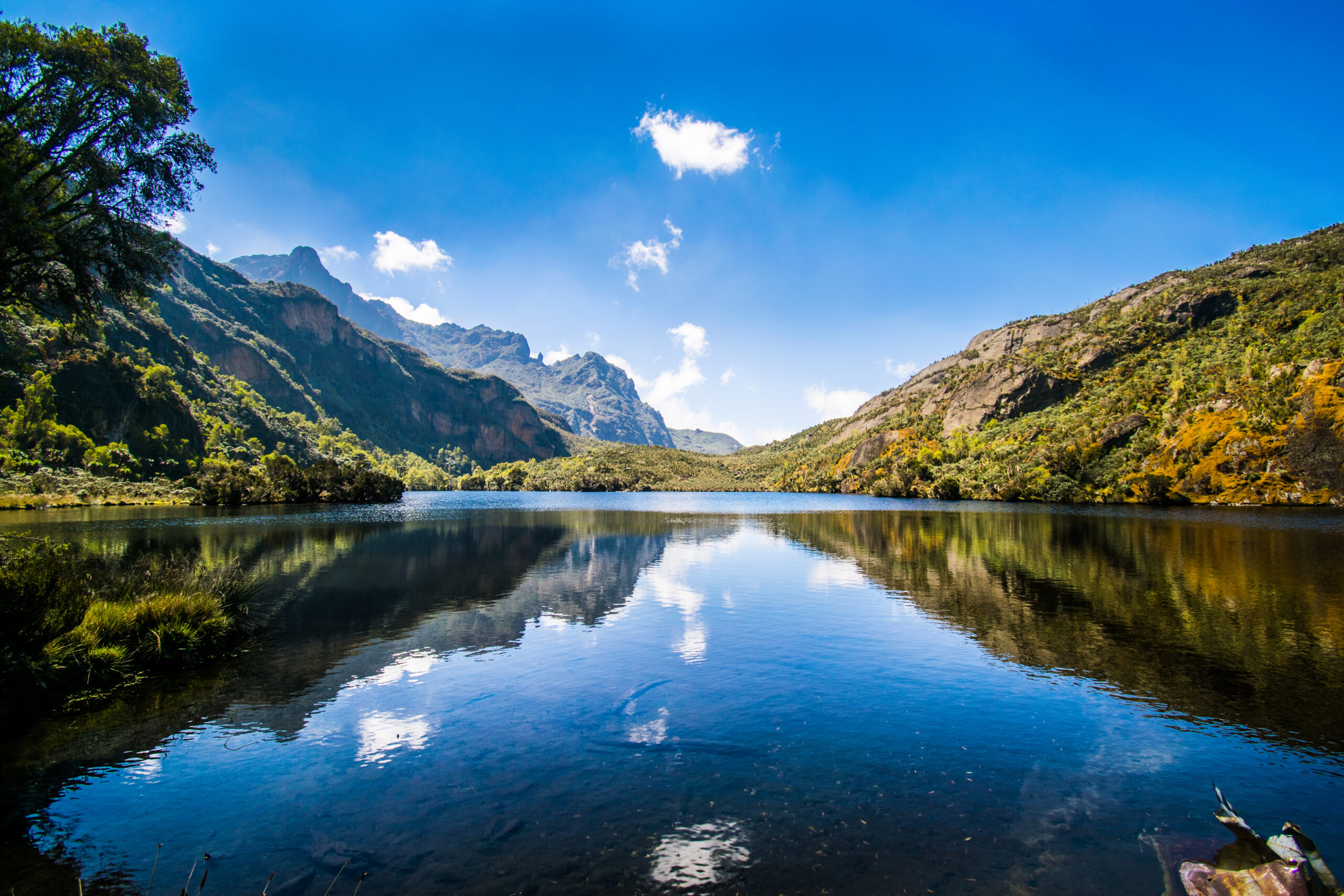
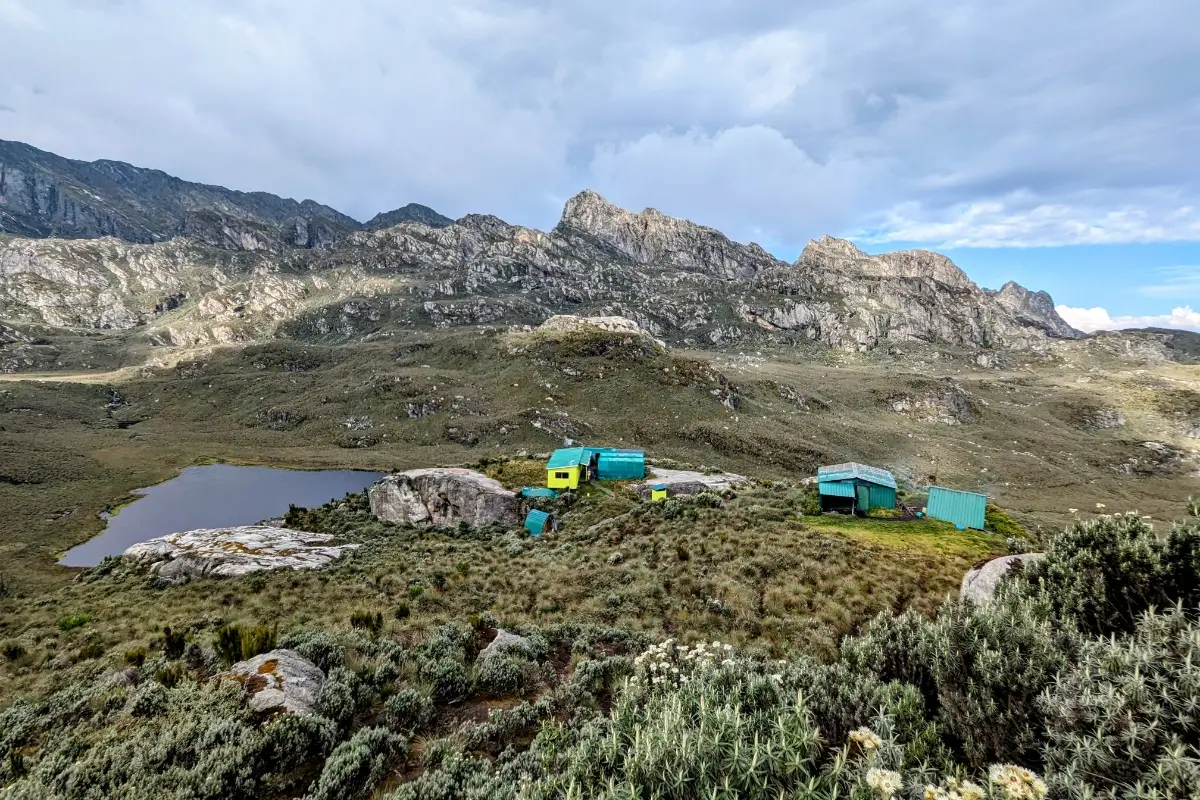
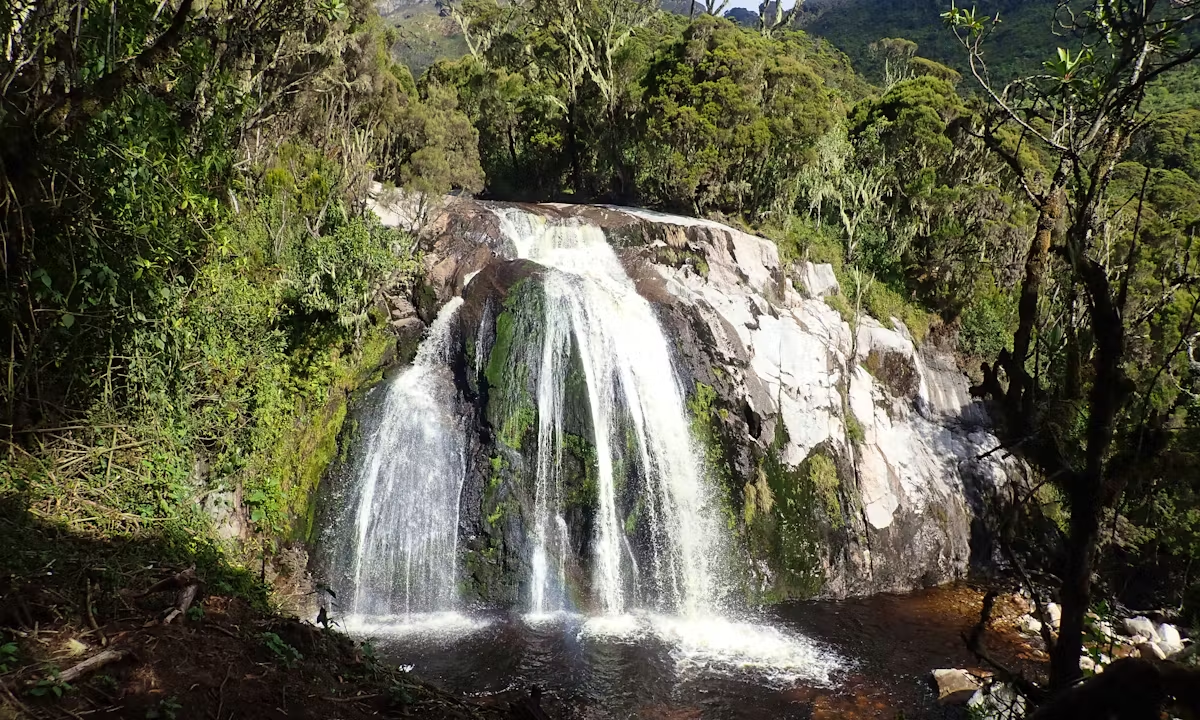
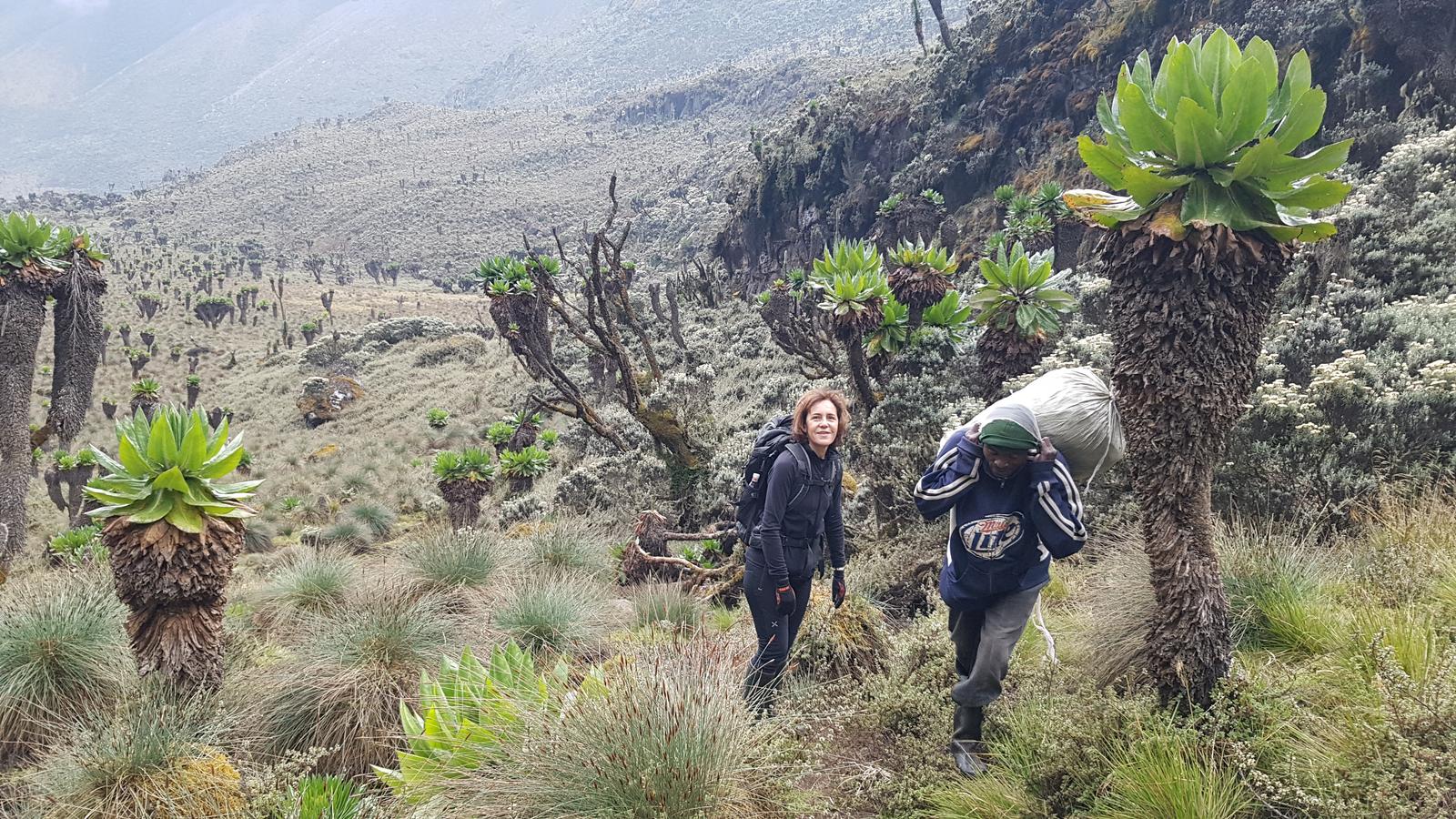
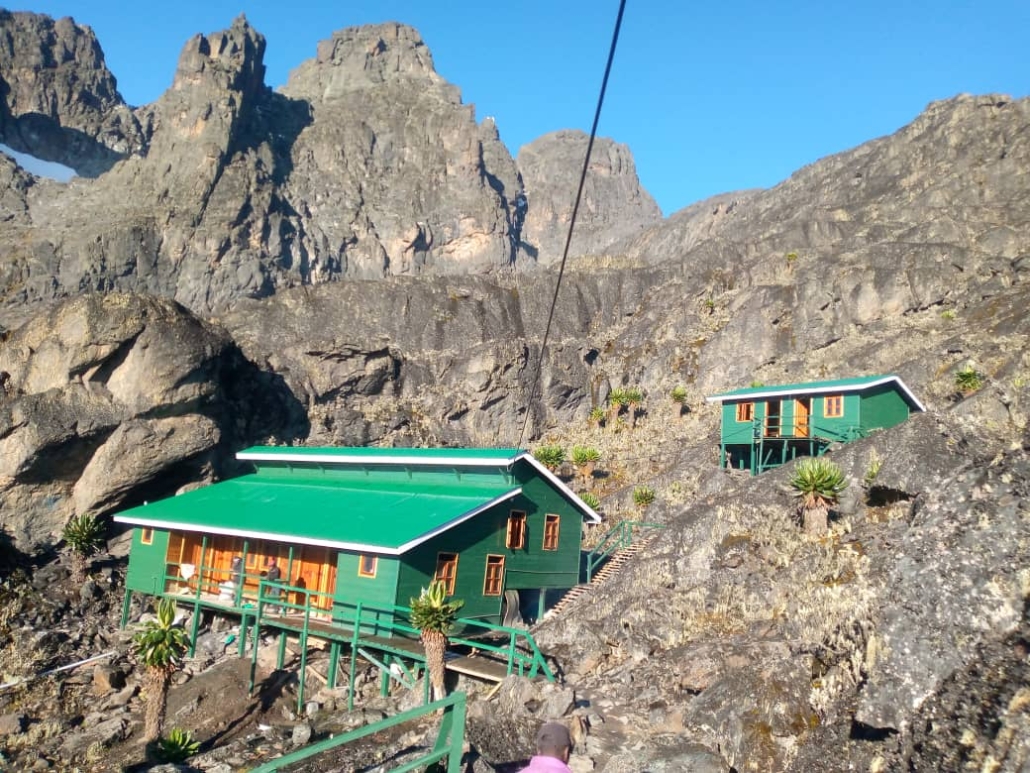
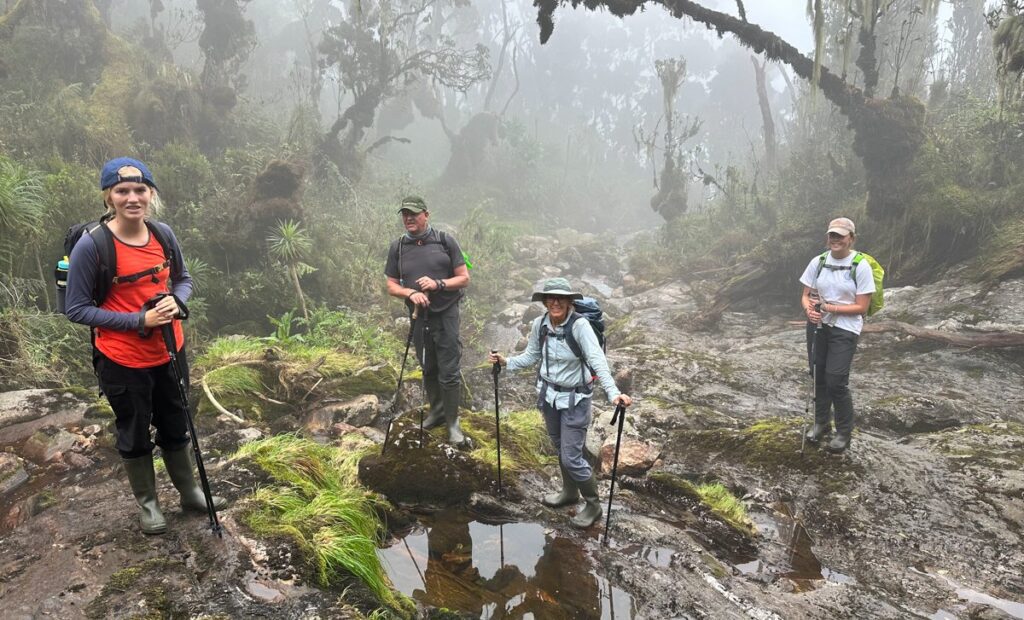
Along the journey to Magheritah Peak, you’ll observe gorges separating the summits of Mount Baker (4843 meters), Mount Speke (4890 meters), Mount Luigi di Savoia (4627 meters), Mount Gessi (4715 meters), and Mount Emin (4798 meters). Margherita Peak, at 5,109 meters, is one of the many peaks that comprise Mount Stanley, Uganda’s tallest mountain.
Expedition Overview
The Central Circuit is the classic approach to Margherita Peak. Over seven days you will cross five distinct ecological zones, from tropical forest to glacier, while gaining gradual altitude that supports acclimatization. The route combines trekking, scrambling, and basic glacier travel using crampons and an ice axe under the supervision of experienced Rwenzori mountain guides.
This program is ideal for trekkers with excellent fitness who want to experience real alpine conditions without requiring advanced climbing experience.
Why the Rwenzori Is Different
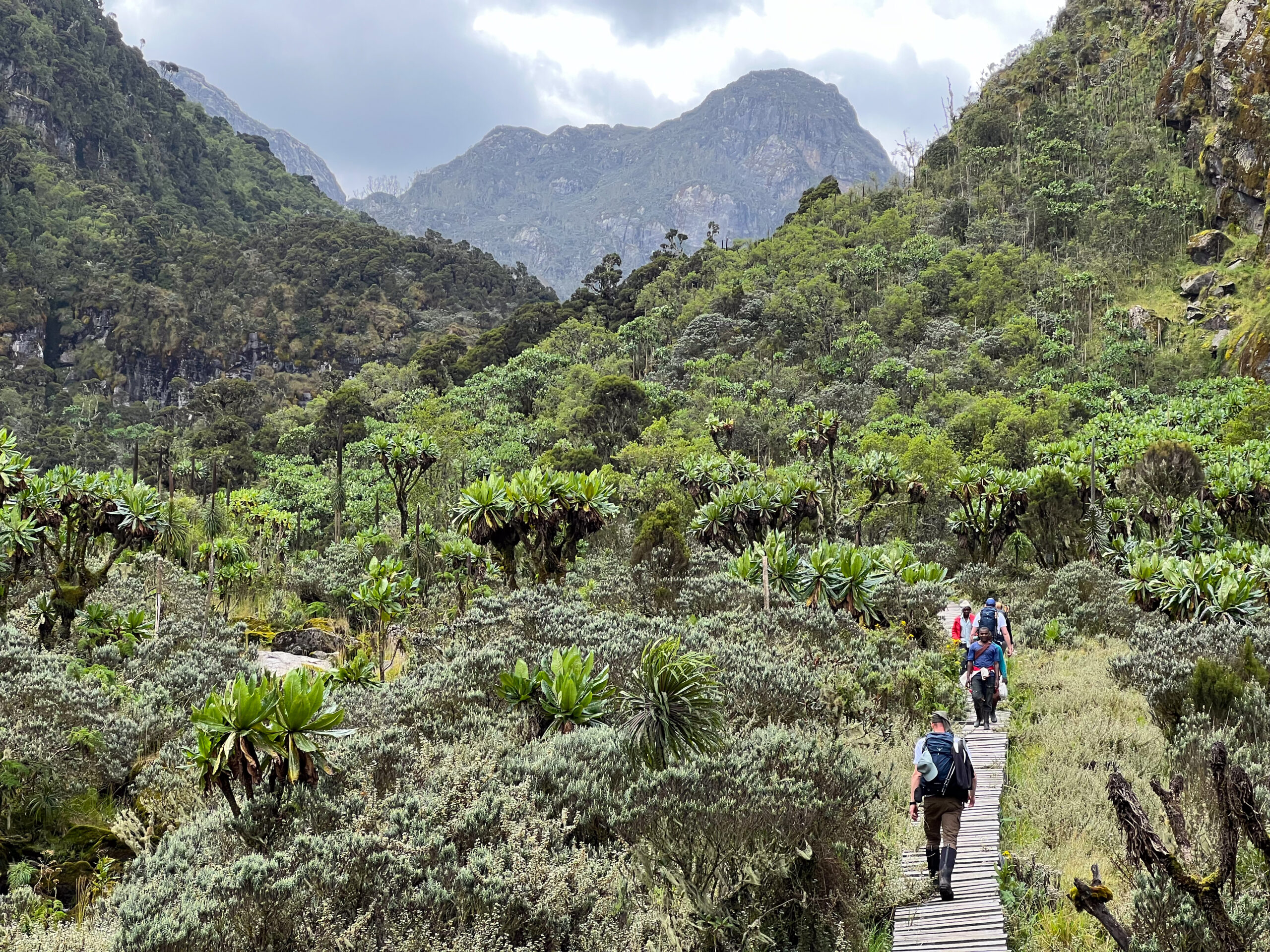
The Rwenzori is often described as Africa’s most demanding trek because conditions change constantly. Trails pass through deep moss forests, bamboo zones, and high-altitude bogs where boardwalks and ladders are used to navigate saturated ground. Higher up, the terrain becomes rocky and glaciated, requiring careful movement rather than fast hiking.
Instead of a single long ascent, the mountain unfolds gradually, allowing you to experience extraordinary biodiversity alongside serious altitude gain. The sense of isolation and scale is unmatched by other African peaks.
The Rwenzori Central Circuit Trail is the longest and most famous hiking trail in the Rwenzori Mountains National Park. It takes about 5–9 days to complete and is about 58 kilometers long. Forests in the mountains, bamboo zones, heather woods, and alpine fields are just some of the ecosystems that this long route goes through. You’ll see glacial lakes, rivers, and rare animals along the way to the peak. Margherita Peak is Uganda’s highest peak.
The Central Circuit Route Trail begins at Mihunga Station and ascends through Nyabitaba and the Bujuku Valley before reaching the mountains. You’ll pass Scott Elliot Pass and then reach the Mubuku Valley via Fresh Field Pass. As a result, you’ll get to see the breathtaking Kitandara Lakes.
There are various huts along this route where trekkers can stay. The vast majority of them are comfortable. Although the trails are very rocky and muddy in some spots, they are generally well-kept considering the weather and conditions in the Rwenzori Mountains.
Trek Highlights Day by Day: 7-Day Rwenzori Central Circuit Trek to Margherita Peak (5,109 m).
- Day 1: Nyakalengija (1,600m) to Nyabitaba Hut (2,650m)
- Day 2: Nyabitaba to John Matte Hut (3,380m)
- Day 3: John Matte to Bujuku Hut (3,960m)
- Day 4: Bujuku camp to Elena Hut (4541 m)
- Day 6: Summit Margherita Peak (5,109m) and Descend to Kitandara (4,023m)
- Day 6: Kitandara to Guy Yeoman via Freshfield Pass (3505m)
- Day 7: Trek downhill from Guy Yeoman through Nyabitaba to Nyakalengijja.
This Rwenzori Trekking Expedition is at $1400 per person.
Detailed Itinerary (Day by Day) of the 7-Day Rwenzori Central Circuit Trek to Margherita Peak (5,109 m).
Day 1: Nyakalengija (1,600 m) to Nyabitaba Hut (2,650 m)
Your hike briefing will take place at the RMS headquarters in Nyakalengija, so make sure to head there after breakfast at the camp. Awaken in Nyakalengija and make your way through the Bakonjo settlements to the gate of Mount Rwenzori National Park. Here, you must register before you can enter the park. Beginning your journey along the central circuit trail, you will encounter lush tropical vegetation, towering elephant grass, and abundant bushes.
This forest is home to various animals, including forest elephants, chimpanzees, hyraxes, black-and-white colobuses, duikers, three-horned chameleons, and L’Hoest’s monkeys. A wide variety of trees and plants can be found here, in addition to numerous bird species, such as the Handsome Francolin, Rwenzori Turaco, Long-eared Owl, Cinnamon-chested Bee-eater, Strange Weaver, Archers’ Robin-chat, and Rwenzori Batis. Most likely, you will encounter a few of them.
The distance between Nyakalengija and the Nyabitaba hut is approximately 8 kilometers. The Nyabitaba hut will serve as your dinner spot and your bed for the night.
Day 2: Nyabitaba to John Matte Hut (3,380m)
There is a full breakfast at the hut. Then you have about 30 minutes to walk through dense trees and bushes to the Kurt Shafer Bridge, where the Bujuku and Mubuku rivers meet. You will spend the next two hours making your way through a mountain forest, rocks covered in moss, and bamboo. Along the way, you could also observe the diverse range of birds that inhabit the forest. Your next stop on the way up is Nyamulejju Rock Shelter for lunch.
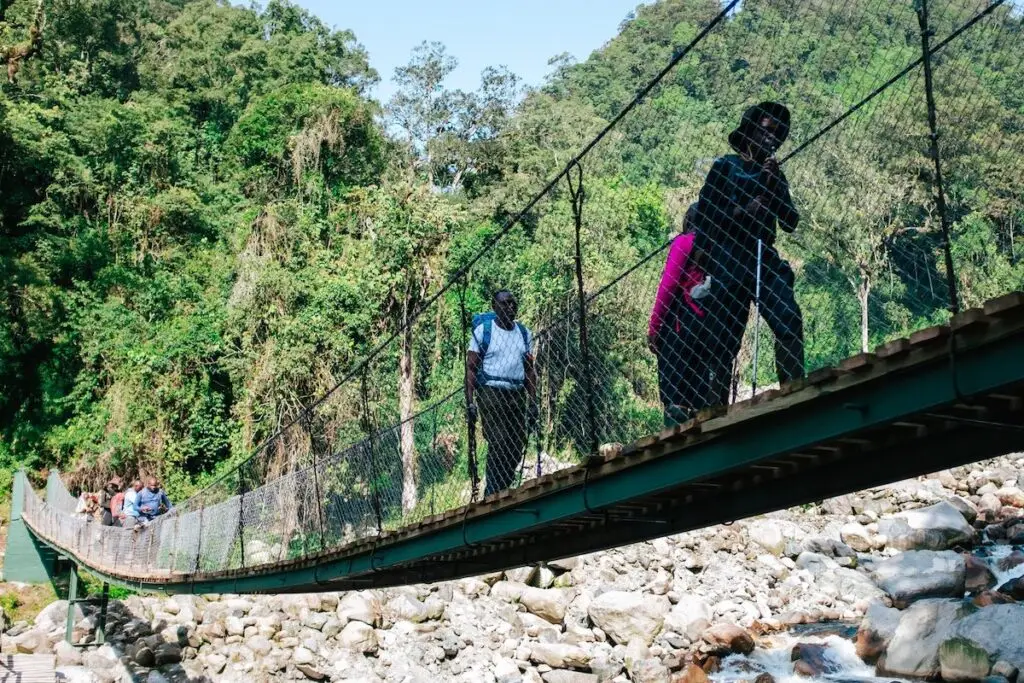
Kurt-Scharffer Bridge
This rock shelter is where early hikers sometimes camped and stayed the night. From here, you can see Mount Stanley and Mount Speke if the sky is clear.
You’ll then keep walking through the mountain forest until you reach the John Matte hut. There you can rest your exhausted head and eat a big meal. Most hikers cool off in the Bujuku River, which is close to the house. From your position on Mount Stanley, you can see the Margherita Glacier, nestled between the Alexandra and Margherita peaks. It takes 11 kilometers to get from Nyabitaba to John Matte.
Day 3: John Matte to Bujuku Hut (3,960m)
After breakfast at the cabin, you will cross the Bujuku River and go through the bush to get to the lower Bigo bog. Large lobelias thrive in this wet valley. It used to be the hardest part of the Rwenzori because it was so swampy. Most walkers, especially women, had trouble jumping from tussock to tussock. A boardwalk has been added to the end of the swampy trail, making it easier to walk. You will likely see groundsel, giant lobelias, and flowers that bloom all the time as you pass through.
Next, you’ll have to climb steeply along a hill to reach the start of the upper Bigo bog. There is also a path that goes up to Lake Bujuku. To reach the Bujuku hut, go through the swampy area left after the boardwalk. From here, you can see mountain ranges such as Speke, Baker, Stanley, and Lake Bujuku. You can now get to Mounts Speke and Stanley. There are about 5 kilometers between John Matte and Bujuku. Spend the night in Bujuku.
Day 4: Bujuku camp to Elena Hut (4541 m).
After breakfast at Bujuku Hut, the walk to Elena Hut will take five to seven hours. You have to walk along the sides of the upper Bigo bog to get there. The next part of your walk will take you across Lake Bujuku’s rough ground. You’ll see more bogs and the exciting Ground Gully on your way to the 4372-meter Scott-Elliot Pass, which is on the western slopes of Lake Bujuku.
You will need to use a metal ladder to get across the steep area at the top of the gully. Thereafter, the road splits in half. The trail on the right goes to the Elena Hut and then climbs steeply over big rocks to reach Mt. Stanley. The trail on the left goes down to Kitandara Lakes via Scott-Elliot Pass. Her hut is on Mount Stanley’s rocky side, too cold to be near. You can see both Mount Baker and Mount Speke from this spot at the top of the Rwenzori Mountains. It’s almost impossible to see these two mountains when the fog comes in. After dinner, spend the night at Elena’s hut.
Day 5: Summit Margherita Peak (5,109 m) and Descend to Kitandara (4,023 m).
Please ensure you are up by 2:00 a.m. today. Wear warm clothes, put on your harness, gloves, and headsock, and make sure your lights, helmet, and sunglasses are in your daypack. Have breakfast at Elena Hut. Go up the Stanley hill until you reach the top of Mount Stanley, which is also called Margherita Peak. Utilize the ropes as a way to move through rough and hilly terrain.
The guide will show you how to use the gear on the ice. In the mountainous areas, you will need crampons, an ice axe, and your own physical strength. The Stanley Plateau Glacier is where you start your short, two-hour journey to the base of the Margherita Glacier. This section of the trek is the most challenging for those who have previously hiked in the Rwenzori Mountains. You can walk across this ice to get to the Margherita summit (5109 m) on top of Mount Stanley. You can see Ireen Lake, Mount Speke, and the land below from the top
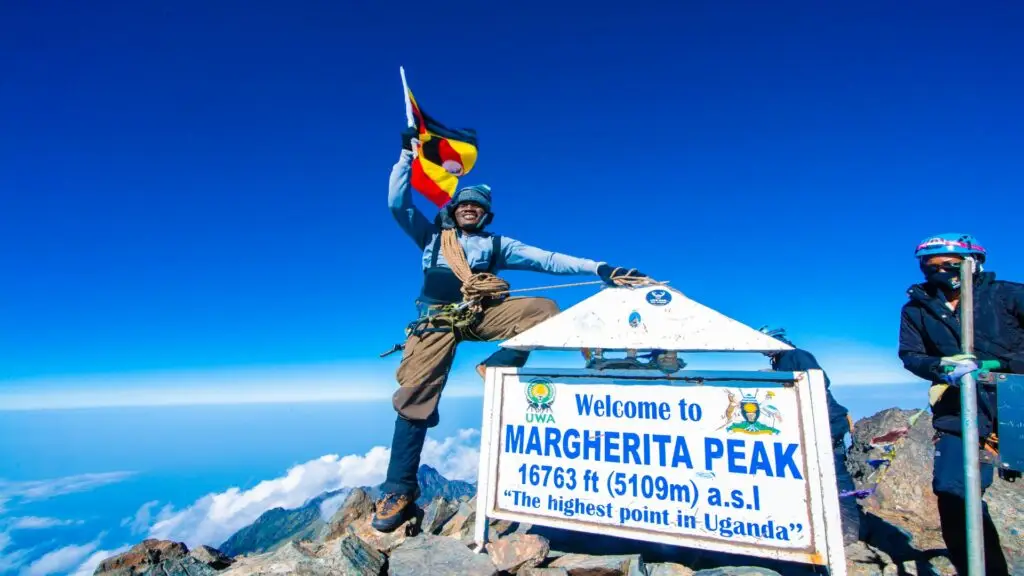
Margherita Peak
Thereafter, have lunch at Elena Hut and then go to Kitandara via the most beautiful part of the Rwenzori, the Scott Elliot Pass. Have dinner at Kitandara and then go to bed for the night. If there are many people in the group, they might stay an extra night at Elena’s hut and continue the next day. You can skip the climb of Mount Stanley on days 4 and 5 by taking a different path from the Bujuku Hut to Scott-Elliot Pass. At the pass is the start of the track that leads to the Elena Hut. Just south of the pass lies a rocky area. However, after a short distance, the ground levels out, and the trail continues to Kitandara Lake Hut.
Day 6: Kitandara to Guy Yeoman via Freshfield Pass (3505m).
First, have breakfast at Kitandara. Then, carefully make your way across the dangerous base of Mount Baker. From Kitandara, the trail goes steeply up the headwall and along the southern slope of Rwenzori Mountain until it reaches Fresh Field Pass.
It starts at the base of Mount Baker and goes out into the distance. From the pass, the steep descent through the mud continues until it reaches the rock shelter at Bujangolo. The site was the Duke of Abruzzi’s base camp during his famous trip in 1906. This campsite is an excellent location to stop for dinner and spend the night after a trip that should take no longer than five to seven hours. The Guy Yeoman hut is on the banks of the Mubuku River.
Day 7: Trek downhill from Guy Yeoman through Nyabitaba to Nyakalengijja.
You can begin your journey to Nyabitaba at Guy Yeoman. The path descends through the bamboo trees. Be careful going down; the ground is slippery and dirty, and there’s little to hold on to. After about five hours of hiking, you will have lunch at the Nyabitaba hut. We will be going down to Nyakalengija for the next three hours.
As soon as you get to Nyakengija in the late afternoon, you can either drive back to Kampala, spend the night in Kasese town, or do more safari activities, like gorilla trekking in Bwindi Impenetrable Forest National Park.
What Makes This Climb Successful
Success on the Rwenzori is not about speed but about pacing, support, and local expertise. Experienced Rwenzori guides lead our climbs, understanding the mountain’s unique weather patterns, terrain challenges, and acclimatization demands. A full porter team carries equipment and supplies, allowing you to focus entirely on the climb.
This structured support dramatically improves summit success while maintaining safety in a remote environment.
Accommodation and Logistics
All nights on the mountain are spent in established huts along the Central Circuit. These shelters provide basic but reliable accommodation protected from the mountain’s frequent rainfall and cold temperatures. Meals are prepared by trained mountain cooks to maintain energy throughout the climb.
The expedition includes park permits, guiding services, porter support, hut accommodation, and technical equipment required for the glacier section.
Who This Trek Is For
This climb is best suited to adventurous hikers with strong fitness who want to experience a true mountain expedition rather than a standard trekking holiday. Prior high-altitude experience is helpful but not required. Determination and preparation matter more than technical climbing background.
Planning Your Rwenzori Expedition
The Rwenzori is one of Africa’s least crowded yet most rewarding mountain experiences. Climbers who choose this range are looking for authenticity, challenge, and a landscape unlike anywhere else on the continent.
Our team handles all logistics from park entry to summit equipment so you can focus entirely on the journey to Margherita Peak.
To begin planning your climb, contact us to check available dates, receive a preparation guide, and start building your Rwenzori expedition.
What’s Included in the Hiking Fees
- Professional mountain guides
- Porters
- All meals on the mountain
- Accommodation in wooden mountain huts
- Technical summit equipment (Ropes, ice axes, helmets, harnesses)
- Free use of rubber boots
Not Included in the Package Fees:
- Tips & gratuities
- Personal expenses
- Medivac and Evacuation insurance
- Accommodation before/after the trek.
- Transfers to/from the trailhead (can be arranged upon request)
ANY QUESTIONS?
If you need any clarification about a Rwenzori trek, contact one of our trekking experts to start planning your journey today.
A 10% percentage of your safari proceeds goes to supporting the local Bakonjo Communities (orphans, schools & homes)
Our Popular Rwenzori Treks
Magheritah Peak (8 Days Kilembe Trail)
$1705 Per Person
Mutinda LookOut (4 Days)
$645 Per Person
Short Magherita Hike (5 Days Central Circuit)
$1200 Per Person
Rwenzori Hike (7 Days Central Circuit)
$1400 Per Person